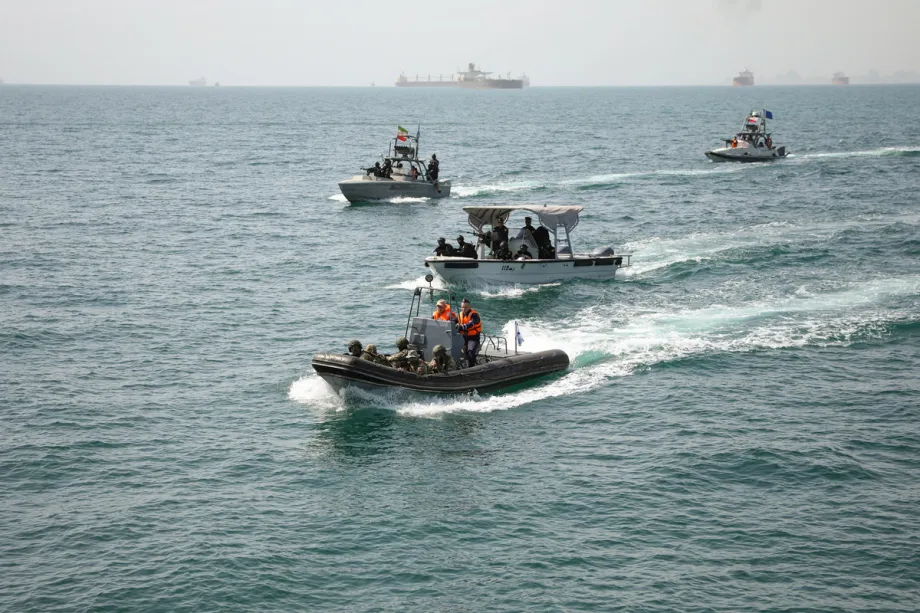
TEHRAN – The strategic waterway through which approximately one-fifth of the world’s oil passes has become the centerpiece of Iran’s强硬 stance against the United States and Israel. In remarks carried by Iran’s Mehr News Agency, Ebrahim Zolfaghari, spokesperson for the Iranian military’s Khatam Al-Anbiya Central Headquarters, declared that new rules governing transit through the Strait of Hormuz have been established, stressing that passage would now depend on Iran’s authorization.
“The situation in the strait will not return to the past,” Zolfaghari said, adding that “permission for transit will be determined by us.” The statement represents a significant hardening of Iran’s position, suggesting that even if the current conflict de-escalates, Tehran intends to maintain enhanced control over the waterway that has long been a flashpoint in regional tensions.
The spokesman also issued a direct warning regarding global energy markets, stating that “the fire beneath oil prices has been ignited, and its level is in our hands.” The remark underscores Iran’s willingness to use its strategic position as leverage in the confrontation with the US and its allies.
The Strategic Chokepoint at the Center of the Crisis
The Strait of Hormuz, a narrow passage separating Iran from the Arabian Peninsula, has long been recognized as one of the world’s most critical maritime chokepoints. Before the current conflict, approximately 20 percent of globally traded oil passed through its waters. Since the US-Israeli strikes on Iran began on February 28, traffic through the strait has been reduced to a fraction of its normal volume, contributing to surging oil prices and global energy insecurity.
Iran’s latest declaration suggests that even if a ceasefire is reached, the pre-war status quo may not be restored. Tehran appears determined to codify its enhanced control over the waterway as a permanent feature of the post-conflict order—a demand that would significantly alter the strategic balance in the Gulf and have profound implications for global energy markets.
Zolfaghari asserted that “the resistance of our people and the power of our armed forces are increasing moment by moment,” while claiming that adversaries have become “grounded” and are showing increasing signs of weakness. The remarks reflect a narrative of resilience that has been a consistent theme in Iranian official communications since the conflict began.
Rising Casualties and Retaliatory Strikes
The war, now in its fifth week, has exacted a devastating toll. According to Iranian figures cited by Anadolu, US and Israeli airstrikes have killed more than 1,340 people since February 28, including former Supreme Leader Ayatollah Ali Khamenei. The strikes have targeted Iranian nuclear facilities, military installations, and energy infrastructure, while also causing widespread damage to civilian structures.
Iran has retaliated with drone and missile strikes targeting Israel, along with Jordan, Iraq, and Gulf countries hosting US military assets. These attacks have caused casualties and damage to infrastructure while disrupting global markets and aviation. The tit-for-tat escalation has raised fears of a wider regional war that could draw in additional powers and further destabilize an already volatile region.
Diplomatic Efforts Amid Hardened Rhetoric
The Iranian military’ comes at a critical juncture in diplomatic efforts to end the conflict. Pakistan has positioned itself as a key mediator, with Prime Minister Shehbaz Sharif formally offering to host US-Iran talks in Islamabad—an offer that received an extraordinary boost when President Donald Trump reposted it on his Truth Social platform.
However, Iran’s latest declarations suggest that significant gaps remain between the two sides. Tehran has already demanded substantial concessions as preconditions for any agreement, including firm guarantees against future military action, compensation for wartime losses, and formal recognition of its control over the Strait of Hormuz. The military’s appears to reinforce these demands, signaling that Iran intends to emerge from the conflict with enhanced strategic leverage.
The five-day pause on US strikes against Iranian power plants, ordered by President Trump after what he described as “very good and productive conversations,” is set to expire soon. Whether the backchannel communications facilitated by Pakistan, Turkey, and Egypt can translate into formal negotiations remains uncertain, particularly in light of Iran’s hardened posture.
Regional and Global Implications
Iran’s assertion of control over the Strait of Hormuz carries profound implications for the global economy. Oil prices, which have already surged above $100 a barrel since the conflict began, remain volatile amid uncertainty about the future of the waterway. Any prolonged disruption to shipping through the strait would have cascading effects on energy-dependent economies worldwide, including Pakistan, which is already implementing fuel conservation measures in response to the crisis.
The statement also complicates the diplomatic calculus for Gulf states, which have historically relied on US security guarantees to ensure freedom of navigation in the strait. Iran’s declaration that transit will require its authorization represents a direct challenge to the long-standing international consensus on the strait’s status as a vital waterway open to all nations.
For the United States, Iran’s posture presents a fundamental challenge. The Trump administration has maintained that freedom of navigation in the strait is non-negotiable, and any permanent Iranian control over transit would likely be met with US opposition. However, with diplomatic efforts ongoing, the administration has not yet articulated a clear response to Tehran’s .
The Human Toll Continues
As diplomatic efforts continue, the human cost of the conflict mounts. The Iranian Red Crescent has reported that more than 82,000 civilian structures have been damaged or destroyed in the strikes, including over 62,000 homes, 281 medical facilities, and 498 schools. The destruction has created a humanitarian crisis that will require years of reconstruction, adding urgency to calls for a ceasefire.
Iran’s retaliatory strikes have also caused casualties and damage in neighboring countries, with Gulf states particularly vulnerable to missile and drone attacks. The closure of the strait has disrupted not only oil shipments but also the flow of goods essential to the region’s economies, exacerbating existing economic pressures.
A Dangerous Moment for Diplomacy
Iran’s declaration that the Strait of Hormuz “will not return to the past” represents a calculated escalation aimed at reshaping the strategic landscape of the Gulf—and a significant challenge to diplomatic efforts to end the conflict.
For Tehran, the statement serves multiple purposes. Domestically, it reinforces the narrative of resistance and resilience that has been central to the regime’s messaging throughout the conflict. Regionally, it sends a message to Gulf states that Iran’s strategic position has been permanently enhanced. Globally, it warns the United States and its allies that any agreement must account for Iran’s demands regarding the strait.
For the Trump administration, the declaration presents a dilemma. President Trump has already signaled openness to negotiations by ordering a pause on strikes and reposting Prime Minister Shehbaz’s offer to host talks. However, accepting Iran’s enhanced control over the strait would represent a significant concession that would have profound implications for US allies in the Gulf.
Pakistan’s mediation efforts now face their most serious test. The backchannel communications facilitated by Islamabad have created a window for dialogue, but Iran’s suggests that Tehran is not prepared to compromise on what it sees as a strategic necessity. Whether the offer to host talks in Islamabad can overcome this impasse will depend on the willingness of both sides to find common ground—a prospect that appears increasingly remote.
As the five-day pause on US strikes continues, the window for diplomacy is narrowing. Iran has made clear its bottom line: control over the strait is no longer negotiable. Whether the United States and its allies are prepared to accept that reality—or whether the conflict will escalate further—remains the central question of the coming days.