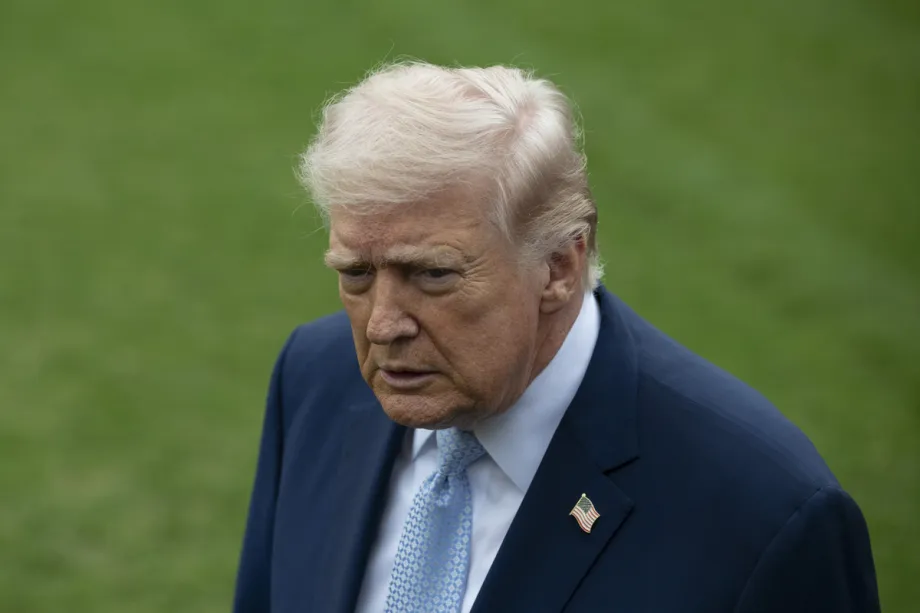
U.S. President Donald Trump has sharply criticized Western allies, claiming that NATO has contributed “absolutely nothing” to ongoing efforts related to the escalating Iran conflict, intensifying tensions within the transatlantic alliance.
In a post on his Truth Social platform, Trump dismissed NATO’s role in addressing the crisis, describing Iran as a “lunatic nation” that has been “militarily decimated,” while asserting that the United States does not rely on the alliance for its security needs.
Trump Questions NATO’s Relevance
“The U.S.A. needs nothing from NATO,” Trump wrote, adding that allies should “never forget” the current moment. His remarks mark one of the strongest rebukes yet of NATO’s position during the ongoing Middle East crisis.
The comments come as Washington continues to lead military and strategic operations in the region, with limited direct participation from European partners.
Trump also suggested that while the United States is not currently planning to exit NATO, withdrawing from the alliance remains an option “worth considering,” reviving long-standing concerns about the future of the decades-old security bloc.
Allies Push Back on U.S. Approach
Several European governments have reportedly declined to take a more active role in the Iran conflict, arguing that the confrontation was initiated without adequate consultation among allies.
Officials in Europe have expressed concern about being drawn into a widening war, particularly as tensions escalate across multiple fronts in the Middle East.
The disagreement highlights a growing divide between Washington and its traditional allies over strategy, risk-sharing, and the role of multilateral institutions in global crises.
Strait of Hormuz Becomes Flashpoint
At the center of the geopolitical standoff is the Strait of Hormuz, a critical maritime corridor through which a significant portion of the world’s oil and gas supplies pass.
Trump has called on both allies and global powers, including China, to help secure the strait, as disruptions have already driven up energy prices and rattled global markets.
However, the lack of coordinated international response has complicated efforts to stabilize the situation, leaving the United States to shoulder much of the operational burden.
Longstanding Skepticism of NATO
Trump’s criticism of NATO is not new. During his previous term in office, he repeatedly questioned the alliance’s value and reportedly explored the possibility of U.S. withdrawal.
He has frequently accused member states of failing to meet defense spending commitments and relying too heavily on American military support.
The latest remarks suggest that those concerns remain central to his foreign policy outlook, particularly in the context of high-stakes conflicts.
Global Implications of Alliance Friction
The public rift between the United States and its NATO allies comes at a critical moment, as the Iran conflict threatens to expand and disrupt global stability.
A lack of unified response among Western nations could weaken deterrence efforts and embolden adversaries, while also complicating diplomatic initiatives aimed at de-escalation.
At the same time, diverging strategies may reflect broader shifts in global power dynamics, with countries increasingly pursuing independent approaches to security and foreign policy.
Alliance Under Pressure
Trump’s remarks underscore a deeper challenge facing NATO—how to maintain cohesion in an era of complex, multi-regional conflicts.
While the alliance remains a cornerstone of Western security, its effectiveness depends on unity and shared strategic vision. The current اختلاف suggests that consensus is becoming harder to achieve, particularly when conflicts involve contested narratives and high risks.
The Iran crisis has exposed these fault lines, raising questions about NATO’s future role in global security. If divisions persist, the alliance may struggle to respond effectively to emerging threats.
For now, the situation highlights a broader reality: in a rapidly changing geopolitical landscape, even long-standing alliances are being tested in unprecedented ways.