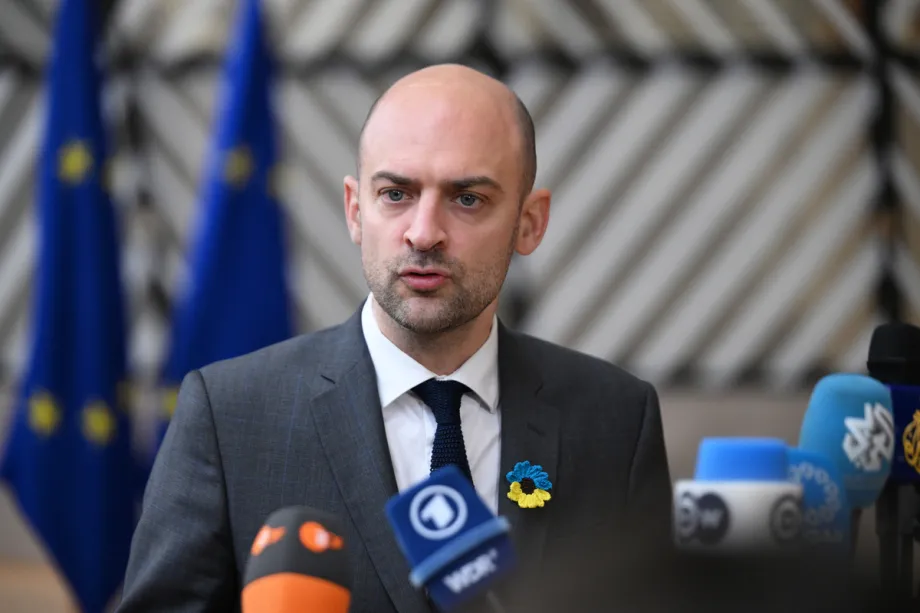
PARIS – As Israeli strikes continue to devastate Lebanon, displacing more than one million people and killing hundreds of civilians, France has added its voice to growing international calls for restraint. Foreign Minister Jean-Noel Barrot delivered a stark warning Friday, urging Israel to avoid “any ground operations, from any attacks on civilian infrastructure, and from any attacks on densely populated areas, particularly Beirut.”
Barrot’s remarks came after a meeting of G7 foreign ministers, where the group issued a statement calling for “an immediate halt to attacks against civilian populations and infrastructure.” The French minister emphasized that “there is no justification for deliberately targeting civilians in armed conflicts, nor for launching attacks against diplomatic facilities.”
The French appeal reflects growing alarm in European capitals over the expansion of the Middle East conflict, which has now engulfed Lebanon, Iraq, and the Gulf states since the US-Israeli offensive on Iran began on February 28.
The G7’s Position on Lebanon and Maritime Security
The G7 foreign ministers’ meeting produced a comprehensive statement addressing multiple dimensions of the regional crisis. Barrot said the group reaffirmed “the absolute necessity” of permanently restoring free and safe navigation in the Strait of Hormuz, in accordance with UN Security Council Resolution 2817 and the Law of the Sea.
The Strait of Hormuz, through which approximately 20 percent of the world’s oil normally passes, has been effectively disrupted since early March. Iran has asserted control over the waterway, with Tehran’s military declaring this week that the situation “will not return to the past.” The closure has driven up global energy prices and severely impacted oil-producing nations, including Iraq, which has seen its production slashed from 3.3 million barrels per day to just 900,000 barrels.
Barrot noted that the G7 ministers agreed “on the principle of a meeting of the G7 foreign ministers with those of the Gulf Cooperation Council” and would “continue our work to contribute to resolving the situation in the Strait of Hormuz.”
Support for Pakistan’s Mediation Role
In a significant development, Barrot voiced support for mediation efforts led by “Pakistan, as well as other countries like Egypt and Turkey,” expressing hope they would help reopen the Strait of Hormuz and de-escalate tensions. The endorsement from France, a permanent member of the UN Security Council, adds significant weight to Pakistan’s diplomatic push to broker talks between the United States and Iran.
Prime Minister Shehbaz Sharif formally offered Pakistan as a venue for US-Iran talks earlier this week—an offer that President Donald Trump reposted on his Truth Social platform, signaling Washington’s openness to the initiative. Pakistan’s military and civilian leadership have been engaged in intensive backchannel communications with both Tehran and Washington, positioning Islamabad as a potential neutral ground for negotiations.
The French foreign minister’s explicit mention of Pakistan’s mediation role suggests that Islamabad’s diplomatic efforts are gaining traction among key international players, even as the conflict continues to rage.
France’s Broader Concerns
Barrot underlined that France “denounces and mobilizes against violations of international law and international humanitarian law” in multiple conflict zones, citing Ukraine, Gaza, Lebanon, Sudan, Syria, Iraq, Iran, and Afghanistan. The sweeping reference reflects France’s consistent position that international legal norms must be respected regardless of the parties involved.
Addressing Lebanon specifically, Barrot said “the gravity of the regional situation reinforces the need to preserve Lebanon’s stability, support its legitimate institutions, protect civilians, and guarantee the full restoration of its sovereignty.” The statement implicitly criticizes the expanding Israeli military operations that have destabilized Lebanon, killing at least 121 children and displacing more than 370,000 children—an average of 19,000 children displaced daily over the past three weeks, according to UNICEF.
Barrot also addressed Russia’s role in the region, rejecting Moscow’s claims to be a defender of international law. “No, Russia does not defend international law, neither in Iran, nor in Ukraine, nor anywhere else,” he said.
US Objectives and G7 Coordination
On US policy, Barrot declined to speak for Secretary of State Marco Rubio but noted that Washington’s stated objective is “to neutralize Iran’s ballistic missile capabilities.” The White House has warned that President Trump is prepared to “unleash hell” on Iran if Tehran fails to accept the “reality of the current moment,” even as talks continue through backchannels.
Barrot noted that the G7 meeting required extensive preparation, with foreign ministry teams working “very actively” with partners, including Saudi Arabia, India, Brazil, and South Korea, to ensure the gathering would deliver “analysis, diagnosis, but also decision-making and declarations.”
The Humanitarian Crisis in Lebanon
The French appeal comes as the humanitarian situation in Lebanon reaches catastrophic proportions. UNICEF reported that an average of 19,000 children have been displaced daily over the past three weeks, with more than 370,000 children forced from their homes. At least 121 children have been killed and 395 injured in the Israeli strikes.
More than 135,000 displaced people are sheltering in over 660 sites across Lebanon, many overcrowded and unsafe. Water systems have been damaged, and more than 435 schools have been repurposed as shelters—disrupting education for more than 115,000 students. The UN has warned of severe psychological consequences for children caught in repeated cycles of violence.
The destruction of key bridges in southern Lebanon has cut off entire districts, isolating more than 150,000 people and severely limiting humanitarian access. The International Federation of Red Cross and Red Crescent Societies has reported that one volunteer has been killed and several others injured during ambulance missions.
Israel’s Multi-Front War
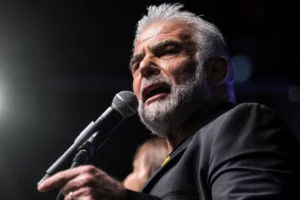
France’s call for restraint comes as Israel faces growing criticism over its military strategy. Opposition leader Yair Lapid warned Thursday that the government is “sending the army into a multi-front war without a strategy, without sufficient resources, and with too few soldiers.” The warning followed a cabinet briefing by army chief of staff Eyal Zamir, who reportedly raised “10 red flags” about the IDF’s capacity to sustain its current operations.
The IDF has been stretched thin by simultaneous operations against Iran, Hezbollah in Lebanon, Hamas in Gaza, and militant groups in the West Bank. Lapid called for an end to ultra-Orthodox draft exemptions, arguing that the manpower shortages make the exemptions untenable.
Analysis: A Critical Moment for Diplomacy
France’s urgent call for Israel to avoid ground operations and civilian attacks in Lebanon, coupled with G7 support for mediation efforts, reflects a growing international consensus that the conflict must be contained before it spirals further out of control.
The endorsement of Pakistan’s mediation role is particularly significant. Islamabad has positioned itself as a key intermediary between Tehran and Washington, leveraging its unique relationships with both capitals. The French foreign minister’s explicit mention of Pakistan’s efforts suggests that the G7 sees Islamabad as a credible broker capable of facilitating the difficult conversations needed to de-escalate the crisis.
Yet the gap between diplomatic aspirations and battlefield realities remains vast. Israeli strikes continue to devastate Lebanon, Iran’s military has declared that the Strait of Hormuz “will not return to the past,” and the White House has warned that it is prepared to “unleash hell” if diplomacy fails.
For Lebanon, the stakes could not be higher. The country’s children are paying the highest price—19,000 displaced daily, their lives upended, their futures uncertain. France’s call for restraint is urgent, but whether it will be heeded depends on decisions made in capitals far from Beirut.
As the G7 ministers concluded their meeting, the message was clear: a path to peace exists, but only if all parties choose to take it. The coming days will test whether that path remains open or whether the region slides further into a war that no one can control.