Israel’s government is sending the military into a multi-front war without a coherent strategy, sufficient resources, or adequate troop numbers, opposition leader Yair Lapid warned Thursday, citing a stark assessment delivered by the army chief of staff to the cabinet. The warning comes as Israel’s military operations expand across the region, with the country engaged in simultaneous conflicts against Iran, Hezbollah in Lebanon, and militant groups in Gaza and the West Bank.
TEL AVIV – In a scathing critique of Prime Minister Benjamin Netanyahu’s war cabinet, opposition leader Yair Lapid accused the government of leading the country toward a serious security crisis without the necessary preparations to sustain a multi-front conflict. His remarks followed a Wednesday cabinet briefing by Israeli army chief of staff Eyal Zamir, who reportedly raised “10 red flags” warning that the Israel Defense Forces (IDF) could “collapse into itself” under the current strains.
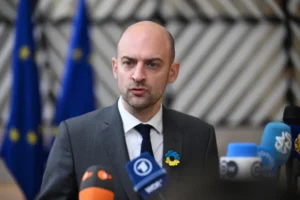
“The chief of staff laid out before the cabinet a whole series of threats, most of which cannot be detailed on camera, but the bottom line is this: the government is sending the army into a multi-front war without a strategy, without sufficient resources, and with too few soldiers,” Lapid said during a news conference, as reported by the Times of Israel.
Lapid emphasized that Netanyahu and his cabinet would not be able to evade responsibility this time. “This time, the government will not be able to say, ‘I didn’t know,'” he argued. “This is the chief of staff they appointed, and they will not be able to politicize him and shift the blame onto him.”
The Chief of Staff’s Red Flags
Lapid’s warnings draw on the assessment delivered by Zamir, who was appointed chief of staff after the previous military leadership stepped down amid criticism of the government’s handling of the conflict. According to Lapid, Zamir’s cabinet briefing laid out a “whole series of threats” that paint a concerning picture of the IDF’s ability to sustain its current operational tempo.
While the specifics of the chief of staff’s warnings were not made public, Lapid’s characterization—that the IDF is at risk of “collapsing into itself”—suggests deep concerns about troop shortages, equipment readiness, and the strategic coherence of Israel’s military operations.
The opposition leader’s warnings come as Israel finds itself engaged on multiple fronts. Since the US-Israeli joint offensive on Iran began on February 28, Israel has conducted extensive airstrikes against Iranian targets, while also maintaining operations against Hezbollah in Lebanon, Hamas in Gaza, and militant groups in the West Bank. The expanding scope of operations has stretched the IDF thin, with reservists called up for extended duty and active-duty units rotated between fronts.
Ultra-Orthodox Draft Exemptions Under Scrutiny
Lapid directed particular criticism at the government’s policy of exempting ultra-Orthodox (Haredi) Jews from military service—a long-standing political arrangement that has become increasingly contentious as the IDF’s manpower needs grow. He called for an immediate end to “all funding to ultra-Orthodox draft evaders” and urged the government to “send the military police after deserters, and draft the ultra-Orthodox without hesitation.”
The issue of Haredi draft exemptions has been a political flashpoint in Israel for decades, with religious parties in Netanyahu’s coalition insisting on maintaining exemptions for yeshiva students. As the IDF faces mounting manpower pressures from the multi-front war, critics argue that the exemptions are no longer tenable and represent a failure of the government to equitably distribute the burden of military service.
Lapid’s call to draft the ultra-Orthodox reflects a growing consensus among secular and nationalist Israelis that the exemptions must end. However, any move to compel Haredi military service would likely threaten the stability of Netanyahu’s coalition, which relies on the support of ultra-Orthodox parties.
A Multi-Front War Without Strategy
Lapid’s accusation that the government lacks a coherent strategy for the multi-front war cuts to the heart of the political debate in Israel. While the government has emphasized its determination to degrade Iran’s military capabilities and restore security to the northern border, critics argue that there is no clear plan for achieving these objectives or for ending the conflict.
The war’s expansion to multiple fronts has raised questions about Israel’s strategic objectives. Operations against Hezbollah in Lebanon have intensified in recent weeks, with Israeli strikes causing widespread displacement and civilian casualties. Meanwhile, the conflict with Iran shows no signs of resolution, with Tehran retaliating with waves of drone and missile strikes targeting Israel and US assets in the region.
For Lapid and other opposition figures, the government’s approach amounts to “cowardice”—a failure to make the difficult political decisions necessary to either escalate decisively or negotiate a resolution. “Stop its cowardice,” Lapid urged the government, calling for immediate action on the military and political fronts.
Regional Context: The Expanding Conflict
Lapid’s warnings come as the regional conflict continues to expand. The US and Israel launched their joint offensive on Iran on February 28, killing more than 1,340 people, including former Supreme Leader Ayatollah Ali Khamenei. Iran has retaliated with waves of drone and missile strikes targeting Israel, Jordan, Iraq, and Gulf countries hosting US military assets, causing casualties and infrastructure damage while disrupting global markets and aviation.
In Lebanon, Israeli strikes have displaced more than one million people—approximately 20 percent of the country’s population—including an average of 19,000 children displaced daily, according to UNICEF. At least 121 children have been killed and 395 injured in Lebanon since the escalation began.
Iraq’s oil sector has also been severely impacted, with production at Basra Oil Company slashed from 3.3 million barrels per day to just 900,000 barrels amid the closure of the Strait of Hormuz.
Political Fallout in Israel
The growing criticism of the government’s war management suggests that political pressure is mounting on Netanyahu. Lapid’s public warning, coming after the chief of staff’s reported red flags, could signal a turning point in Israeli public opinion, which has largely supported the military campaign but may be growing weary of the conflict’s duration and cost.
The government has attempted to frame the multi-front war as a necessary response to existential threats, but Lapid’s accusations of strategic failure strike at the credibility of the war cabinet. If the IDF’s manpower and resource constraints become more visible, public support could erode further.
Analysis: Israel’s Strategic Crossroads
Yair Lapid’s warnings about the IDF’s capacity to sustain a multi-front war without adequate resources or strategy highlight the growing strains on Israel’s military and political system.
For the IDF, the challenge is both operational and structural. Operationally, the simultaneous demands of strikes on Iran, operations in Lebanon, and ongoing security duties in Gaza and the West Bank have stretched the military to its limits. Structurally, the long-standing exemptions for ultra-Orthodox conscripts have created a manpower shortage that becomes more acute with each new front.
For Netanyahu’s government, the political implications are significant. Lapid’s public warning, based on the chief of staff’s cabinet briefing, suggests that even the military leadership is signaling deep concerns about sustainability. The prime minister faces a difficult choice: either escalate further to try to achieve a decisive victory, or negotiate a resolution that could be seen as a political setback.
The international dimension adds another layer of complexity. The United States, Israel’s primary ally, has its own strategic objectives and constraints. While the Trump administration has supported Israel’s military campaign, the White House has also engaged in backchannel communications with Iran and expressed openness to Pakistan’s offer to host peace talks.
For Israelis, the coming weeks will test whether the government can articulate a coherent strategy for ending the multi-front war or whether Lapid’s warnings will prove prophetic. The children of Lebanon, the displaced families of Gaza, and the soldiers on Israel’s front lines are all waiting for answers that, so far, have not been forthcoming.