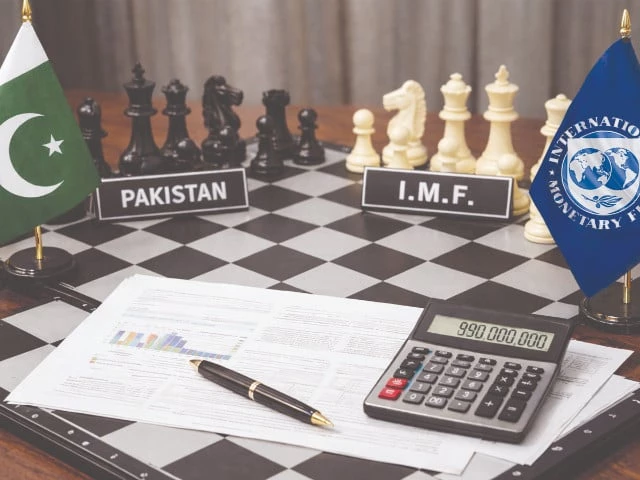
The International Monetary Fund (IMF) on Saturday announced a staff-level agreement with Pakistan for the release of approximately $1.2 billion under two loan tranches, while issuing a stark warning that the ongoing Middle East conflict could cloud the country’s economic outlook by pressuring growth, inflation, and external sector stability. The Fund said it reached the agreement only after seeking fresh assurances that the government would strictly adhere to pre-war fiscal targets and that the central bank would raise interest rates if inflation exceeds the target range.
ISLAMABAD – In a development that secures critical external financing for Pakistan’s struggling economy, the IMF has reached a staff-level agreement with Pakistani authorities on the third review under the Extended Fund Facility (EFF) and the second review under the Resilience and Sustainability Facility (RSF). The agreement, announced by IMF Mission Chief to Pakistan Iva Petrova, will unlock approximately $1 billion under the EFF and $210 million under the RSF upon approval by the IMF Executive Board, bringing total disbursements under the two arrangements to approximately $4.5 billion.
However, the Fund’s assessment of Pakistan’s economic trajectory diverges sharply from projections by the country’s Ministry of Finance. While Pakistani officials have maintained that the Middle East war would have no major economic implications, the IMF warned that “the conflict in the Middle East casts a cloud over the outlook as volatile energy prices and tighter global financial conditions risk putting upward pressure on inflation and weigh on growth and the current account.”
No Relaxation in Fiscal Targets
Despite the challenging external environment created by the regional war, the IMF did not ease the pre-war primary budget surplus target of 1.6% of GDP. The Fund maintained this stringent target even as the State Bank of Pakistan had previously indicated the goal might be difficult to achieve due to weak tax collection performance by the Federal Board of Revenue (FBR).
Petrova said authorities remained committed to ensuring a sustainable fiscal position and reducing the still high public debt burden over the medium term. “Efforts are ongoing to meeting the FY26 budget primary surplus of 1.6% of GDP and to target an underlying primary balance of 2% of GDP in FY27, supported by measures to broaden the tax base and strengthen expenditure discipline,” she said.
The IMF also maintained stringent fiscal targets for the next financial year, signaling that the Fund expects Pakistan to continue its fiscal consolidation efforts despite the economic pressures arising from the conflict.
Energy Price Subsidies and Circular Debt
The IMF reiterated its long-standing position on energy sector viability, warning that Pakistan must prevent a recurrence of circular debt—the accumulation of unpaid bills in the power sector that has historically required government bailouts.
“It is critical that sustainability is maintained through timely tariff adjustments that ensure cost recovery,” Petrova said, adding that “energy price subsidies should be avoided due to their high fiscal cost and distortionary effects.”
This position comes at a time when the government has already provided Rs69 billion in petrol and diesel subsidies over the past two weeks and is rolling out a mobile app-based targeted subsidy system for two- and three-wheeler owners. The IMF’s warning suggests that the Fund will be closely monitoring any expansion of subsidy programs that could undermine fiscal targets.
The IMF also pointed to efforts to enhance expenditure sharing between the federal and provincial governments, as Islamabad has requested provinces to share the burden of fuel subsidies, which had already risen to Rs125 billion by April 3. “Efforts are underway to enhance fiscal burden sharing between federal and provincial governments and to strengthen public financial management,” Petrova said.
Monetary Policy and Exchange Rate Flexibility
The IMF emphasized that the State Bank of Pakistan remains committed to maintaining inflation within its target range and stands ready to raise interest rates if price pressures intensify, including due to passthrough effects from global food and fuel price volatility. Pakistan has set an inflation target of 7.5%, which the Finance Ministry believes remains achievable despite fuel price shocks—a view the IMF appears to treat with more caution.
The Fund also stressed that exchange rate flexibility should continue to serve as the primary shock absorber against spillovers from the Middle East conflict. This position suggests that the IMF expects the rupee to adjust to external pressures rather than being supported through aggressive intervention that could deplete foreign exchange reserves.
Divergent Outlooks: IMF vs. Finance Ministry
The contrast between the IMF’s assessment and Pakistan’s official projections is striking. While Pakistan’s Finance Ministry has projected inflation would rise only marginally by 0.3%, remain within the target, economic growth would stay around 4%, and the current account deficit would remain within $2 billion despite global oil price shocks, the IMF warned of “volatile energy prices and tighter global financial conditions” that risk putting “upward pressure on inflation” and weighing on “growth and the current account.”
This divergence underscores the uncertainty surrounding Pakistan’s economic trajectory as the Middle East conflict enters its fifth week with no end in sight. The closure of the Strait of Hormuz has driven global oil prices above $100 a barrel, and Pakistan’s Sensitive Price Indicator (SPI) has already jumped 8.24% year-on-year, driven by surging food and energy prices.
Structural Reforms and Tax Collection
The IMF highlighted ongoing structural reforms, saying progress on state-owned enterprise reforms and the privatization agenda remains central to reducing the state’s economic footprint and improving service delivery. Authorities are also strengthening institutional capacity and intensifying anti-corruption efforts to promote inclusive growth and ensure a level playing field for businesses and investors.
Petrova noted that revenue mobilization efforts were beginning to yield results under the FBR’s transformation plan, including stronger taxpayer audits, expanded digital invoicing and production monitoring, and improved internal governance. However, the IMF is now also focusing on weaknesses in the FBR’s internal governance, signaling concerns that government efforts to strengthen the tax machinery have yet to produce fully effective results.
Social Protection for the Vulnerable
To shield vulnerable households from volatile food and fuel prices, authorities are strengthening the Benazir Income Support Programme (BISP) through inflation-adjusted cash transfers, expanded beneficiary coverage, and improved payment systems. The IMF’s emphasis on social protection reflects the Fund’s recognition that the structural adjustment measures it requires must be accompanied by mechanisms to protect the poorest segments of society.
Regional Context: The War’s Economic Spillover
The IMF’s warning about the Middle East conflict’s impact on Pakistan’s economy comes as the regional war continues to escalate. US-Israeli strikes on Iran, which began on February 28, have killed more than 1,340 people, and Iran has retaliated with drone and missile strikes targeting US assets across the region. The closure of the Strait of Hormuz has disrupted global oil supplies, driving up prices and affecting energy-importing countries like Pakistan.
Iraq’s oil production has been slashed from 3.3 million barrels per day to just 900,000 barrels, and in Lebanon, Israeli strikes have displaced more than one million people, including an average of 19,000 children displaced daily. The US has reported billions of dollars in military equipment losses, and domestic drone incursions have been detected over Barksdale Air Force Base in Louisiana.
Pakistan has positioned itself as a key mediator in the conflict, with Prime Minister Shehbaz Sharif formally offering to host US-Iran talks in Islamabad—an offer that President Donald Trump reposted on his Truth Social platform. France and the G7 have expressed support for Pakistan’s mediation role.
Analysis: A Precarious Balance
The IMF’s staff-level agreement with Pakistan represents a critical infusion of external financing at a time when the country’s foreign exchange reserves are under pressure from higher import costs and reduced export competitiveness. Yet the terms of the agreement—and the Fund’s stark warning about the Middle East conflict’s impact—highlight the precariousness of Pakistan’s economic position.
For the government, the agreement provides breathing room. The $1.2 billion disbursement will help stabilize reserves and signal to other multilateral and bilateral creditors that Pakistan remains committed to its reform program. The fact that the IMF reached the agreement despite the challenging external environment suggests that the Fund is willing to work with Pakistan through the current crisis.
Yet the conditions attached to the agreement are stringent. The maintenance of the 1.6% primary budget surplus target, despite the Finance Ministry’s own indications that tax collection has lagged, will require difficult fiscal decisions. The IMF’s warning about energy subsidies suggests that the government’s efforts to provide relief to consumers may be constrained. And the Fund’s emphasis on exchange rate flexibility implies that the rupee may face further downward pressure as external conditions deteriorate.
The divergence between the IMF’s outlook and the Finance Ministry’s projections is particularly concerning. While Pakistani officials have sought to downplay the economic impact of the Middle East war, the Fund’s analysis suggests that the spillover effects are already being felt—and could worsen. The 8.24% year-on-year increase in the SPI for the week ended March 26 suggests that inflationary pressures are already building.
For ordinary Pakistanis, the agreement offers little immediate relief. The IMF’s insistence on fiscal discipline and tariff adjustments means that the cost of energy and other essential goods is likely to remain high. The government’s targeted subsidy programs may provide some support for the most vulnerable, but the broader population will continue to feel the squeeze of rising prices.
As the IMF Executive Board prepares to consider the agreement, the focus will be on whether Pakistan can maintain the fiscal discipline the Fund demands while navigating the economic fallout of a regional war that shows no signs of ending. The agreement provides a lifeline—but the journey ahead remains treacherous.