Interior Minister Mohsin Naqvi has directed the Federal Investigation Agency (FIA) to launch a comprehensive crackdown against corruption in government institutions, signaling a renewed push for accountability as Pakistan navigates a complex economic landscape. During a visit to the FIA Headquarters in Islamabad, Naqvi emphasized that in line with Prime Minister Shehbaz Sharif’s vision, a “zero-tolerance policy against corruption in government departments must be adopted.”
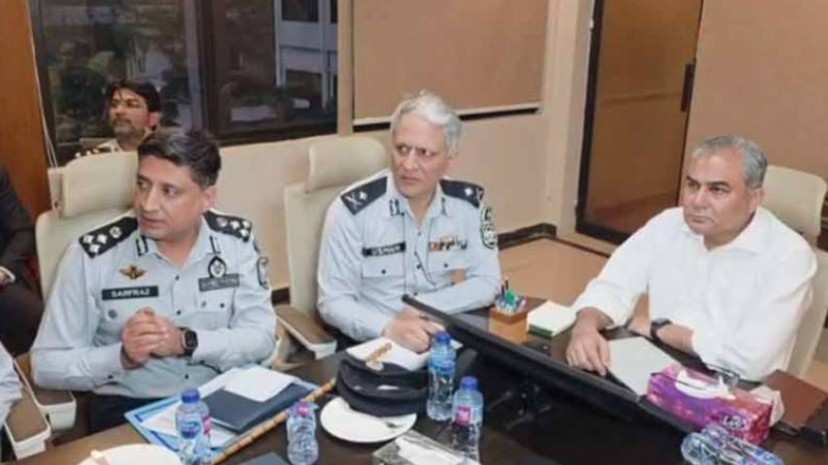
ISLAMABAD – In a move aimed at strengthening governance and restoring public confidence in state institutions, Interior Minister Mohsin Naqvi visited the Federal Investigation Agency (FIA) Headquarters on Saturday to review infrastructure improvement projects and assess progress on ongoing reforms. The minister issued clear directives for the agency to intensify its efforts against corruption across government departments.
Naqvi instructed FIA officials to ensure the early completion of ongoing construction activities at the headquarters and set a December 2026 deadline for completing the reform process within the agency. The interior minister emphasized that these institutional improvements are essential for enabling the FIA to function as a “frontline force against all forms of organized crime.”
Zero Tolerance for Corruption
Speaking to officials during the visit, Naqvi stressed that the government’s commitment to rooting out corruption is unwavering. “In line with the Prime Minister’s vision, a zero-tolerance policy against corruption in government departments must be adopted,” he said, underscoring that accountability will apply across all levels of government.
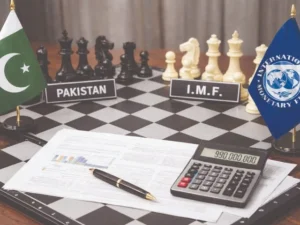
The directive comes at a time when Pakistan is facing significant economic pressures, including an 8.24% year-on-year increase in short-term inflation, surging energy prices driven by the Middle East conflict, and stringent fiscal targets under the IMF’s recently announced $1.2 billion staff-level agreement. The government’s ability to maintain public trust while implementing difficult economic measures depends in part on demonstrating progress in governance and anti-corruption efforts.
FIA Reform and Modernization
The interior minister reviewed the infrastructure improvement project at the FIA Headquarters and assessed its progress, directing officials to expedite remaining construction activities. He assured the agency of full support at every level as it works to complete its reform agenda by the end of the year.
FIA Director General Dr. Usman Anwar briefed the minister in detail about the institution’s current operations, ongoing reforms, and future plans. The briefing covered the agency’s capacity-building efforts, technological upgrades, and strategies for enhancing its effectiveness in investigating complex financial crimes, human trafficking, and other offenses.
Monitoring Overseas Job Advertisements
In a significant directive aimed at protecting Pakistani workers seeking employment abroad, Naqvi ordered that all overseas job advertisements be monitored online. He stressed the importance of public awareness campaigns to help citizens identify misleading advertisements that could lead to fraudulent employment schemes.
The instruction reflects growing concerns about the exploitation of Pakistani workers by unscrupulous recruitment agents. With millions of Pakistanis employed overseas, particularly in Gulf countries, the protection of their rights and prevention of fraud has become an increasingly important priority for the government.
Organized Crime and Institutional Capacity
Naqvi emphasized that the FIA must be organized and equipped to serve as a frontline force against all forms of organized crime. The directive signals an expectation that the agency will expand its focus beyond traditional areas of investigation to address emerging threats, including cybercrime, money laundering, and transnational criminal networks.
The minister’s commitment to providing full support to the FIA at every level suggests that the government is prepared to allocate resources and political backing to enable the agency to fulfill its expanded mandate.
Broader Context: Governance and Economic Challenges
The interior minister’s anti-corruption directive comes at a critical juncture for Pakistan. The country is grappling with the economic spillover effects of the Middle East conflict, which has driven global oil prices above $100 a barrel and contributed to rising inflation. The IMF’s recent staff-level agreement, while providing $1.2 billion in critical external financing, has also imposed stringent fiscal targets that will require difficult policy decisions.
Against this backdrop, the government’s ability to demonstrate progress on governance and anti-corruption is essential for maintaining public support for economic reforms. The FIA crackdown represents one element of a broader strategy to strengthen institutional accountability and restore confidence in state institutions.
Coordination with Other Anti-Corruption Bodies
While the FIA’s mandate includes investigating specific categories of financial crimes and transnational offenses, Pakistan’s anti-corruption landscape also includes the National Accountability Bureau (NAB) and other provincial accountability bodies. The interior minister’s directive to the FIA suggests that the government is seeking to activate all available institutional mechanisms to address corruption.
Analysts note that effective anti-corruption efforts require not only high-profile investigations but also systemic reforms to reduce opportunities for graft. The FIA’s ongoing reform process, which Naqvi has set to be completed by December, is intended to strengthen the agency’s institutional capacity to detect and investigate corruption cases.
Public Expectations
For ordinary Pakistanis, the announcement of a crackdown on corruption carries significant weight. Public surveys consistently identify corruption as one of the most pressing issues facing the country, and citizens have expressed frustration with the perceived lack of accountability for officials involved in graft.
The government’s ability to translate the interior minister’s directive into concrete results—including investigations, prosecutions, and convictions—will determine whether the crackdown meets public expectations. The FIA’s reform process and the timeline established by Naqvi suggest an awareness that institutional strengthening is essential for sustained anti-corruption efforts.
A Governance Imperative
Interior Minister Mohsin Naqvi’s directive for a crackdown on corruption in government departments reflects the government’s recognition that governance and economic stability are inextricably linked.
As Pakistan implements the IMF’s fiscal targets—including maintaining a 1.6% primary budget surplus while energy prices surge and inflation accelerates—the government’s credibility with both international creditors and domestic stakeholders will depend in part on its ability to demonstrate progress on governance. Anti-corruption efforts signal that the burden of adjustment is being shared and that public resources are being protected from misuse.
The timing of the directive is also significant. With the IMF’s staff-level agreement announced just yesterday and the government seeking to reassure markets and international partners of its commitment to reform, the anti-corruption push serves as a complement to the fiscal consolidation measures required by the Fund.
For the FIA, the directive represents both an opportunity and a challenge. The agency has been directed to function as a “frontline force against all forms of organized crime”—a mandate that will require significant capacity building and institutional development. The December timeline for completing the reform process sets a clear benchmark against which progress can be measured.
For the public, the announcement offers hope that the government is serious about addressing corruption. Whether that hope translates into sustained support for the government’s broader economic agenda will depend on whether the crackdown produces visible results. The interior minister has set expectations high; the challenge now is to deliver.