A senior Houthi official has signaled that the strategic Bab al-Mandeb Strait—a critical chokepoint connecting the Red Sea and the Gulf of Aden—could be closed as part of the ongoing military escalation between Iran, the US, and Israel. The warning marks a significant expansion of the conflict, with the Iran-backed Yemeni group announcing it has joined the war in coordination with Tehran and its regional allies.
SANAA – The Middle East conflict is widening. Mohammed Mansour, deputy information minister in the Houthi-run Yemeni government, told Al-Araby Television on Saturday that the group is now actively participating in the war alongside Iran, Hezbollah, and Iraqi militias. The announcement came after the Houthis launched missile strikes toward Israel—the first such attacks since the US-Israeli offensive on Iran began on February 28.
“We are in joint coordination with our brothers in Iran, Lebanon, and Iraq,” Mansour said, describing the alliance as “primarily aiming to support Palestine.” He added that the Houthis joined the conflict “to provide support to our brothers in Iran who are fighting epic battles.”
The Bab al-Mandeb: A New Front in the War
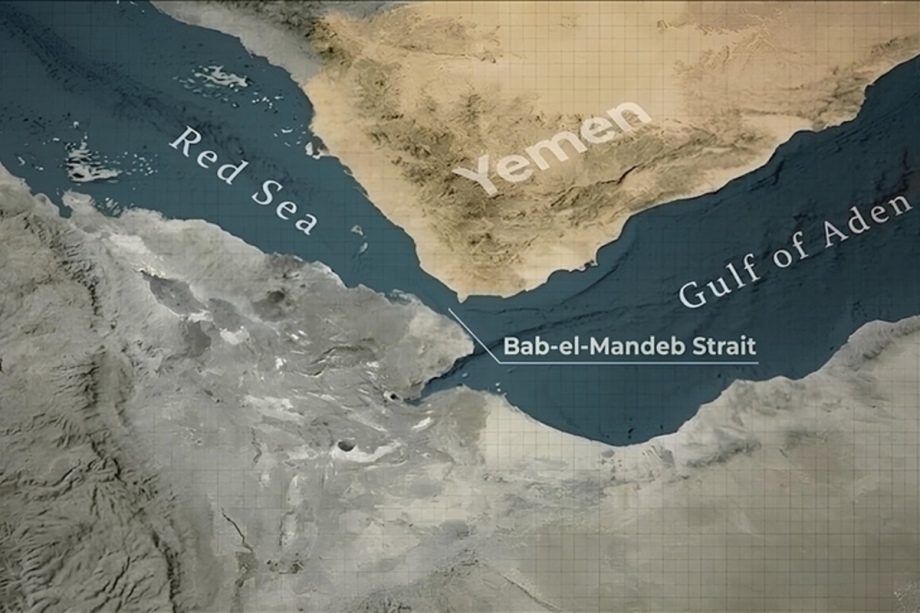
The Bab al-Mandeb Strait, a 20-mile-wide passage at the southern tip of the Red Sea, is one of the world’s most critical maritime chokepoints. Along with the Strait of Hormuz in the Gulf, it serves as a gateway for global energy shipments. Approximately 9 million barrels of oil pass through the strait daily, making it a vital artery for European, Asian, and Middle Eastern economies.
Mansour warned that the strait could become a target as the conflict escalates. “The Red Sea, the Gulf of Aden, and Bab al-Mandab will be among the options,” he said, referring to the Houthis’ toolkit for pressuring Israel and the US.
“We have extensive experience in naval and land operations, and our previous intervention to support Gaza was one of the important surprises for the world,” the Houthi official added.
A Coordinated Alliance
Mansour’s comments reveal the depth of coordination among Iran’s regional allies. He said Yemen “bears a moral, religious, and humanitarian responsibility toward Iran, Hezbollah, and Iraq’s Popular Mobilization Forces,” framing the alliance as a unified front in support of Palestine.
“Every step we take is carefully calculated to be effective and to increase the pressure on Israel and the US,” Mansour said. “The Yemeni leadership makes its decisions independently based on military and political assessments, taking into account that any step will be calculated and effective.”
Regarding the potential closure of the strait or attacks on passing ships, Mansour said the decision “depends on the Israeli and US escalation, and the American preparations for any ground movement.”
History of Houthi Maritime Operations
The Houthis have previously demonstrated their ability to disrupt Red Sea shipping. During the Gaza war that began in October 2023, the group launched dozens of missile and drone attacks on commercial vessels passing through the Bab al-Mandeb, forcing major shipping lines to reroute around Africa—a costly detour that added weeks to voyage times and drove up insurance premiums.
The group’s arsenal includes anti-ship ballistic missiles, cruise missiles, and a growing fleet of unmanned surface and aerial drones. Yemen’s strategic location at the mouth of the Red Sea gives the Houthis effective control over one of the world’s most important shipping lanes.
Regional Context: Expanding Conflict
The Houthi entry into the war marks a significant escalation in a conflict that has already drawn in multiple regional actors. Since February 28, the US and Israel have carried out an air offensive on Iran, killing more than 1,340 people, including then-Supreme Leader Ayatollah Ali Khamenei. Iran has retaliated with waves of drone and missile strikes targeting Israel and US assets in Gulf countries.
Hezbollah in Lebanon has been engaged in cross-border fighting with Israel, with Israeli strikes displacing more than one million people in Lebanon. Iraqi militias have launched attacks on US bases in Iraq and Syria. The US has deployed three aircraft carriers to the region and is preparing for potential ground operations.
The addition of the Houthis—with their proven ability to threaten Red Sea shipping—adds a new dimension to the conflict. Unlike Iran or Hezbollah, which face immediate retaliation from US and Israeli forces, the Houthis operate from a country already devastated by a decade of civil war, where US and allied military options are limited.
Global Economic Implications
The threat of Houthi action in the Bab al-Mandeb comes as global energy markets are already reeling from the closure of the Strait of Hormuz, where Iran has asserted control since early March. Together, the two chokepoints handle approximately 30 percent of the world’s seaborne oil trade.
A closure of Bab al-Mandeb would compound the disruptions already caused by the war. Oil prices, which have already surged above $100 a barrel, could spike further. Shipping costs would rise. Insurance premiums for vessels transiting the region would increase. European and Asian economies, which rely heavily on Middle Eastern energy supplies, would face significant economic pressure.
The International Energy Agency has warned that the world faces an energy crisis worse than both 1970s oil shocks combined. The addition of a second maritime chokepoint to the conflict would only deepen that crisis.
Diplomatic Efforts Continue
The Houthi warning comes as diplomatic efforts to end the conflict continue. Pakistan has positioned itself as a key mediator, hosting the foreign ministers of Saudi Arabia, Turkey, and Egypt over the weekend for consultations on de-escalation. China has expressed support for Pakistan’s mediation role.
But the entry of the Houthis into the conflict—and their threat to close Bab al-Mandeb—complicates those efforts. The group has shown little interest in diplomatic solutions in the past, viewing its maritime operations as leverage against Israel and its allies.
Analysis: A Strategic Opening
The Houthis’ decision to enter the war and their threat to close Bab al-Mandeb represent a strategic opening for Iran’s regional alliance. By activating the Yemeni front, Tehran forces the US and Israel to contend with yet another adversary, stretching their military resources and complicating any potential ground operations against Iran.
For the Houthis, the war offers an opportunity to demonstrate their value to Iran and to assert their role as a major regional player. The group has long sought to be taken seriously as a military power; participation in a war against the US and Israel burnishes that image.
For global energy markets, the threat is real. The Houthis have shown they can hit ships in the Red Sea. If they choose to escalate, they could effectively close the strait, at least temporarily. The cost would be borne by consumers worldwide, in the form of higher fuel prices and disrupted supply chains.
As the conflict enters its second month, the front lines are expanding. What began as a US-Israeli air campaign against Iran has become a regional war involving Yemen, Lebanon, Iraq, and the Gulf states. The Bab al-Mandeb is the newest front—but it may not be the last.