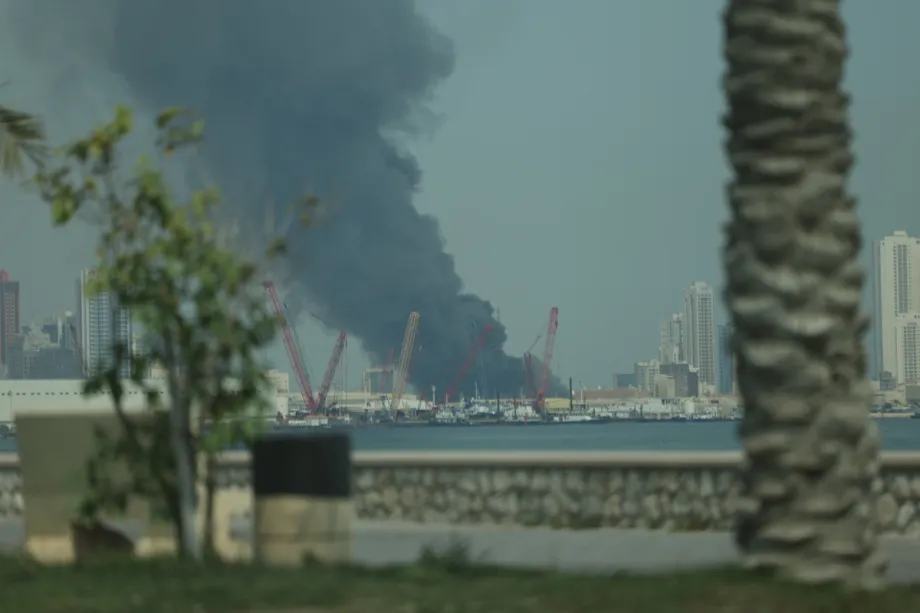
Bahrain’s air defenses have intercepted and destroyed 174 missiles and 391 drones targeting the kingdom since Iranian attacks began on February 28, the Bahrain Defense Force announced Sunday, revealing the scale of the threat faced by Gulf states as the US-Israeli war on Iran enters its second month.
MANAMA – In a detailed statement, the General Command of the Bahrain Defense Force said its air defense systems continue to confront successive waves of what it described as “terrorist Iranian attacks.” The announcement provides the first comprehensive accounting of the Iranian threat to one of the Gulf states hosting US military assets.
No details were given about casualties or damage resulting from the attacks that may have evaded interception, but the numbers released by Bahrain’s military underscore the intensity of the Iranian campaign against US allies in the Gulf.
A Region Under Fire
Since the US and Israel launched their joint offensive on Iran on February 28, Tehran has retaliated with waves of drone and missile strikes targeting Israel, Jordan, Iraq, and Gulf countries hosting US military assets. Bahrain, which hosts the US Navy’s Fifth Fleet at its naval base in Manama, has been a primary target.
The 174 missiles and 391 drones intercepted by Bahrain’s defenses represent a significant portion of the Iranian arsenal deployed against the kingdom. The numbers suggest that Iran has launched hundreds of projectiles at Bahrain alone, with the kingdom’s US-supplied Patriot and THAAD air defense systems working continuously to protect the country’s territory and critical infrastructure.
The Gulf’s Air Defense Network
Bahrain’s air defense capabilities are integrated into the broader US-led regional air defense architecture. The kingdom hosts the headquarters of the US Naval Forces Central Command (NAVCENT) and the Fifth Fleet, making it a critical hub for US military operations in the region.
The interception numbers released by Bahrain’s military demonstrate the effectiveness of these systems, which have been tested repeatedly since the conflict began. However, the scale of the attacks also reveals the intensity of Iranian retaliation, which has targeted not only Israel but also the Gulf states that host US military bases.
Regional Context
The entire region has been on high alert since February 28. The US-Israeli offensive on Iran has killed more than 1,340 people, including then-Supreme Leader Ayatollah Ali Khamenei. Iran has responded with sustained drone and missile campaigns, forcing Gulf states to activate their air defenses on a near-daily basis.
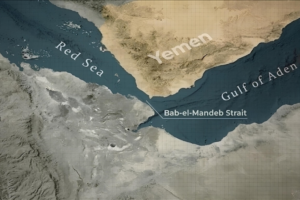
The conflict has also disrupted global energy markets. Iran has asserted control over the Strait of Hormuz, through which approximately 20 percent of the world’s oil passes, and has threatened to close the Bab al-Mandeb Strait as well. The Houthi group in Yemen, allied with Iran, has warned it may join the conflict and target Red Sea shipping.
Bahrain’s Vulnerability
Bahrain’s proximity to Iran—just across the Gulf—makes it particularly vulnerable to Iranian missile and drone attacks. The kingdom’s small size and concentration of critical infrastructure, including the US naval base, oil facilities, and population centers, make it a high-value target.
The interception numbers released by Bahrain’s military suggest that Iranian attacks have been sustained and significant. The 565 total projectiles intercepted—174 missiles and 391 drones—represent an average of more than 20 attacks per day since the conflict began.
US Military Presence
Bahrain has been a key US ally for decades, hosting the Fifth Fleet since 1948. The naval base in Manama serves as the command center for US naval operations in the Gulf, the Red Sea, and the waters around the Arabian Peninsula. The base has been a critical asset for US operations during the current conflict, including the deployment of additional naval assets to the region.
The US has significantly bolstered its military presence in the Gulf since February 28, deploying three aircraft carriers to the region—the USS Abraham Lincoln, the USS Gerald R Ford (currently undergoing repairs in Crete), and the USS George HW Bush, which departed Norfolk earlier this month. An amphibious assault vessel carrying thousands of expeditionary forces arrived in the region on March 27.
Diplomatic Efforts Continue
Despite the ongoing military exchanges, diplomatic efforts to end the conflict continue. Pakistan has positioned itself as a key mediator, hosting the foreign ministers of Saudi Arabia, Turkey, and Egypt over the weekend for consultations on de-escalation. China has expressed support for Pakistan’s mediation role.
However, the scale of Iranian attacks on Gulf states, as revealed by Bahrain’s military, suggests that Tehran is not prepared to cease its retaliation until its conditions for peace are met. Iran has outlined five conditions for ending the war, including a complete halt to US and Israeli actions, guarantees against future attacks, compensation for war damages, an end to fighting across all fronts, and recognition of Iranian sovereignty over the Strait of Hormuz.
The Hidden Toll
Bahrain’s announcement provides a rare window into the scale of the conflict that has been largely invisible to the outside world. While media attention has focused on the US-Israeli air campaign against Iran and Iran’s retaliation against Israel, the daily barrage of missiles and drones targeting Gulf states has continued largely unreported.
The numbers—174 missiles, 391 drones—reveal a sustained campaign that has tested the air defenses of US allies in the region. That Bahrain’s systems have successfully intercepted all of these projectiles is a testament to the effectiveness of US-supplied air defense technology. But the sheer volume of attacks also suggests that Iran retains a significant arsenal and the will to use it.
For the Gulf states caught between Iran and the US, the conflict presents an existential threat. Their populations, economies, and critical infrastructure are vulnerable to Iranian retaliation, and their air defenses are being consumed at a rate that may not be sustainable over the long term.
As the conflict enters its second month, with no ceasefire in sight, Bahrain’s announcement serves as a reminder of the costs being borne by America’s Gulf allies. The missiles and drones intercepted over Bahrain are not just numbers—they represent a country under siege, its defenses holding, but the future uncertain.