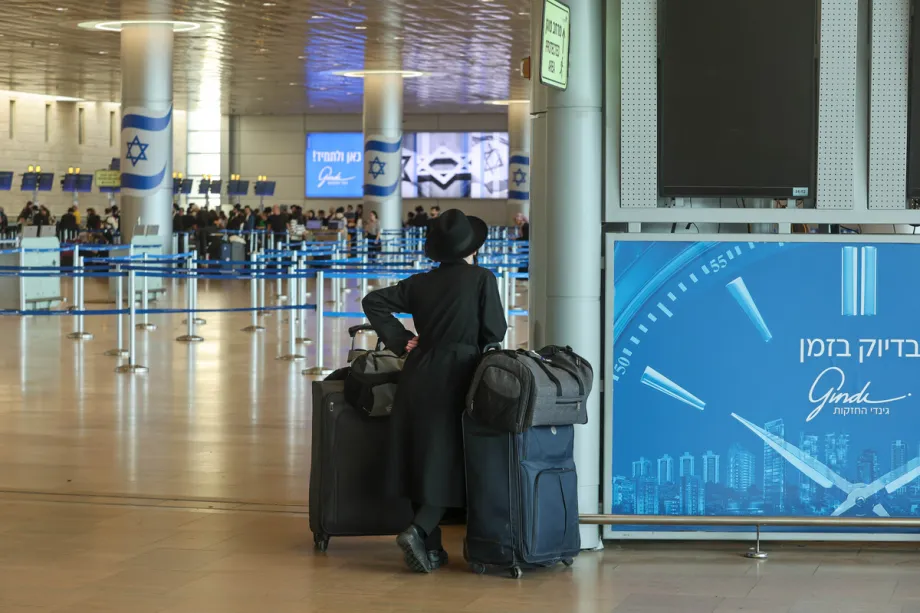
Hundreds of Israeli travelers were left stranded at King Hussein International Airport in Aqaba, southern Jordan, on Sunday after Jordanian authorities suspended flights operated by Israeli airline Arkia, according to Israeli Channel 12. The disruption marks the latest travel crisis in the region as the US-Israeli war on Iran continues to disrupt aviation and border crossings across the Middle East.
AQABA/AMMAN – Video aired by Israeli media showed scores of Israeli citizens waiting at the Aqaba airport terminal, their travel plans thrown into disarray by the sudden suspension of Arkia flights. There was no official comment from Jordanian authorities on the decision, which came without advance warning to passengers or the airline.
The suspension represents a significant setback for Arkia, Israel’s second-largest airline, which had announced last week that it would transfer most of its operations to airports in Jordan and Egypt after Israel closed Ben Gurion Airport in Tel Aviv amid ongoing Iranian missile and drone attacks.
A Regional Travel Crisis
Israel closed Ben Gurion Airport—the country’s main international gateway—following the outbreak of war with Iran on February 28, as Iranian retaliatory strikes targeted Israeli territory. The closure has forced Israeli airlines to seek alternative routes through neighboring countries to maintain international connectivity.
Arkia had planned to operate flights from Aqaba and Taba Airport in Egypt’s Sinai Peninsula, hoping to provide a lifeline for Israeli travelers stranded by the closure of their home airport. But Jordan’s decision to suspend the airline’s operations has left those plans in limbo.
According to Israeli aviation officials cited by the daily Yedioth Ahronoth, Arkia will likely be forced to cancel all its flights through Jordan. The airline said in a statement Sunday that part of its operations would be transferred to Taba Airport in Egypt, “according to operational capacity and required permits.”
Stranded Travelers
The video footage from Aqaba showed hundreds of Israelis waiting at the airport, some with luggage, uncertain of how they would return to Israel or continue their journeys. The suspension came without prior notice, leaving passengers scrambling for alternative arrangements.
According to Israeli data, 29,429 people left Israel by land, air, and sea by March 13 following the outbreak of war with Iran. Many of those travelers may have been expecting to return through Aqaba, only to find their planned route blocked.
The Broader Conflict
The travel disruptions are the latest consequence of the US-Israeli war on Iran, now in its second month. Since February 28, the US and Israel have maintained airstrikes on Iran, killing more than 1,340 people, according to Iranian figures, including then-Supreme Leader Ayatollah Ali Khamenei.
Iran has retaliated with waves of drone and missile strikes targeting Israel, as well as Jordan, Iraq, and Gulf countries hosting US military assets. The attacks have caused casualties and damaged infrastructure while disrupting global markets and aviation.
The closure of Ben Gurion Airport was ordered to protect civilian aviation from the threat of Iranian missiles and drones. But the ripple effects of that decision have now spread to neighboring countries, affecting travel across the region.
Jordan’s Position
Jordan has found itself caught in the middle of the escalating conflict. The kingdom hosts US military assets and has been targeted by Iranian retaliatory strikes. It also shares a border with Israel and has historically served as a transit point for Israeli travelers.
The suspension of Arkia flights may reflect Jordan’s desire to avoid becoming a staging ground for Israeli aviation operations that could draw Iranian retaliation. With Iranian drones and missiles already targeting Jordanian territory, Amman has reason to be cautious about hosting Israeli flights.
There was no official comment from Jordanian authorities on the suspension, leaving the reasons for the decision unclear.
Impact on Travelers
For the hundreds of Israelis stranded at Aqaba, the immediate concern is finding a way home. The closure of Ben Gurion Airport has already limited options, and the suspension of Arkia flights from Jordan removes a critical alternative.
Arkia’s plan to shift operations to Taba Airport in Egypt may provide some relief, but the Sinai airport’s capacity is limited, and the necessary permits may take time to arrange. In the meantime, travelers may be forced to seek alternative routes through other countries or wait until the situation is resolved.
A Conflict Without Borders
The stranding of hundreds of Israelis at Aqaba Airport is a vivid illustration of how the Iran-US-Israel war has disrupted life across the Middle East. What began as an air campaign against Iranian military and nuclear targets has expanded into a regional conflict that affects travel, trade, and daily life in countries far from the front lines.
Jordan’s decision to suspend Arkia flights—whether motivated by security concerns, political considerations, or operational issues—demonstrates the cascading effects of the conflict. A closure ordered in Tel Aviv leads to stranded passengers in Aqaba, and an airline’s contingency plan is upended by a neighboring country’s decision.
For the stranded travelers, the immediate concern is practical: how to get home. But for the region, the broader lesson is that this conflict will continue to disrupt lives in unpredictable ways until it ends.
As diplomatic efforts continue—with Pakistan hosting the foreign ministers of Saudi Arabia, Turkey, and Egypt over the weekend to discuss de-escalation—the travelers waiting at Aqaba Airport are a reminder that the costs of war are measured not only in casualties but in the daily disruptions that ripple across borders.