French Foreign Minister Jean-Noel Barrot has condemned the killing of three journalists in an Israeli airstrike in southern Lebanon, warning that deliberately targeting media personnel constitutes a “blatant violation of international law.” The strike, which occurred Saturday near the city of Jezzine, has drawn international outrage as the conflict between Israel and Iran-backed Hezbollah continues to escalate.
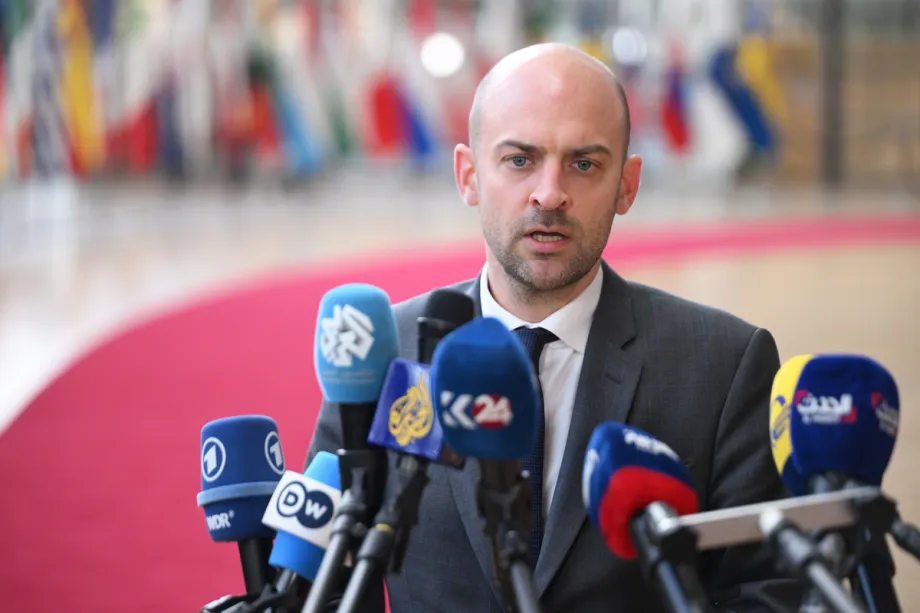
PARIS/BEIRUT – Speaking to broadcaster France 3, French Foreign Minister Jean-Noel Barrot delivered a sharp rebuke of the attack that killed three journalists in southern Lebanon. The strike targeted a vehicle the journalists were traveling in near Jezzine, according to an Anadolu correspondent.
“Journalists must never be targeted in war zones, including if they have ties to parties in the conflict,” Barrot said. “If it is indeed confirmed that the journalists in question were deliberately targeted by the Israeli army, then this is extremely serious and a blatant violation of international law.”
The Israeli army admitted to killing Ali Shuaib, one of the journalists, but did not comment on the deaths of the other two media personnel. The incident marks the latest in a series of attacks on journalists covering the expanding Middle East conflict.
Press Freedom Under Fire
The killings add to a growing toll of media workers who have lost their lives covering the regional war. Since the US-Israeli offensive on Iran began on February 28—and as Israeli strikes on Lebanon have intensified—journalists have faced increasing dangers while documenting the conflict.
International press freedom organizations have repeatedly warned that journalists are being targeted in violation of international humanitarian law, which protects civilians and civilian infrastructure, including media personnel, during armed conflict.
Barrot’s condemnation reflects growing international concern over the safety of journalists in the region. France, which has historically positioned itself as a defender of press freedom, called for a thorough investigation into the circumstances of the killings.
The Israeli Response
In a statement, the Israeli army acknowledged the killing of Ali Shuaib but did not address the deaths of the other two journalists. The military has not provided details on whether the strike was intended to target media personnel or whether it was aimed at other targets.
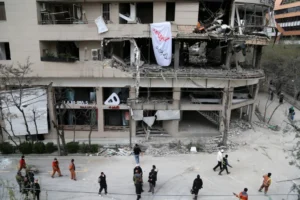
The Jezzine strike occurred in southern Lebanon, an area that has seen intense Israeli bombardment as the conflict with Hezbollah expands. The region has been a focal point of cross-border fighting since the outbreak of the wider war.
Broader Conflict Context
The journalist killings come amid a widening regional conflict that has drawn in multiple actors. Since February 28, the US and Israel have conducted airstrikes on Iran, killing more than 1,340 people, including former Supreme Leader Ayatollah Ali Khamenei. Iran has retaliated with drone and missile strikes targeting Israel and Gulf states hosting US military assets.
Hezbollah, the Iran-backed Lebanese militant group, has been engaged in cross-border fighting with Israel. Israeli strikes on Lebanon have displaced more than one million people, including an average of 19,000 children displaced daily, according to UNICEF.
The Jezzine strike represents the latest escalation in this front, with journalists now among the casualties.
International Law and Journalist Protection
Under international humanitarian law, journalists are considered civilians and are entitled to protection from attack unless they are directly participating in hostilities. Deliberately targeting journalists is considered a war crime.
Barrot’s statement that targeting journalists “including if they have ties to parties in the conflict” remains a violation reflects this legal principle. Even if a journalist has connections to armed groups, their status as a non-combatant—and the protection they are afforded—does not automatically cease.
Calls for Accountability
Human rights organizations have called for an independent investigation into the killings. The International Federation of Journalists (IFJ) and other press freedom groups have documented dozens of journalist deaths in the region since the conflict began, with many occurring in Gaza, Lebanon, and the West Bank.
French officials have indicated they will raise the issue in international forums, including the United Nations, and have called for accountability for those responsible.
A Pattern of Attacks
The Jezzine strike is not an isolated incident. According to the Committee to Protect Journalists (CPJ), more than 100 journalists have been killed in the Middle East since October 2023, when the Gaza war began. The expansion of the conflict to Lebanon and Iran has added to the dangers facing media personnel covering the region.
In Lebanon, multiple journalists have been killed or injured in Israeli airstrikes since cross-border fighting intensified. The targeting of media vehicles—as in the Jezzine incident—has raised particular concern, as such attacks suggest a deliberate effort to silence reporting from the front lines.
Analysis: A Dangerous Precedent
The killing of three journalists in southern Lebanon—and France’s forceful condemnation—underscores the growing risks faced by media personnel covering the Middle East conflict. With fighting now spanning from Iran to Lebanon to the Gaza Strip, journalists are operating in an environment where the protections of international law are increasingly disregarded.
Barrot’s statement that targeting journalists constitutes a “blatant violation of international law” is legally accurate. But whether such violations will lead to accountability remains uncertain. Previous attacks on journalists in the region have often gone unpunished, contributing to an environment of impunity.
For the journalists who continue to report from Lebanon, Gaza, and elsewhere, the Jezzine strike is a grim reminder of the dangers they face. Their work—documenting the human cost of war, holding power to account, and providing the public with information—remains essential. But it comes at an increasingly deadly price.
As the conflict expands and intensifies, the international community faces a choice: enforce the protections afforded to journalists under international law, or accept that a dangerous precedent has been set. France’s condemnation is a first step; whether it leads to action remains to be seen.