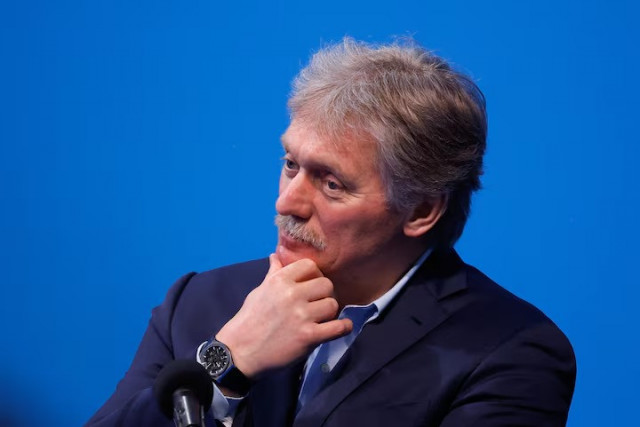
MOSCOW – Speaking to Russian state news agency Tass, Kremlin spokesman Dmitry Peskov delivered a stark assessment of the ongoing US-Israeli war on Iran and its broader implications. “We are now seeing extremely devastating consequences of this war for the global economy and for regional geopolitics,” Peskov said. “These consequences will probably not be short-term; they will have a long-term effect.”
The Kremlin’s warning comes as global energy markets continue to reel from the closure of the Strait of Hormuz, through which approximately 20 percent of the world’s oil normally passes. Oil prices have surged above $100 a barrel since the conflict began on February 28, with ripple effects felt across the global economy.
Russia and the ‘Board of Peace’
Peskov also addressed Russia’s position on the Board of Peace, an initiative established by US President Donald Trump in January when 19 countries signed its charter in Davos. Initially created to manage the Gaza Strip as part of agreements between Israel and Hamas, Washington has been actively promoting the idea of using the body to prevent and resolve conflicts in other regions.
Russia has not yet made a decision on joining the Board of Peace, Peskov said, adding that “the concept appears less relevant than before against the backdrop of US aggression in the Middle East.”
The statement reflects Moscow’s skepticism about US-led peace initiatives amid the ongoing conflict, which Russia has repeatedly criticized as a violation of international law.
Russian-US Parliamentary Contacts
Peskov also commented on the recent visit of Russian lawmakers to the United States, calling the trip “useful” and expressing hope that contacts between Russian and US parliamentarians would continue. A group of five Russian deputies visited the US at the invitation of US Congresswoman Anna Paulina Luna this week.
Meetings between Russian and US lawmakers took place in Washington, attended by representatives of both Republican and Democratic parties. The agenda included bilateral topics, the Ukrainian crisis, the Middle East conflict, and wider Russian-American relations.
“In any case, this will make a great contribution to revitalising the entire range of bilateral relations. If the American side is ready and agrees to this,” Peskov said.
The parliamentary contacts represent a rare channel of communication between Russia and the United States at a time when diplomatic relations have been strained by the war in Ukraine and now by the Middle East conflict.
Regional Diplomacy Intensifies
Peskov’s warnings about the economic impact of the war come as diplomatic efforts to end the conflict intensify. Pakistan has positioned itself as a key mediator, hosting the foreign ministers of Saudi Arabia, Turkey, and Egypt over the weekend for consultations on de-escalation.
Pakistan’s Deputy Prime Minister and Foreign Minister Ishaq Dar has confirmed that indirect communication between the US and Iran is underway through messages being relayed by Pakistan, with Turkey and Egypt also assisting diplomatic efforts.
China has expressed support for Pakistan’s mediation role, with Chinese Foreign Minister Wang Yi telling his Pakistani counterpart that Beijing appreciates Islamabad’s “unremitting efforts to de-escalate the Iranian situation.”
The Economic Toll
The economic consequences of the war have already been severe. The closure of the Strait of Hormuz has disrupted global oil supplies, driving up prices and contributing to inflationary pressures worldwide. Iraq’s oil production has been slashed from 3.3 million barrels per day to just 900,000 barrels, and the Houthi threat to close the Bab al-Mandeb Strait threatens to add another chokepoint to the crisis.
Pakistan, which imports the vast majority of its oil needs, has allocated Rs125 billion to shield consumers from rising fuel prices and has implemented austerity measures to conserve energy. The government has warned that petrol and diesel prices could have reached Rs544 and Rs790 per litre respectively without government subsidies.
A Long-Term Impact
Peskov’s warning that the consequences will have a “long-term effect” reflects a growing consensus among analysts that the Middle East conflict will reshape global energy markets and geopolitical alignments for years to come. The disruption to shipping through the Strait of Hormuz has already prompted discussions about alternative supply routes and the potential for increased investment in renewable energy.
For Russia, which has positioned itself as an alternative energy supplier to Europe and Asia, the conflict presents both challenges and opportunities. Moscow has maintained diplomatic relations with Iran while also engaging with Gulf states and Israel.
Analysis: A Conflict with Global Reach
The Kremlin’s warning about the devastating economic consequences of the Middle East conflict underscores a reality that has become increasingly apparent over the past month: this is not a regional war but a global crisis.
From the oil markets of the Gulf to the fuel subsidies of Islamabad, from the shipping lanes of the Red Sea to the diplomatic corridors of Moscow and Washington, the conflict has reached every corner of the global economy. The closure of the Strait of Hormuz has affected not only the price of oil but also the price of food, transportation, and manufacturing inputs worldwide.
For Russia, the conflict offers an opportunity to reassert its role as a global power, engaging with the United States through parliamentary channels while maintaining its relationships with Iran and Gulf states. Peskov’s comments on the Board of Peace—dismissing it as “less relevant than before”—reflect Moscow’s skepticism about US-led initiatives, but the parliamentary contacts in Washington suggest a desire to keep lines of communication open.
For the United States, the challenge is to manage a conflict that is draining military resources, alienating allies, and contributing to domestic inflation. President Trump has signaled openness to negotiations, reposting Prime Minister Shehbaz Sharif’s offer to host US-Iran talks in Islamabad, but the administration has also deployed a third aircraft carrier to the region and prepared for potential ground operations.
For Pakistan, which has positioned itself as a mediator, the stakes are high. Success would cement Islamabad’s status as a key regional power and strengthen its relationships with both the United States and Iran. But failure would expose the limits of its diplomatic reach and leave the country to bear the continuing costs of a war it cannot control.
As Peskov noted, the consequences of this conflict will not be short-term. Whether they lead to a reshaping of global alignments or simply a period of prolonged instability remains to be seen. What is clear is that the war in the Middle East has become a war on the global economy—and everyone is paying the price.