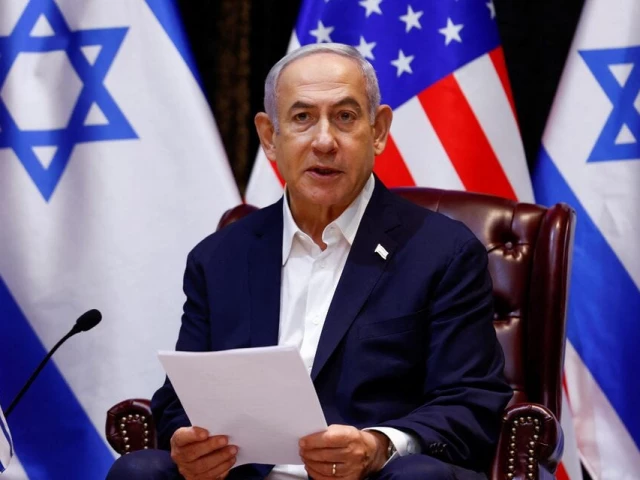
Israeli Prime Minister Benjamin Netanyahu announced Sunday he had instructed the military to further expand the existing security buffer zone in southern Lebanon, vowing to fundamentally change the security situation along Israel’s northern frontier. The decision came as the conflict with Iran entered its second month, spreading across the Middle East with new fronts opening in Lebanon, Yemen, and the Gulf.
JERUSALEM/TEHRAN – In a video statement from the Northern Command, Netanyahu said the expansion of the buffer zone aimed to strengthen Israel’s security posture along the northern border, where cross-border hostilities have raised fears of a broader regional escalation. “I have just instructed to further expand the existing security buffer zone. We are determined to fundamentally change the situation in the north,” he said.
The announcement came as Israeli forces continued operations against Hezbollah in Lebanon, with the military reporting a fifth soldier killed in combat in southern Lebanon. Lebanese media reported that an Israeli strike on a media vehicle killed three journalists, while a Lebanese soldier was also killed in separate attacks.
Iran Accuses US of Preparing Ground Assault
As the conflict intensified, Iran accused Washington on Sunday of preparing a land assault even as the Trump administration sought talks and as regional powers met in Pakistan to try to end the war. Iran’s parliament speaker, Mohammad Baqer Qalibaf, said Tehran was ready to respond to any US ground attack.
“As long as the Americans seek Iran’s surrender, our response is that we will never accept humiliation,” Qalibaf said in a message to the nation, accusing the US of sending messages about possible negotiations while secretly planning to send in troops.
The Washington Post quoted US officials as saying the Pentagon was preparing for weeks of ground operations in Iran, though it was not yet clear if President Donald Trump would approve such plans. The Pentagon has already dispatched thousands of Marines to the Middle East, with the first of two contingents arriving Friday aboard an amphibious assault ship.
Israeli Strikes Across Iran
Israel’s military said it carried out overnight strikes on Tehran, targeting what it described as a facility producing critical components for ballistic missiles and a weapons production and storage site. Iranian media reported that at least five people were killed in a US-Israeli attack on a residential unit in the northwestern city of Zanjan.
In Tehran, the Qatari news channel Al Araby TV said an Israeli missile struck the building housing its office, causing extensive damage and forcing the suspension of live broadcasts. Footage from inside the office showed shattered glass, broken windows, and debris scattered across the newsroom.
The Israeli military also hit targets in Lebanon, resuming its war against Iran-backed Hezbollah. Lebanon’s Al Manar TV reported that three Lebanese journalists were killed in a strike on a media vehicle, with a follow-up strike on rescue workers causing additional fatalities. Israel’s military said it had targeted one of the journalists, accusing him of being part of a Hezbollah intelligence unit.
Iran Retaliates Across the Region
Iran launched multiple missile salvos at Israel on Sunday, sending millions of people across the country into shelters. Israel’s fire and rescue service said a blaze had broken out in an industrial area in the country’s south after an “impact.” Chemical manufacturing and industrial plants, as well as a hazardous waste treatment facility, are located in the area.
An Iranian airstrike hit the Israeli village of Eshtaol, near Jerusalem, with seven people hospitalized, Israel’s ambulance service said. Iranian attacks were also reported in multiple areas across the Gulf, including Kuwait, the United Arab Emirates, and Oman. Aluminium Bahrain said its facilities were targeted in an Iranian attack on Saturday.
Iran kept up attacks on Israel and several Gulf states after hitting an air base in Saudi Arabia on Friday and wounding 12 US military personnel, two of them seriously, in one of the most serious breaches of US air defenses so far.
Houthis Enter the Conflict
The risk of a broader regional war increased further after Yemen’s Iran-aligned Houthi movement launched its first attacks on Israel since the conflict began. Houthi military spokesperson Yahya Saree said the group carried out a second strike on Israel, vowing more strikes to come.
The attack points to a potential new threat to global shipping, already hit by the effective closure of the Strait of Hormuz, previously a conduit for about a fifth of global oil and liquefied natural gas supplies. The Houthis have shown an ability to strike targets far beyond Yemen and disrupt shipping lanes around the Arabian Peninsula and the Red Sea.
US Marines Arrive in Middle East
Washington has dispatched thousands of Marines to the Middle East, with the first of two contingents arriving Friday aboard an amphibious assault ship. Secretary of State Marco Rubio said on Friday the US could achieve its aims without ground troops, but that it was deploying some to the region so Trump would have “maximum” flexibility to adjust strategy. The Pentagon was also expected to deploy thousands of soldiers from the US Army’s 82nd Airborne Division.
Trump faces a stark choice between seeking a negotiated exit or escalating militarily, risking a protracted crisis that would likely weigh further on his already low approval ratings. “President Trump has poor options all around to end the war,” said Jonathan Panikoff, former US deputy national intelligence officer for the Middle East. “Part of the challenge is the lack of clarity related to what a satisfactory outcome would be.”
Iran Threatens Universities
Iran’s Islamic Revolutionary Guard Corps (IRGC) said it would target Israeli or US-affiliated universities in the region in retaliation for attacks on Iranian universities. The IRGC gave the US until noon on Monday, March 30, Tehran time, to condemn the bombing of Iranian universities, warning that otherwise, Israeli and American universities in West Asia would be targeted.
One of Iran’s oldest universities, the University of Science and Technology, was bombed by US-Israeli forces on Saturday. The extent of casualties remains unclear. The IRGC warned students, staff, and nearby residents to stay at least one kilometer away from these universities.
Diplomatic Efforts Continue in Islamabad
As the conflict expanded, the foreign ministers of Pakistan, Saudi Arabia, Turkiye, and Egypt met in Islamabad to discuss ways to halt the Iran war, which has killed thousands of people and caused the biggest-ever disruption to global energy supplies. Pakistan, which along with Turkey and Egypt has been relaying messages between Washington and Tehran, was hosting four-nation talks and looking for proposals that could bring the two sides together.
The countries meeting in Pakistan have floated proposals to Washington tied to maritime traffic and reopening the Strait of Hormuz, five sources familiar with the matter told Reuters, as part of wider efforts to stabilize shipping flows.
Washington said last week it had offered a 15-point ceasefire plan, with a proposal to reopen the waterway and restrict Iran’s nuclear program, but Tehran has rejected the list and put forward proposals of its own.
Protests in the US
Demonstrators took to city streets across the United States on Saturday in anti-Trump rallies described by organizers as a call to action against the war on Iran. With US midterm elections due in November, the increasingly unpopular war has weighed on Trump’s Republican Party. Trump has appeared eager to end it soon, while also threatening escalation.
Analysis: A Conflict Without Borders
Netanyahu’s announcement that Israel will expand its security buffer zone in southern Lebanon represents yet another escalation in a conflict that has already drawn in Iran, Israel, the United States, Hezbollah, the Houthis, and Gulf states. What began as a US-Israeli air campaign against Iranian nuclear facilities has become a regional war with multiple fronts, from the hills of southern Lebanon to the waters of the Strait of Hormuz.
For Israel, the expansion of the buffer zone is intended to create a security cordon against Hezbollah attacks. But history suggests that such occupations breed resistance rather than security. Israel’s previous occupation of southern Lebanon, which lasted from 1982 to 2000, ultimately strengthened Hezbollah and set the stage for the 2006 war.
For Iran, the entry of the Houthis into the conflict and the continued strikes on US and Israeli targets demonstrate Tehran’s ability to project power across the region. But the attacks also risk drawing the US deeper into a conflict that could expand to include direct ground operations.
For the United States, the arrival of Marines and the preparation for potential ground operations represent a significant escalation. Trump’s desire for a negotiated exit is complicated by the fact that Tehran has rejected the US 15-point plan and insists on its own conditions—including recognition of its control over the Strait of Hormuz.
As the diplomats meet in Islamabad, the war continues to spread. The Houthis are now attacking Israel. US Marines are arriving in the region. Israel is expanding its buffer zone in Lebanon. And Iran is threatening to target universities. The conflict that began in February shows no signs of ending—and every sign of getting worse.