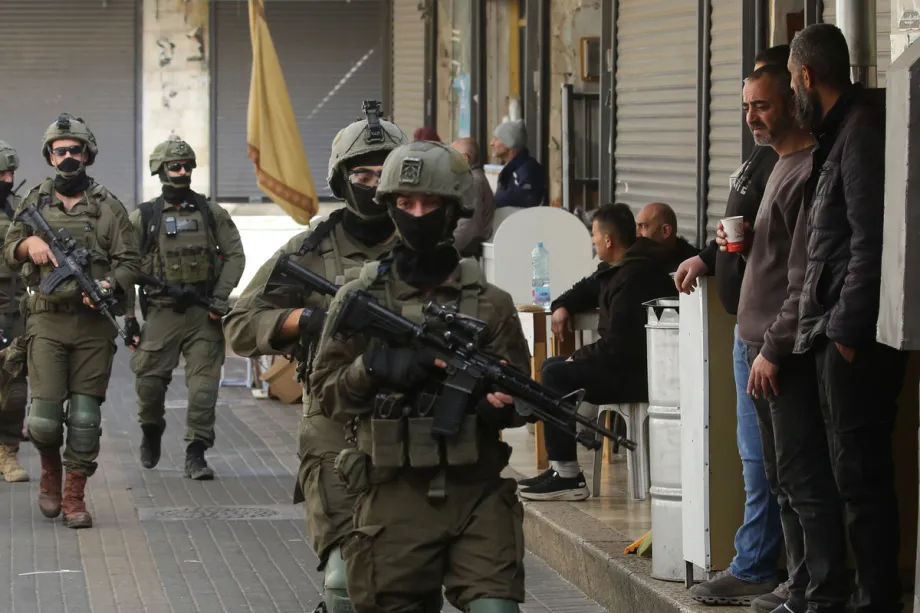
Israel’s deepening manpower crisis appears to be pushing the occupation army to drag even traumatized reservists back into service, according to a report in Haaretz. Some Israeli soldiers suffering from severe mental trauma have been threatened with penalties, including arrest, if they failed to report for duty, as the military struggles to sustain its reserve forces while waging war on multiple fronts.
JERUSALEM – The report points to an army under mounting pressure as Israel wages war on Iran, Hezbollah in Lebanon, and Palestinian factions in Gaza, while struggling to sustain its reserve forces. Commanders have demanded that reservists receiving treatment for war-related trauma report for duty, even when some had been admitted to the Israeli Defence Ministry’s Rehabilitation Department and were undergoing psychiatric care.
It is claimed that many of the soldiers had not yet received formal disability rulings—a process that can take years—leaving them exposed to fresh call-up orders despite their condition. Commanders in several reserve brigades are said to have taken the same line even in especially serious cases, including soldiers who had recently been hospitalized in psychiatric wards. Haaretz said it had received more than 20 such reports since the war with Iran began.
‘We Need Everyone’
One reservist in a Home Front Command battalion said that he sent his commander a psychiatrist’s document warning that he was a danger to himself and others but was still told he had to report. His reserve duty was only frozen after Haaretz contacted the Israeli army spokesperson’s unit.
Another case involved a paratrooper who took part in the Israeli military campaign in Gaza after October 7. The soldier is said to have been living with post-traumatic stress disorder but was recently served with another call-up notice. A reservist in the 300th Brigade also told the paper that commanders insisted he report for duty even after he made clear that he was in a day-treatment programme.
Some of the testimonies suggest that the pressure stemmed directly from the army’s shortage of troops. One infantry reservist told Haaretz that his platoon commander insisted he report because this was “the most important war in Israel’s history” and because “we need everyone.”
Army Approaching ‘Collapse from Within’
The revelations reinforce growing signs that the Israeli military is under severe strain. Last month, Israeli Chief of Staff Eyal Zamir warned that the army is approaching “collapse from within” amid mounting pressures from the ongoing war on multiple fronts, including Iran and Hezbollah.
The manpower crisis has been exacerbated by the government’s continued exemption of ultra-Orthodox Jews from military service, a policy that has drawn sharp criticism from opposition leaders. Israeli opposition leader Yair Lapid has warned that the government is “sending the army into a multi-front war without a strategy, without sufficient resources, and with too few soldiers.”
Mental Health Toll
It is reported that 37,500 people are currently being treated by the Defence Ministry for mental health, around 15,000 of whom have not yet gone before a medical committee. Of that group, nearly 7,300 have received a provisional diagnosis of PTSD or another mental health condition.
Experts cited by Haaretz warned that sending traumatized soldiers back into service could have serious consequences, including a greater risk of suicide. The paper noted that it had previously reported on two cases of soldiers diagnosed with PTSD who were recalled to duty and later took their own lives while still serving.
Broader Context
The Israeli military has been engaged in sustained operations since the US-Israeli offensive on Iran began on February 28, now entering its second month. In addition to strikes on Iranian military and nuclear infrastructure, Israel has been conducting operations against Hezbollah in Lebanon, where Israeli strikes have displaced more than one million people and killed hundreds of civilians.
The expansion of the conflict has stretched Israeli forces thin, with reservists called up for extended duty and active-duty units rotated between fronts. The strain on personnel has been compounded by equipment shortages and the depletion of interceptor stocks, with reports indicating that Israel has fired approximately 80% of its Arrow 2 and Arrow 3 interceptors.
Analysis: A Military at Its Breaking Point
The Haaretz report reveals a military institution under unprecedented strain. The practice of recalling reservists with diagnosed PTSD and other mental health conditions—some of whom have recently been hospitalized in psychiatric wards—suggests that the army’s manpower shortage has reached crisis levels.
The testimonies from reservists who were threatened with arrest despite providing psychiatric documentation indicate a breakdown in the systems designed to protect soldiers’ mental health. That some commanders have insisted on recall even when soldiers were in day-treatment programs or had been deemed a danger to themselves and others points to a culture that prioritizes operational needs over human welfare.
The long-term consequences of this policy could be severe. As experts noted, sending traumatized soldiers back into combat zones increases the risk of suicide and further psychological deterioration. The two previously reported cases of soldiers who took their own lives after being recalled to duty serve as tragic warnings.
For the Israeli military, the challenge is existential. Without sufficient personnel to sustain its multi-front war, the army faces the prospect of strategic failure. But the solution—pushing traumatized soldiers back into service—risks creating a generation of veterans with untreated mental health conditions, with consequences that will outlast the current conflict.
As opposition leader Yair Lapid has warned, the government is sending the army into a war without adequate resources or strategy. The Haaretz report suggests that the human cost of that failure is already being paid—by soldiers who have already given more than should ever have been asked.