



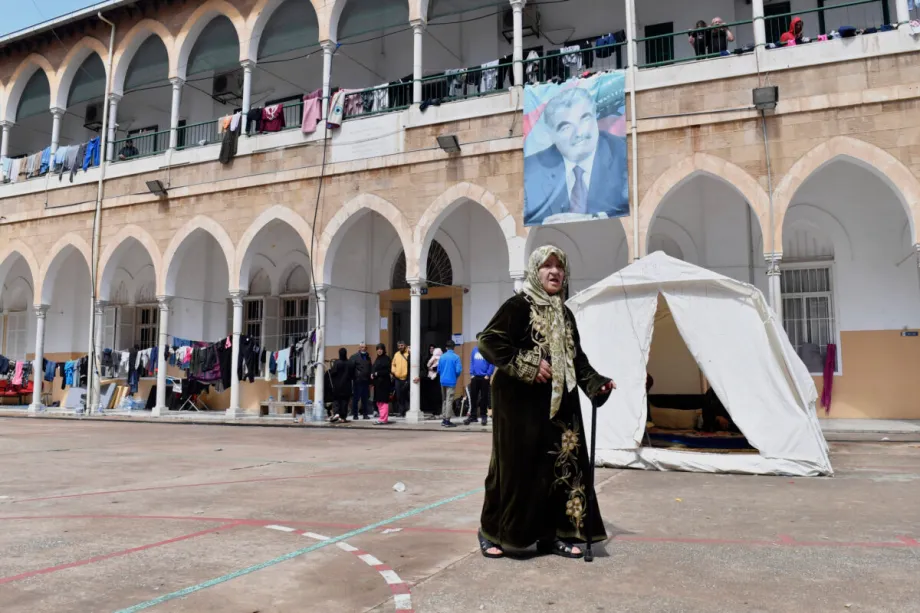
More than 1 million people have been displaced in Lebanon over the past month following Israeli attacks, with one in every five people in the country currently displaced, according to the UN refugee agency (UNHCR). The humanitarian situation is “deepening day by day,” a UNHCR spokesperson warned, as the conflict between Israel and Iran-backed Hezbollah continues to escalate.
GENEVA – UNHCR spokesperson Babar Baloch told Anadolu that the humanitarian crisis in Lebanon has reached alarming proportions. “We have seen it during the last one month that the Israeli evacuation orders, then the strikes and people have been on the move. Right now inside Lebanon we have more than a million people that have been displaced because of the escalating conflict inside the region and in Lebanon itself as well,” Baloch said.
He stressed that one in five people inside Lebanon “currently is displaced and many of them are desperate, they’re traumatized,” adding that displacement is occurring across the country, with more than 130,000 people sheltering in over 600 collective centers.
‘The Conflict Intensifies and Does Not Stop’
“The conflict intensifies and escalates and it does not stop, it keeps going on with the Lebanese people and Syrian refugees who live in Lebanon, affecting them but it also forces people to leave Lebanon and seek safety somewhere else,” Baloch added.
Families are sleeping in overcrowded shelters, often without adequate indoor conditions, he said. The displacement crisis has overwhelmed Lebanon’s already fragile infrastructure, with the country still recovering from a devastating economic collapse that began in 2019.
Children Paying the Heaviest Price
The humanitarian toll on children has been particularly severe. UNICEF has previously reported that an average of 19,000 children have been displaced daily in Lebanon over the past month, with more than 370,000 children forced from their homes. At least 121 children have been killed and 395 injured in Israeli strikes since the escalation began.
The displacement of more than one million people in less than a month represents one of the most rapid population movements in recent history. For a country of approximately 5.5 million people, the scale of displacement is unprecedented.
Healthcare System Under Siege
The destruction of critical infrastructure has compounded the humanitarian crisis. According to the Lebanese Ministry of Public Health, more than 435 schools have been repurposed as shelters, disrupting education for more than 115,000 students. Water systems have been damaged, and access to medical care has been severely restricted.
The International Federation of Red Cross and Red Crescent Societies (IFRC) has reported that one volunteer has been killed and several others injured during ambulance missions, underscoring the dangers facing humanitarian workers.
International Response
The UN and its partners have been scaling up humanitarian operations, but access remains a critical challenge. The destruction of key bridges in southern Lebanon has cut off entire districts, isolating more than 150,000 people and severely limiting humanitarian access.
UNHCR has called for increased international support to address the growing needs. “The risk of a humanitarian catastrophe is real,” a UNHCR representative said earlier, as needs are “rising faster than resources.”
Broader Regional Context
The displacement crisis in Lebanon is inseparable from the broader regional conflict that began with US-Israeli strikes on Iran on February 28. Iran-backed Hezbollah has been engaged in cross-border fighting with Israel, and Israeli strikes have targeted Hezbollah positions across Lebanon, causing widespread civilian casualties and infrastructure damage.
Israeli Prime Minister Benjamin Netanyahu has ordered the expansion of a security buffer zone in southern Lebanon, with far-right ministers calling for the Litani River to become “the new border.” The policy has raised fears of prolonged occupation and further displacement.
A Catastrophe in the Making
The displacement of one in five people in Lebanon represents a humanitarian catastrophe that has received far less international attention than the broader geopolitical dimensions of the conflict. For the families sleeping in overcrowded shelters, for the children who have lost their homes and schools, the war is not an abstraction—it is a daily reality of fear, uncertainty, and loss.
Lebanon was already struggling with an economic crisis that had pushed more than 80 percent of the population into poverty before the war began. The addition of more than one million displaced people—many of whom have lost their homes, livelihoods, and access to basic services—threatens to break a country that was already on the edge of collapse.
The international response has been inadequate. While diplomatic efforts focus on ending the US-Israel war on Iran, the humanitarian catastrophe in Lebanon continues to deepen. As UNHCR has warned, the risk of a humanitarian catastrophe is real—and it is happening now.
For the people of Lebanon, the war has already lasted too long. For the more than one million displaced, the question is not when the conflict will end, but whether there will be anything left to return to when it does.





One thought on “Israeli Attacks Displace Over 1 Million in Lebanon, One in Five Affected: UNHCR”