KHAIRPUR / SUKKUR – Pakistan is grappling with its first local outbreak of mpox, a zoonotic viral infection, after four newborns died among seven confirmed cases in Khairpur district, Sindh. The outbreak, which emerged in late March, has prompted health authorities to temporarily close neonatal intensive care units (NICUs) at two hospitals and initiate comprehensive contact tracing to contain the spread.
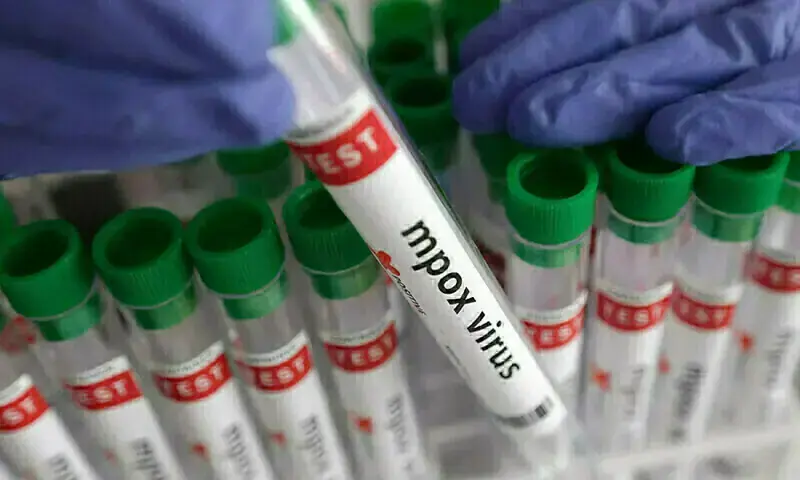
The worrisome child health situation first came to light on March 14 when health officials received reports of “unusual skin pimples” affecting children in Khairpur . Blood samples sent to Karachi — analyzed at the Sindh Public Health Laboratory, Dow University of Health Sciences (DUHS), and Aga Khan University Hospital (AKUH) — confirmed seven cases of mpox .
A Delicate Medical Picture
The Sindh health department confirmed in a statement that “initial findings showed that four of the seven children [who died] were affected by mpox” . However, medical experts emphasized that the deaths were not directly caused by the viral infection.
“A review by medical experts, however, indicates that their deaths were not directly caused by mpox. All children who died were premature, too weak and had low birth weight. They were already suffering health complications caused by malnutrition,” the health department stated .
The seven affected babies were under treatment in intensive care units at public and private hospitals in Khairpur, where sources suggest they may have acquired the infection from unsterilized equipment . Poor infection prevention and control (IPC) measures in healthcare facilities are being investigated as the primary cause of the rapid spread .
Hospitals Shut Down as Emergency Response Intensifies
In response to the outbreak, authorities have temporarily closed the NICUs of Khairpur Medical College Hospital and a private hospital . “In order to prevent spread of the virus, the neonatal intensive care units of the Khairpur Medical College, Hospital and a private hospital have been temporarily closed down,” the health department said .
An expert team has identified the index case and possible sources of virus transmission and infection. The department is currently engaged in contact tracing and has directed all hospitals to enforce infection control protocols .
Sukkur Commissioner Abid Saleem Qureshi, in a letter to the Sindh health secretary, described an emergency-like situation in Khairpur and Sukkur districts. The letter noted that out of 16 reported cases of this “chickenpox-like” mysterious disease, seven children have died, with most victims being newborns .
Suspected Cases Spread Across Multiple Districts
Cases involving children with unusual skin lesions continue to be reported in Sukkur, Khairpur, Mirpurkhas and Hyderabad . Numerous cases have surfaced at Sukkur Children’s Hospital and various private facilities in Khairpur.
Commissioner Qureshi directed the Khairpur district health officer to initiate comprehensive contact tracing, followed by timely sampling, isolation and monitoring of all identified contacts . He issued strict instructions to all government hospitals regarding the use of Personal Protective Equipment (PPE) kits, and a Rapid Response Team (RRT) has been formed to monitor the situation.
“The local authorities, in coordination with the health department, have set up isolation centres in different hospitals in places where such cases are being reported,” Khairpur Deputy Commissioner Altaf Ahmed confirmed .
Expert Concerns and Public Health Implications
Dr Abdul Ghafoor Shoro of the Pakistan Medical Association described the situation as an outbreak of mpox requiring urgent measures to prevent further spread in the community .
This marks the first local outbreak of the zoonotic viral infection in the country . The virus spreads through close contact with infected humans or animals, and can be transmitted through respiratory droplets and contaminated materials .
The outbreak has heightened concerns as the World Health Organization continues to monitor deadlier variants of the virus globally. Epidemiologist Dr Rana Jawad Asghar noted that the emergence of the Clade 1b variant marks a significant shift, as this version has grown “both more fatal and easier to spread,” with young children particularly at risk. “Preliminary figures indicate that 70% of infections and 90% of fatalities occur in children under the age of 15,” Dr Asghar told Arab News .
The Sindh Health Department has sought urgent support from the Aga Khan University Laboratory for priority testing. “Early laboratory confirmation is critical for prompt case management, implementation of infection prevention and control measures and for prevention of further transmission,” stated Dr Waqar Memon, Director General of Health Services for Sindh, in a letter to the AKU laboratory .
Analysis: A Wake-Up Call for Infection Control
The Khairpur mpox outbreak represents a critical test of Pakistan’s public health infrastructure. That the first local outbreak of this disease would strike the most vulnerable population — premature newborns in hospital settings — is particularly alarming.
The fact that sources suggest unsterilized equipment may have contributed to transmission points to systemic failures in infection prevention and control measures at healthcare facilities . The initial misdiagnosis as a bacterial infection at a private facility, before the provincial health department was alerted on March 14, allowed the outbreak to potentially spread further .
For the affected families, the tragedy is compounded by the knowledge that their infants — already fighting for survival due to prematurity, low birth weight, and malnutrition — faced an additional, preventable threat within the very facilities meant to heal them.
As authorities work to contain the outbreak, the coming days will determine whether the response has been swift enough to prevent wider community transmission. The situation remains fluid, with suspected cases continuing to emerge across multiple districts. Health officials urge the public to report any unusual signs or symptoms to nearby government hospitals immediately .