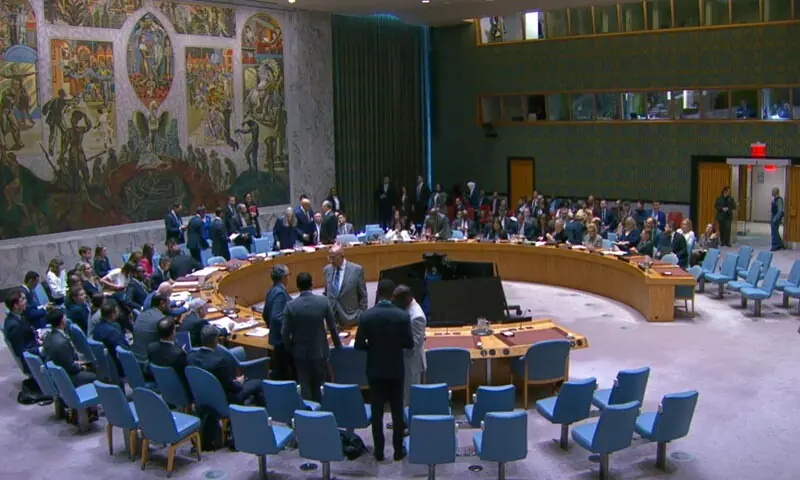
UNITED NATIONS – Russia and China on Tuesday vetoed a draft resolution at the United Nations Security Council for reopening the Strait of Hormuz, while Pakistan abstained. The draft resolution prepared by Bahrain, which underwent six revisions during negotiations to bridge differences among council members, received 11 votes in favour, two against and two abstentions.
The resolution was vetoed by Russia and China, exercising their power as permanent members of the 15-nation UNSC, thereby blocking its adoption despite majority support. Pakistan and Colombia were the two countries that abstained from voting.
Bahrain, the Democratic Republic of the Congo, Denmark, France, Greece, Latvia, Liberia, Panama, Somalia, the United Kingdom and the United States voted in favour of the resolution.
Resolution Details
Drafted by Bahrain in coordination with Gulf Cooperation Council (GCC) states and Jordan, the resolution strongly urged nations using the commercial route to coordinate defensive measures — including escorting merchant vessels — to guarantee safe navigation. It also demanded that Iran immediately cease attacks on commercial ships and civilian infrastructure, including oil, gas and water facilities.
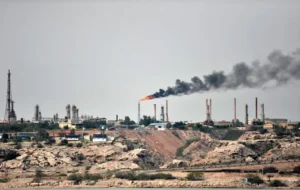
The Strait of Hormuz is a strategic maritime chokepoint through which a substantial portion of global oil shipments passes. Iran has effectively shut down the strait following the US-Israel war on the Islamic republic, which began on February 28.
Chapter VII Removed
Earlier versions of the draft resolution reportedly invoked Chapter VII of the UN Charter, which could have authorised the use of force. Objections from Moscow, Beijing, and several non-permanent members led to its removal. Despite those revisions, Moscow and Beijing on Tuesday maintained their opposition, arguing that the draft failed to adequately reflect underlying regional dynamics.
The final text emphasised defensive coordination “commensurate with the circumstances,” respect for international law, and included a reporting requirement asking the UN secretary general to brief the UNSC within seven days and every 30 days thereafter on attacks and provocations affecting commercial shipping.
Pakistan’s Abstention
Pakistan’s decision to abstain from the vote reflects its delicate diplomatic balancing act. As a country that has positioned itself as a mediator between the US and Iran, abstaining allows Pakistan to avoid alienating either side while maintaining its role as a facilitator of dialogue.
Pakistan has been actively involved in diplomatic efforts to end the conflict, with reports of a ceasefire framework being shared with both the US and Iran. Abstaining on a resolution that would have condemned Iran and authorised defensive measures could have compromised Pakistan’s mediation role.
Reactions
The United States and its allies expressed disappointment at the veto, arguing that the resolution was a balanced attempt to address the disruption of global energy supplies and ensure freedom of navigation. The Gulf states, particularly Bahrain which drafted the resolution, had sought international backing for measures to reopen the strait.
Russia and China defended their veto, arguing that the resolution did not adequately address the root causes of the conflict and that unilateral measures would not resolve the crisis. They called for diplomatic solutions and reiterated their support for Pakistan’s mediation efforts.
Analysis: A Diplomatic Setback
The veto of the UN resolution to reopen the Strait of Hormuz represents a diplomatic setback for the United States and its Gulf allies. With Russia and China blocking the measure, the Security Council has been unable to take action on one of the most critical issues arising from the Middle East conflict.
The veto also highlights the divisions within the Security Council on how to address the crisis. While Western and Gulf states favour a强硬 approach that would authorise defensive measures, Russia and China have consistently called for diplomatic solutions and have resisted measures that could escalate the conflict.
Pakistan’s abstention reflects its careful diplomatic positioning. As a mediator, Pakistan cannot afford to be seen as taking sides. By abstaining, it avoids antagonizing Iran while not opposing the Gulf states that are its strategic partners.
For the United States, the veto means that it will have to pursue its objectives outside the UN framework, potentially through bilateral or coalition efforts. The UAE has reportedly been preparing to support US-led efforts to reopen the strait by force, but such action would lack UN authorization.
For Iran, the veto is a diplomatic victory. With Russia and China blocking the resolution, Tehran has avoided international condemnation and the threat of authorized military action. However, the underlying issue remains unresolved: the strait remains closed, and global energy supplies remain disrupted.
As the conflict continues, the Security Council remains paralyzed. The veto of the Hormuz resolution is a reminder that in a divided world, even the most pressing issues can be blocked by the interests of the powerful.