WASHINGTON – Lebanon and Israel began the first round of direct diplomatic talks in more than 30 years on Tuesday under US mediation as Israel continues to pursue an offensive in southern Lebanon that it says targets Hezbollah. Lebanese ambassador to the US, Nada Hamadeh, and Israeli ambassador Yechiel Leiter represented their countries during the meeting at the State Department.
Secretary of State Marco Rubio, who also doubles as US President Donald Trump’s national security adviser, US Ambassador to Lebanon Michel Issa, Counsellor Michael Needham, and US envoy to the UN Mike Waltz represented the Trump administration.
‘Start of a Process’
Rubio sought to temper expectations for the talks, saying the meeting represents the start of a “process”, rather than a culminating event. “All of the complexities of this matter are not going to be resolved in the next six hours, but we can begin to move forward to create a framework where something can happen, something very positive, something very permanent,” he said.
“This will take time, but we believe it is worth this endeavour, and it’s a historic endeavour that we hope to build on. And the hope today is that we can outline the framework upon which a permanent and lasting peace can be developed,” he added.
Lebanese Position
Lebanon Foreign Minister Youssef Raggi said that direct ceasefire talks with Israel in the US represent a “new track” separate from Iran-related negotiations, emphasising that only the Lebanese state has the authority to negotiate on behalf of the country.
“The Lebanese state alone holds the authority to negotiate on behalf of Lebanon,” Raggi said on X, describing the talks as an effort to reach a ceasefire with Israel while reinforcing “the principle of national sovereignty at the heart of Lebanese diplomacy.”
“Lebanon is seeking, through direct negotiations with Israel, to reach a ceasefire,” he added, noting that the new diplomatic track has “in practice reinforced the separation between the Lebanese file and the Iranian track.”
Israeli Position
Israeli Foreign Minister Gideon Saar told reporters in Jerusalem ahead of the meeting that talks would focus on the disarmament of Hezbollah, which he said must take place before Israel and Lebanon could sign any peace agreement and normalise relations. He said Hezbollah was a problem for Israel’s security and Lebanon’s sovereignty that needed to be addressed to move relations to a different phase. “We want to reach peace and normalisation with the state of Lebanon,” he said.
Context of Conflict
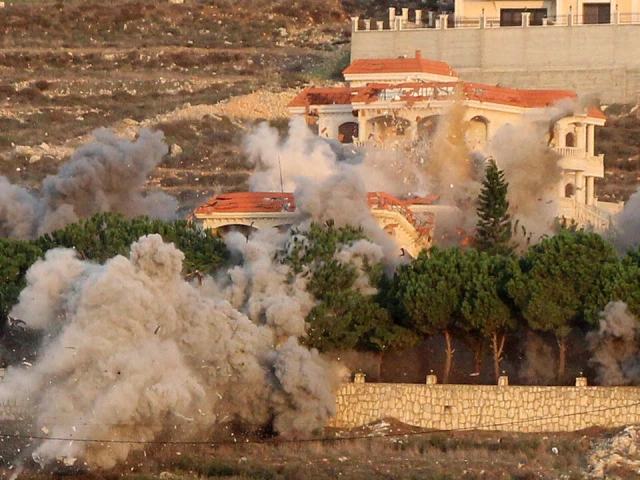
The Israeli army has expanded its air and ground offensive across Lebanon since a cross-border attack by Hezbollah on March 2, despite a ceasefire deal that took effect in November 2024. According to Lebanese health authorities, at least 2,089 people have since been killed and 6,762 injured in the Israeli assault.
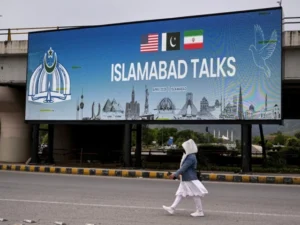
The meeting came at a critical juncture in the crisis in the Middle East, a week into a fragile ceasefire between the US, Israel and Iran. Iran says Israel’s campaign against Hezbollah in Lebanon must be included in any agreement to end the wider war, complicating talks mediated by Pakistan aimed at averting further economic fallout.
Analysis: A Historic but Limited Step
The first direct diplomatic talks between Lebanon and Israel in more than 30 years represent a historic step, but expectations should be tempered. As Rubio noted, this is the start of a “process,” not a culminating event.
The gap between the two sides remains wide. Lebanon wants a ceasefire. Israel wants Hezbollah’s disarmament before any peace agreement. The Lebanese state has been seeking to disarm Hezbollah peacefully since the 2024 war, but any move to disarm by force risks igniting another civil war.
The separation of the “Lebanese file” from the “Iranian track” is significant. By distinguishing between the two, Lebanon is attempting to insulate its negotiations from the broader US-Iran conflict. Whether Iran and Hezbollah will accept this separation remains to be seen.
For now, the talks have begun. The framework for a permanent and lasting peace may take years to develop. But after more than 30 years of no direct dialogue, even a first step is progress.