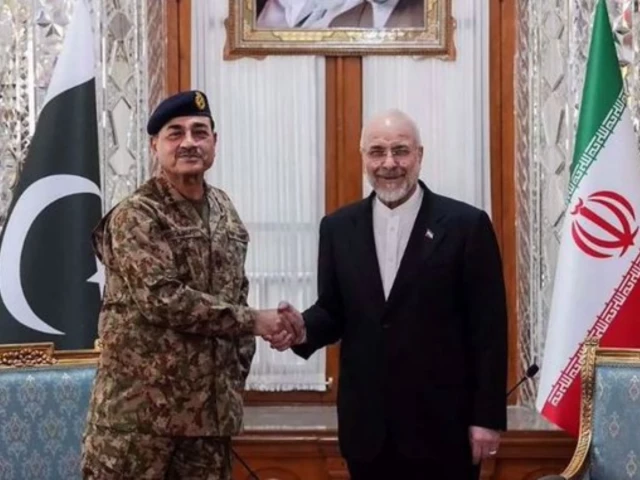
TEHRAN – Chief of Defence Forces (CDF) and Chief of the Army Staff Field Marshal Asim Munir met with Iranian Parliament Speaker Mohammad Bagher Ghalibaf in Tehran on Thursday, with discussions focused on a potential breakthrough in negotiations over Iran’s nuclear programme, according to Pakistani government sources. The consultations included planning for a possible new round of talks between Iran and the US, as well as “to convey messages from Washington,” Iranian state-run IRIB reported.
Tehran “would decide on the next phase of negotiations” with the US following the meetings with the Pakistani delegation, the report said. Iranian media also reported that CDF Munir held a meeting with Khatam Al-Anbiya Central Headquarters Commander Major General Ali Abdollahi.
Nuclear Breakthrough in Sight
Two government sources told Anadolu that Pakistan was working for a “breakthrough” on Iran’s nuclear programme issue in “days to come” with CDF Munir holding talks with the Iranian leadership on the issue, which remains the key bottleneck in the way of a negotiated settlement with the United States.
Islamabad “is working on bringing a maximum understanding” between the US and Iran, with a focus on Tehran’s nuclear issue, before a possible new round of talks in the capital, said the sources, stressing anonymity for discussing “sensitive details” of the ongoing mediation process.
Third-Party Monitoring Proposal
Sources also said Iran has agreed to a third-party monitoring of its nuclear programme by four nations jointly with the International Atomic Energy Agency (IAEA). “Tehran in principle agrees to Islamabad’s proposal” of third-party monitoring on its nuclear programme, they said, adding that Iran has no objection to the inclusion of the IAEA in the four-nation monitoring framework.
Iran has conveyed its agreement to CDF Munir, while Washington has yet to react to the proposal, the sources noted. No names were provided for potential members of the four-nation team.
Gap Reduced on Nuclear Issue
Reports have emerged from Tehran that gaps between the US and Iranian demands have been “reduced,” while the nuclear issue remains the main issue. Washington’s priority, however, “still is the suspension of Iran’s uranium enrichment programme for at least 20 years in exchange for sanctions relief,” the Pakistani sources added.
Iran is said to have over 400 kilogrammes of enriched uranium, and Tehran has proposed that it can suspend nuclear activity for up to five years, according to The New York Times.
Possible Munir-Trump Meeting
The sources also said that CDF Munir may visit Washington, DC, “in a day or two” to meet with US President Donald Trump to discuss various issues related to Islamabad’s proposal. There has been no official confirmation or announcement regarding a possible US visit by CDF Munir.
Technical Exchanges Ongoing
Technical teams of the US and Iran “are constantly exchanging messages” to reach “maximum understanding” before another round of talks, the Pakistani sources told Anadolu, adding: “Both sides want the next round of talks to be a ‘deal-signing’ ceremony.”
Expressing optimism about the prospects of a four-nation third-party team, the sources added: “There could be a different framework — a mix of four-nations formula and Washington’s demands; it could also be a 10-year moratorium on Iran instead of five years.” The situation, they added, “would be clear” after CDF Munir’s possible US visit.
Meeting with Iranian Foreign Minister
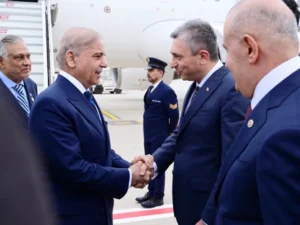
CDF Munir arrived in Tehran on Wednesday as part of the ongoing Middle East peace negotiation efforts. He was part of a delegation that also included Interior Minister Mohsin Naqvi. Iranian Foreign Minister Abbas Araghchi received the delegation, the Inter Services Public Relations (ISPR) said in a statement.
Araghchi said he was “delighted” to welcome the field marshal on his visit. “Expressed gratitude for Pakistan’s gracious hosting of the dialogue, emphasising that it reflects our deep and great bilateral relationship. Our commitment to promoting peace and stability in the region remains strong — and shared,” he said.
Message Exchanges Continue
Iran had earlier said it continued to exchange messages with Washington through Pakistani mediators. “Message exchanges continue” regarding negotiations with the US, Foreign Ministry spokesperson Esmaeil Baghaei said in a news briefing cited by the state news agency IRNA.
“Since Sunday, when the Iranian delegation returned to Tehran, multiple messages have been exchanged through the Pakistani intermediary,” he stated, adding, “Our positions have been conveyed and heard.”
Background of Talks
The US and Iran held rare direct talks in Pakistan last weekend aimed at ending their conflict, but the talks ended early Sunday without any agreement. Both sides were unable to reach an agreement despite marathon negotiations lasting around 21 hours in Islamabad. The prolonged talks, aimed at halting hostilities that have killed thousands and driven global oil prices higher over the past six weeks, ended with both sides blaming each other for the impasse.
Analysis: A Potential Breakthrough
The reported agreement by Iran to third-party monitoring of its nuclear programme by four nations jointly with the IAEA represents a potential breakthrough in the negotiations. The US has long demanded “strict and comprehensive” monitoring to ensure that Iran does not build a nuclear weapon.
The gap between the US demand for a 20-year suspension of enrichment and Iran’s proposal for a five-year suspension remains significant. However, the Pakistani sources’ suggestion of a possible 10-year moratorium indicates that a compromise may be within reach.
The possible visit of CDF Munir to Washington to meet President Trump would be a significant escalation of Pakistan’s mediation role. Trump’s previous praise for Munir — “the field marshal is doing a great job” — suggests that the US president is receptive to Pakistan’s efforts.
As technical teams continue to exchange messages, and with a possible new round of talks on the horizon, the next few days could determine whether the ceasefire leads to a permanent peace agreement.