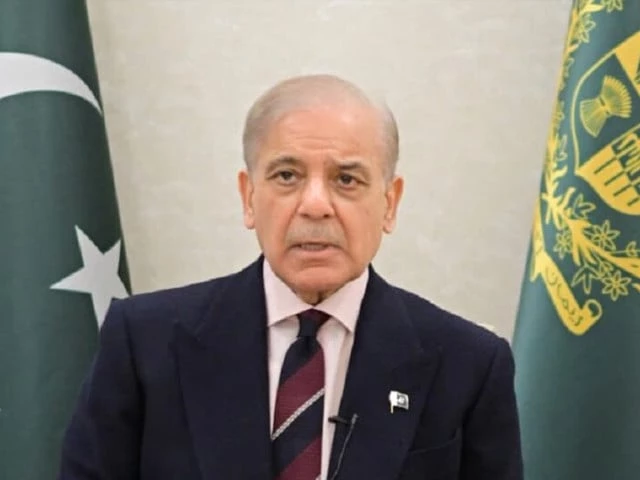
Prime Minister Shehbaz Sharif has hailed Pakistan’s growing diplomatic role in facilitating dialogue between the United States and Iran, describing the effort as a defining moment that has elevated the country’s international standing and restored global confidence in Islamabad’s leadership.
Speaking in an interview with The Sunday Times, the prime minister said Pakistan’s involvement in efforts to reduce tensions between Washington and Tehran represented “one of the shining moments” in the country’s history.
His remarks come at a crucial time as the Middle East continues to face instability linked to stalled negotiations, military tensions, and broader geopolitical rivalries involving Iran, the United States, and Gulf nations.
Pakistan Emerging as a Trusted Diplomatic Mediator
During the interview, Shehbaz Sharif emphasized that Pakistan had earned recognition as a reliable and neutral mediator capable of engaging with rival powers simultaneously.
“Pakistan is acknowledged worldwide as an honest mediator and as a country in which international leadership has full trust and faith,” the prime minister said, expressing pride in what he described as a major diplomatic achievement for the country.
The premier stated that both the United States and Iran had shown confidence in Pakistan’s mediation efforts, alongside Gulf states that remain deeply invested in regional stability.
According to Shehbaz, Islamabad’s current diplomatic role reflects years of strategic balancing between regional and global powers while maintaining constructive ties across competing blocs.
Hope for Renewed US-Iran Negotiations
The prime minister also expressed optimism regarding a possible second round of direct talks between the United States and Iran, saying Pakistan continues to work behind the scenes to encourage lasting peace.
He stressed that diplomacy requires patience, strategic wisdom, and persistence, particularly during periods of heightened regional uncertainty.
“As we speak, we’re still doing our best to ensure that this peace effort achieves long-lasting peace,” he said, adding that Islamabad remains hopeful future discussions could take place in Pakistan’s capital.
Diplomatic observers believe Pakistan’s involvement could become increasingly important as direct communication channels between Washington and Tehran remain fragile following months of confrontation and failed negotiations.
Political and Military Coordination Praised
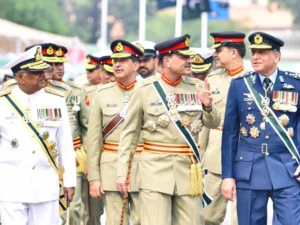
A key theme in the interview was the coordination between Pakistan’s civilian and military leadership in shaping the country’s foreign policy approach.
Shehbaz Sharif praised Asim Munir for what he described as a critical role in advancing Pakistan’s diplomatic outreach and regional engagement strategy.
The prime minister said the collaboration between political leadership and the military had significantly improved Pakistan’s international image and strengthened confidence among foreign governments.
“What we are seeing is team efforts of the political and military leadership,” he said, adding that the role played by the military leadership “will be recorded in history.”
Analysts note that Pakistan’s foreign policy has historically relied on close coordination between civilian authorities and the military establishment, especially on regional security and strategic affairs.
Ishaq Dar’s Diplomatic Engagement Highlighted
The prime minister also commended Ishaq Dar for maintaining extensive diplomatic engagement with international counterparts during the ongoing peace efforts.
According to Shehbaz, Dar has remained actively involved in dialogue with regional and global stakeholders while pursuing de-escalation initiatives.
Officials familiar with recent diplomatic activity say Pakistan has increased communication with Gulf countries, Western capitals, and regional powers in an effort to prevent broader instability in the Middle East.
Pakistan’s Global Image Under Transformation
The premier’s remarks reflect Islamabad’s broader effort to reposition itself internationally as a stabilizing regional actor rather than merely a security-focused state.
Political analysts argue that successful mediation between rival powers could significantly enhance Pakistan’s diplomatic credibility at a time when many countries are seeking neutral intermediaries capable of facilitating dialogue.
Pakistan’s involvement also highlights its strategic geographic importance connecting South Asia, Central Asia, the Middle East, and the Gulf region.
Experts believe Islamabad’s balanced relations with Tehran, Washington, Beijing, Riyadh, and other Gulf capitals have given it a unique diplomatic advantage in the current geopolitical climate.
Regional Stakes Remain High
Despite the optimism expressed by the prime minister, challenges remain significant.
Relations between the United States and Iran continue to be strained over nuclear negotiations, sanctions, regional security concerns, and military tensions involving allied groups across the Middle East.
Recent incidents, including drone attacks near critical infrastructure and escalating rhetoric between regional powers, have further complicated diplomatic efforts.
Security experts warn that any collapse in negotiations could trigger wider instability affecting energy markets, trade routes, and regional security dynamics.
Analysis: Pakistan Seeking a Larger Global Role
Shehbaz Sharif’s comments indicate that Pakistan is attempting to redefine its international image through diplomacy and mediation rather than conflict-driven narratives.
By facilitating dialogue between the United States and Iran, Islamabad appears eager to position itself as a responsible regional stakeholder capable of contributing to global peace efforts.
The emphasis on political-military coordination also signals an attempt to project internal unity to international audiences at a time when geopolitical competition is reshaping alliances across Asia and the Middle East.
If Pakistan successfully helps sustain dialogue between Tehran and Washington, analysts believe it could strengthen Islamabad’s standing among both Western and regional powers while opening new economic and diplomatic opportunities.
However, experts caution that mediation in highly sensitive conflicts also carries risks, especially if negotiations fail or regional tensions intensify further.
For now, Pakistan’s leadership appears determined to capitalize on what it sees as a rare diplomatic opportunity to reshape the country’s global perception and influence.