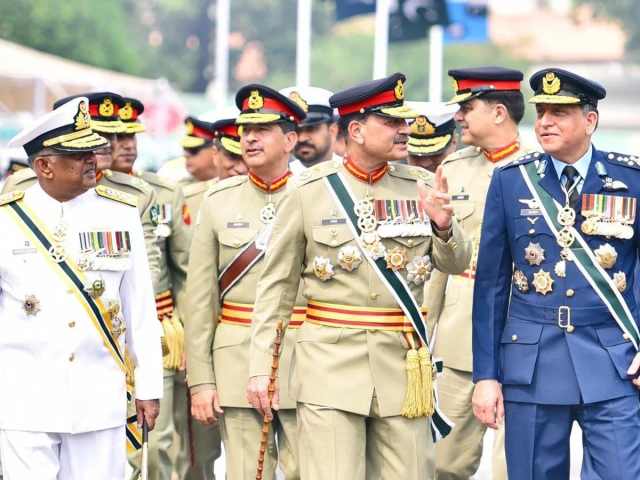
Pakistan’s military has sharply condemned recent remarks made by India’s army chief, warning that inflammatory rhetoric between two nuclear-armed neighbors risks pushing South Asia toward another dangerous crisis.
In a strongly worded statement issued on Sunday, the Inter-Services Public Relations (ISPR) criticized comments attributed to the Indian army chief, who reportedly questioned whether Pakistan “desired to remain part of geography and history.”
The remarks have triggered a fresh diplomatic and military war of words between Islamabad and New Delhi at a time when regional tensions remain elevated following the 2025 military confrontation between the two countries.
ISPR Rejects Indian Narrative
The ISPR described the Indian army chief’s comments as “provocative,” accusing India’s leadership of failing to accept Pakistan’s existence even after more than seven decades since Partition.
According to the military’s media wing, Pakistan remains “an indelible part of South Asia’s geography and history” and continues to hold strategic importance globally as a declared nuclear power.
The statement argued that hostile rhetoric rooted in nationalist ideology and regional dominance had repeatedly destabilized South Asia and contributed to cycles of conflict between the neighboring states.
Pakistan’s military also warned that threats directed toward a sovereign nuclear state reflected what it described as “dangerous brinkmanship” rather than responsible strategic communication.
Warning Against Escalation
The ISPR cautioned that any attempt to threaten Pakistan’s sovereignty or territorial integrity could have consequences extending beyond conventional military calculations.
“Responsible nuclear states reflect restraint, maturity, and strategic sobriety,” the statement said, adding that rhetoric involving “national erasure” and “civilizational supremacy” was incompatible with responsible statecraft.
Analysts say such statements are particularly sensitive given the fragile security environment in South Asia, where both Pakistan and India possess nuclear weapons and maintain one of the world’s most heavily militarized borders.
Diplomatic observers warn that aggressive public messaging from senior military leadership on either side risks inflaming nationalist sentiment and reducing space for diplomatic engagement.
Tensions Linked to 2025 Conflict
The latest exchange comes months after the 2025 military confrontation between Pakistan and India, referred to by Pakistan as “Marka-e-Haq.”
The conflict erupted following the April 22 Pahalgam attack and escalated into cross-border military operations before a ceasefire agreement was reached on May 10 under what Pakistan termed Operation Bunyanum Marsoos.
Although open hostilities subsided after the ceasefire, relations between the two countries have remained tense, with both sides continuing to exchange accusations regarding regional instability and security threats.
Pakistan’s military stated that India’s current rhetoric reflected frustration over what it described as New Delhi’s inability to strategically isolate or weaken Pakistan during the recent confrontation.
Pakistan Accuses India of Regional Destabilization
In its statement, the ISPR accused India of engaging in destabilizing activities across the region, alleging involvement in terrorism, disinformation campaigns, and transnational operations.
The military’s media wing claimed that India’s aggressive posture was aimed at distracting from internal and regional challenges while projecting strength internationally.
India has repeatedly denied similar allegations in the past and has instead accused Pakistan of supporting militant activity across the Line of Control and in Indian-administered Kashmir.
The ongoing blame game continues to deepen mistrust between the two countries, further complicating prospects for sustained diplomatic dialogue.
Regional Stability Under Pressure
Security experts say the latest rhetoric underscores how fragile peace remains in South Asia despite the recent ceasefire.
The region has historically witnessed multiple wars and military standoffs between Pakistan and India, including conflicts over Kashmir, border disputes, and cross-border militancy allegations.
International observers have often expressed concern that even limited escalation between the two nuclear-armed nations could rapidly spiral into a broader regional crisis.
Global powers, including the United States, China, and Gulf nations, have repeatedly encouraged both Islamabad and New Delhi to maintain communication channels and avoid inflammatory statements capable of worsening tensions.
Calls for Peaceful Coexistence
Despite its strong criticism, the ISPR also called on India to “learn to co-exist peacefully” with Pakistan and recognize the strategic realities of the region.
The statement emphasized that sustainable peace in South Asia would require dialogue, mutual respect, and avoidance of hostile rhetoric that could destabilize the region further.
Political analysts note that while military statements often reflect strategic messaging for domestic and international audiences, such exchanges can also influence diplomatic relations and military preparedness on both sides.
At a time when South Asia faces economic pressures, climate-related challenges, and security concerns, experts argue that regional cooperation remains essential for long-term stability.
Analysis: Escalating Rhetoric Raises Regional Concerns
The latest confrontation in public messaging highlights the increasingly hardline narratives emerging from both Pakistan and India following the 2025 conflict.
For Pakistan, the ISPR’s response appears aimed at reinforcing deterrence and signaling that any perceived threat to national sovereignty will be met firmly.
For India, analysts believe the rhetoric reflects growing domestic political pressure and efforts to project military confidence amid ongoing regional security tensions.
However, experts warn that repeated hostile exchanges between senior military figures could create a dangerous environment where miscalculation becomes more likely.
With both countries possessing advanced military capabilities and nuclear arsenals, maintaining strategic restraint remains critical for regional and global stability.
The coming months will likely test whether diplomatic backchannels and ceasefire mechanisms can withstand mounting political and military pressure on both sides.