Growing political tensions and worsening economic challenges in Khyber Pakhtunkhwa have triggered fresh concerns after Governor Faisal Karim Kundi warned that mounting public frustration over shortages, governance failures, and economic hardship could push people onto the streets.
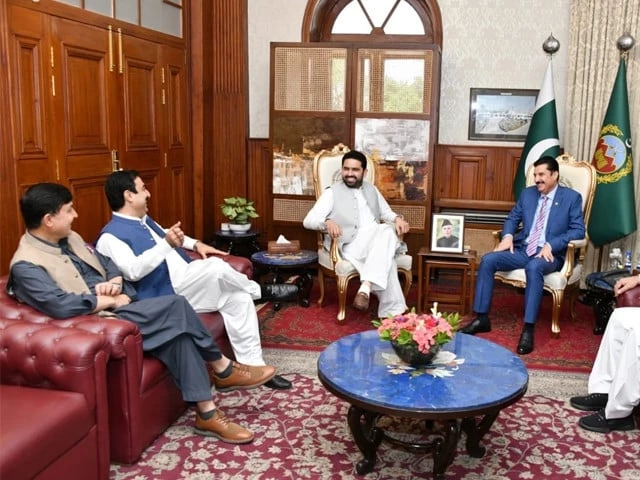
Speaking to the media after meeting Chief Minister Sohail Afridi at the Governor House in Peshawar, Kundi urged the federal government to immediately intervene and help resolve key issues affecting the province.
The governor’s remarks reflect increasing political pressure on both provincial and federal authorities as residents of Khyber-Pakhtunkhwa continue to face economic difficulties, supply disruptions, and security-related concerns.
Governor Warns of Growing Public Anger
During his media interaction in Islamabad, Kundi issued a stark warning regarding the province’s social and economic conditions.
“The people of K-P have reached a point where if they take to the streets tomorrow, nobody could be held responsible for it,” he said.
The governor emphasized that shortages of essential commodities and governance challenges were intensifying public frustration across the province.
He specifically highlighted the suspension of CNG supply and restrictions on wheat transportation as major issues requiring urgent federal attention.
According to Kundi, the worsening economic situation risks creating wider unrest if authorities fail to respond effectively.
Wheat Supply Dispute Raises Concerns
One of the governor’s central concerns involved wheat supply disruptions affecting the province.
Kundi stated that if Punjab faced issues supplying wheat to Khyber-Pakhtunkhwa, then alternative transportation routes from Sindh should be facilitated.
He claimed provincial authorities had been instructed to transport wheat from Sindh through Balochistan rather than via Punjab.
The comments highlight growing inter-provincial tensions over food supply chains and resource distribution amid inflationary pressures and economic instability in Pakistan.
Food security experts warn that disruptions in wheat supply could significantly affect lower-income populations already struggling with rising living costs.
Call for Federal Government Intervention
Kundi appealed directly to Prime Minister Shehbaz Sharif to personally address the province’s concerns.
He said he had already engaged with stakeholders and provincial ministers but stressed that stronger federal involvement was necessary to prevent conditions from deteriorating further.
“When you do not give them roti, and there is no one to listen to their problems, they will certainly take to the streets,” the governor warned.
Political analysts note that Khyber-Pakhtunkhwa has historically faced complex governance challenges linked to security concerns, economic underdevelopment, and political polarization.
Criticism of PTI-Led Provincial Government
Alongside his appeal for federal support, Kundi also criticized the Pakistan Tehreek-e-Insaf (PTI)-led provincial government for what he described as misplaced political priorities.
The governor said he advised Chief Minister Afridi to focus more on governance and provincial administration instead of political activity related to Adiala Jail, where former prime minister Imran Khan remains imprisoned.
Kundi questioned how governance could function effectively if senior provincial leadership remained heavily occupied with political mobilization centered around the jailed PTI founder.
“Who will be responsible for governing the province if you are sitting outside Adiala for five days of the week?” he asked.
In a sarcastic remark, Kundi suggested there should be “two PTIs — one to govern and one for Adiala.”
Political Divisions Continue Despite Cooperation Pledge
Despite his criticism, the governor also stated that he remained willing to cooperate with the provincial government on matters involving public welfare, peace, and provincial stability.
Observers say the meeting between the governor and chief minister reflects an attempt to maintain communication between the federal-backed governor’s office and the PTI-led provincial administration despite deep political differences.
Relations between Pakistan’s federal government and PTI-controlled provinces have remained tense since the party’s removal from federal power, particularly after the legal and political cases involving Imran Khan intensified.
Economic and Security Challenges Facing Khyber-Pakhtunkhwa
Khyber-Pakhtunkhwa continues to face multiple overlapping challenges, including inflation, unemployment, security threats, and infrastructure pressures.
The province has also witnessed recurring militant attacks in recent years, raising concerns about security management and governance effectiveness.
Economic experts warn that shortages of fuel and food supplies could further deepen dissatisfaction among citizens already affected by rising inflation and slowing economic growth nationwide.
The province’s strategic location bordering Afghanistan also adds complexity to its security and economic environment.
Rising Pressure on Both Provincial and Federal Authorities
Kundi’s remarks reflect growing political anxiety over the worsening governance and economic situation in Khyber-Pakhtunkhwa.
For the federal government, the warnings increase pressure to ensure stable supply chains and address public grievances before unrest escalates further.
For the PTI-led provincial administration, criticism regarding governance priorities could intensify political scrutiny at a time when the party remains heavily focused on legal and political campaigns linked to Imran Khan.
Analysts say the situation highlights the broader challenge facing Pakistan’s political system: balancing governance responsibilities with ongoing political confrontation.
If economic hardships continue without visible relief measures, experts warn that both provincial and federal authorities could face increasing public dissatisfaction in the coming months.