Russia and China issued a strong joint warning Wednesday that the world risks descending into a “law of the jungle” era as global tensions intensify and major powers increasingly compete for influence.
In a joint declaration released during Russian President Vladimir Putin’s high-profile visit to Beijing, Moscow and Beijing criticized what they described as failed attempts by certain countries to dominate global affairs in the spirit of colonial-era politics.
“The global situation is becoming more complex,” the declaration stated, warning of “fragmentation of the international community and a return to the ‘law of the jungle’.”
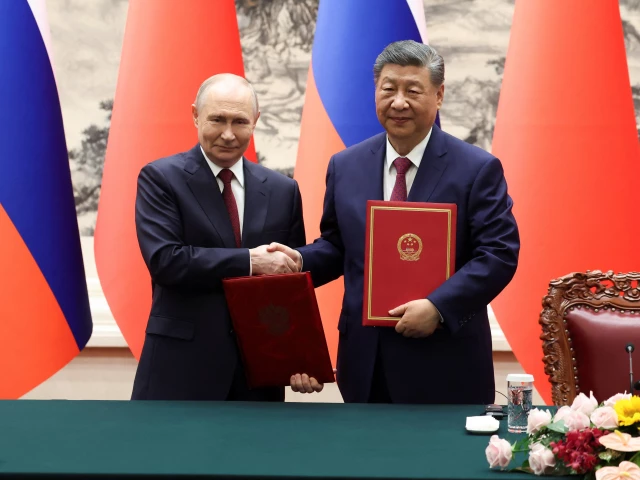
The statement was issued following talks between Putin and Chinese President Xi Jinping at the Great Hall of the People in Beijing.
Russia and China Push Vision of New Global Order
The summit underscored the growing strategic partnership between Moscow and Beijing at a time of increasing rivalry with the West.
According to the joint statement, Russia and China accused unnamed states of trying to “unilaterally manage global affairs” and suppress the sovereign development of other countries.
The declaration reflects a broader effort by both governments to position themselves as defenders of a multipolar international order against what they describe as Western dominance.
Xi emphasized the need for a “more just and reasonable” system of global governance during the meeting.
“The reason China-Russia relations have reached this level is that we have been able to deepen political mutual trust and strategic cooperation,” Xi said.
Putin similarly praised the partnership, calling it “an example of international relations in the modern world.”
Putin Visit Comes Days After Trump’s China Trip
The timing of Putin’s arrival in Beijing has drawn significant international attention because it came only days after US President Donald Trump completed a major state visit to China.
Analysts say the rapid succession of the two visits highlights China’s increasingly delicate balancing act between improving ties with Washington while deepening strategic cooperation with Moscow.
During Trump’s visit, the United States and China discussed trade stabilization, tariffs, artificial intelligence, and semiconductor access.
In contrast, Putin’s trip has focused heavily on long-term strategic alignment, energy cooperation, and global geopolitical coordination.
Symbolic Diplomacy Sends Clear Message
The optics surrounding the Putin-Xi summit were carefully watched by diplomats and analysts worldwide.
Xi welcomed Putin with:
- An honor guard
- A gun salute
- Flag-waving ceremonies
- Private tea discussions
Observers noted the warmer and more personal tone of Putin’s reception compared to Trump’s more formal state visit.
Putin and Xi have repeatedly referred to one another as “old friend” and “dear friend,” language reflecting the unusually close personal diplomacy between the two leaders.
Energy Cooperation Central to Talks
Energy security emerged as one of the summit’s most important topics.
Russia continues to be one of China’s largest suppliers of oil and gas, particularly after Western sanctions pushed Moscow to strengthen economic ties with Asia.
A key issue during the talks involves the long-delayed Power of Siberia 2 gas pipeline project.
Russian energy giant Gazprom previously announced progress on the pipeline, though major issues — especially gas pricing — remain unresolved.
Analysts believe recent instability in Middle East energy markets may strengthen Russia’s argument for expanded long-term energy exports to China.
However, Beijing continues pursuing a broader strategy of diversifying energy suppliers rather than depending too heavily on a single source.
Trade and Economic Cooperation Expanding
China remains Russia’s largest buyer of crude oil, including both pipeline and seaborne shipments.
At the same time, China also signaled interest in stabilizing trade relations with the United States independently of its relationship with Russia.
During the summit, China confirmed a purchase of 200 Boeing aircraft initially announced after the Trump-Xi talks.
Beijing also expressed interest in extending a trade truce with Washington and pursuing reciprocal tariff reductions.
The dual-track diplomacy illustrates how China is attempting to balance strategic rivalry, economic pragmatism, and geopolitical influence simultaneously.
Ukraine War and Western Sanctions Shape Alliance
The Russia-China partnership has expanded dramatically since Western sanctions isolated Moscow following the Ukraine conflict.
China has become a crucial economic lifeline for Russia, helping offset pressure from:
- Financial sanctions
- Trade restrictions
- Technology bans
- Energy limitations
Putin reportedly acknowledged the need to reverse a recent downturn in bilateral trade while emphasizing the importance of China to Russia’s economic future.
Dozens of Agreements Expected
The Kremlin said the summit carried “serious expectations,” with approximately 40 agreements and a major joint statement expected to be signed.
The agreements are expected to cover:
- Energy cooperation
- Infrastructure
- Technology
- Trade
- Strategic coordination
- International diplomacy
Foreign policy experts say even the symbolism of the summit sends a powerful geopolitical signal.
Patricia Kim of the Brookings Institution noted that the meeting reinforces the perception that the China-Russia partnership remains “strong, institutionalised, and coordinated.”
Beijing and Moscow Signal Resistance to Western Dominance
The summit between Xi and Putin reflects a rapidly shifting global order in which China and Russia increasingly present themselves as alternatives to Western-led international structures.
Their warning about a return to the “law of the jungle” highlights growing concerns over:
- Military conflicts
- Trade wars
- Sanctions diplomacy
- Technological competition
- Fragmentation of global alliances
For Russia, closer ties with China are critical for economic survival amid ongoing sanctions pressure.
For China, partnership with Moscow strengthens its strategic leverage while challenging American influence without fully abandoning economic engagement with the West.
The contrast between Trump’s stabilization-focused Beijing visit and Putin’s strategic partnership summit illustrates how China is positioning itself at the center of multiple competing power blocs.
As global tensions continue rising, the evolving Russia-China relationship may remain one of the defining geopolitical forces shaping the future international system.