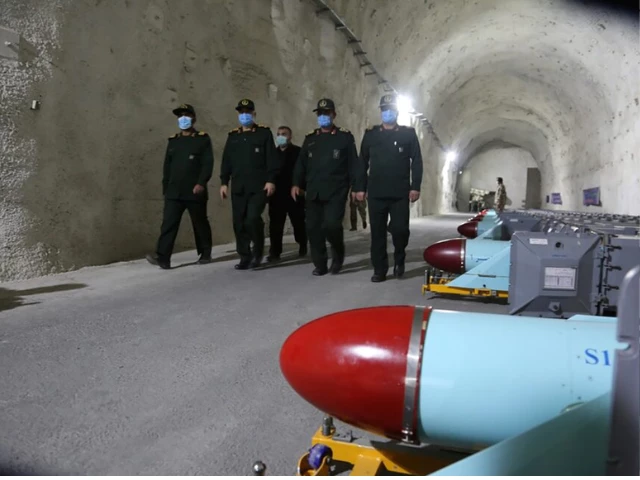
Iran’s powerful Islamic Revolutionary Guard Corps (IRGC) issued a stark warning Wednesday, declaring that any renewed US-Israeli military assault on Iran would trigger a conflict extending “far beyond the region.”
The threat comes as tensions sharply escalate between Washington and Tehran despite ongoing diplomatic efforts aimed at preserving a fragile ceasefire that has largely held since early April.
In a statement published through Sepah News, the Revolutionary Guards warned that any repeat of military aggression would unleash devastating retaliation.
“If the aggression against Iran is repeated, the promised regional war will this time spread far beyond the region,” the statement said, adding that Iran’s “devastating blows” would intensify if attacks resume.
Trump Threatens New Strikes Within Days
The IRGC’s warning followed fresh remarks from US President Donald Trump, who said Washington could launch new military strikes against Iran within days if negotiations fail to produce a settlement.
Speaking at the White House, Trump revealed he had paused a planned attack after Gulf Arab leaders requested additional time for diplomacy.
“I’m saying two or three days, maybe Friday, Saturday, Sunday,” Trump told reporters while insisting Iran remained under pressure to accept a deal.
The comments reflect the increasingly unstable balance between military pressure and diplomacy as both sides continue exchanging proposals through intermediaries including Pakistan and Gulf states.
Iran Says It Has Not Used Full Military Capability
The Revolutionary Guards claimed that despite the scale of the recent US-Israeli campaign, Iran had still not fully deployed its military capabilities.
“The American-Zionist enemy must know that despite the offensive carried out against us using the full capabilities of the world’s two most expensive armies, we have not deployed the full power of the Islamic revolution,” the statement declared.
Iranian officials continue portraying the ceasefire period as an opportunity to strengthen defenses and prepare for potential escalation.
The nearly 40-day conflict earlier this year reportedly killed senior Iranian military and political figures, including Supreme Leader Ali Khamenei, according to reports referenced during the ongoing crisis.
Strait of Hormuz Crisis Remains Critical
The standoff continues to center heavily around the Strait of Hormuz, one of the world’s most important energy corridors.
The conflict has severely disrupted global oil shipments, with hundreds of tankers delayed in Gulf waters due to naval tensions, drone attacks, and regional instability.
However, there were signs of cautious optimism Wednesday after two Chinese oil tankers successfully exited the Strait carrying approximately four million barrels of crude oil.
The movement of the vessels slightly eased fears surrounding global supply disruptions.
Oil prices initially fell following positive comments from the White House regarding negotiations before recovering much of the losses later in trading.
JD Vance Says ‘A Lot of Progress’ Made
US Vice President JD Vance suggested negotiations were advancing despite ongoing tensions.
“We’re in a pretty good spot here,” Vance said during a White House briefing while acknowledging difficulties in understanding Tehran’s negotiating position.
Vance reiterated that Washington’s core objective remained preventing Iran from obtaining nuclear weapons and limiting the spread of nuclear capabilities across the Middle East.
At the same time, Iranian officials accused Washington of presenting threats as diplomacy while refusing meaningful concessions.
Iran’s Conditions Remain Firm
According to Iranian state media, Tehran’s latest proposal includes:
- Ending hostilities across the region
- Withdrawal of US forces near Iran
- Removal of sanctions
- Release of frozen Iranian assets
- Compensation for wartime destruction
- Ending naval restrictions around Iranian ports
Reports also indicate the United States has demanded major restrictions on Iran’s nuclear infrastructure and uranium stockpiles.
Iranian officials reportedly rejected several American demands as excessive and one-sided.
UN Alarm Grows Over Gulf Security
The conflict has also raised growing international concern about attacks near critical energy and nuclear infrastructure.
At the United Nations Security Council, Pakistan’s Ambassador Asim Iftikhar Ahmad condemned recent drone attacks targeting the UAE’s Barakah nuclear facility and Saudi Arabia.
Meanwhile, Rafael Grossi warned that a direct strike on the Barakah nuclear plant could result in “a very high release of radioactivity.”
The UN nuclear watchdog warned that attacks on operating nuclear facilities could trigger severe environmental and humanitarian consequences across hundreds of kilometers.
Ceasefire Holding — But Tensions Persist
Although the ceasefire between Iran and US-Israeli forces has mostly held since April, instability continues across the broader region.
Recent drone launches from Iraq toward Gulf countries including Saudi Arabia and Kuwait have heightened fears that proxy groups aligned with Iran could widen the conflict further.
Despite extensive bombing campaigns, analysts note that Iran still retains:
- Missile capabilities
- Drone infrastructure
- Proxy militia networks
- Enriched uranium stockpiles
At the same time, the Iranian government appears to have survived the conflict politically despite internal unrest earlier in the year.
Middle East Edges Closer to Wider Confrontation
The latest warning from Iran’s Revolutionary Guards underscores how fragile the current ceasefire remains.
Both Washington and Tehran continue publicly threatening escalation while simultaneously pursuing indirect negotiations through mediators.
For Iran, strong rhetoric serves both domestic and strategic purposes — projecting resilience after weeks of conflict while deterring further military attacks.
For the United States, military pressure remains part of a broader strategy aimed at forcing concessions on nuclear and regional security issues.
However, the growing threats involving Gulf shipping routes, nuclear infrastructure, and regional militias suggest the conflict could rapidly expand beyond bilateral confrontation if diplomacy collapses.
With global energy markets already strained and regional governments urging restraint, the coming days may prove critical in determining whether the Middle East moves toward renewed war or a fragile negotiated settlement.