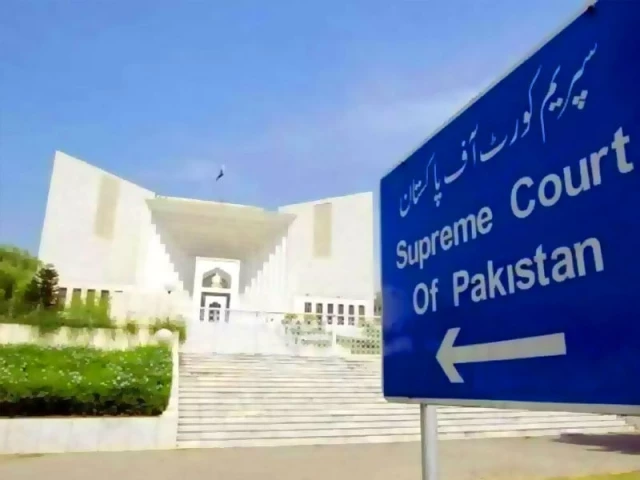
The Supreme Court of Pakistan has expressed serious concern over the vulnerability of politicians and parliamentarians to allegedly false criminal accusations, warning that public officials can implicate elected representatives in even capital offences “without any justification and with mala fide intent.”
The remarks were made in an eight-page judgment authored by Justice Jamal Khan Mandokhail while acquitting an MQM politician who had previously been sentenced to life imprisonment in a murder case based primarily on a confessional statement.
The ruling has drawn significant attention within legal and political circles because of its broader observations regarding misuse of criminal proceedings, preventive detention, and judicial confessions in Pakistan.
Supreme Court Questions Vulnerability of Politicians
In the judgment, the court stated that politicians — particularly parliamentarians — remain highly exposed to politically motivated criminal cases.
“Politicians in general, and parliamentarians in particular, are so vulnerable that they can be implicated in even capital charges without any justification and with mala fide intent by a public servant,” the ruling observed.
The court emphasized that because elected representatives serve the public and represent constituencies, judicial officers must exercise exceptional caution when recording statements and handling criminal allegations involving political figures.
Justice Mandokhail noted that the magistrate involved in the case failed to remain within the legal framework required under Section 364 of the Criminal Procedure Code (CrPC).
MQM Politician Acquitted in Murder Case
The judgment was issued by a three-member bench led by Justice Mandokhail.
The case involved a politician affiliated with the Muttahida Qaumi Movement (MQM), who had been convicted in 2016 and sentenced to life imprisonment in a murder case.
The conviction was later upheld by the Sindh High Court.
However, the Supreme Court ruled that the prosecution’s case relied almost entirely on a judicial confession allegedly made by the accused.
The court stressed that confessional statements must be examined with “utmost care, caution, and circumspection,” especially when such confessions are later retracted.
Court Raises Concerns Over Preventive Detention
The ruling also questioned the legality of the politician’s detention before the confession was recorded.
According to the judgment, the accused had been taken into custody by the Pakistan Rangers in 2016 under preventive detention provisions linked to the Anti-Terrorism Act.
The court observed that preventive detention under Section 11EEEE of the ATA 1997 required formal notification from the federal or provincial government.
However, the record reportedly contained no such notification authorizing the detention.
The judgment further noted that during this period of custody, the accused allegedly admitted guilt before Rangers officials before later being handed over to police.
Confessional Statement Became Central Issue
After spending eight days in police custody, the accused’s statement under Section 164 CrPC was recorded before a magistrate.
The confession later became the central basis for conviction.
The Supreme Court emphasized that under Pakistani law, a confessional statement must be:
- Voluntary
- Truthful
- Free from coercion
- Free from pressure or inducement
- Legally reliable
The judgment highlighted that magistrates are legally obligated to ensure accused persons are not under fear, influence, threat, or compulsion when statements are recorded.
Court Criticizes Failure to Follow Legal Safeguards
The ruling strongly suggested that required legal safeguards were not properly observed during the confession process.
Justice Mandokhail stressed that magistrates must remain vigilant while recording confessions, particularly in sensitive criminal and political cases.
Legal experts say the judgment reinforces long-standing judicial principles regarding the evidentiary risks associated with confessional statements obtained during custody.
The court’s remarks may also influence future cases involving:
- Preventive detention
- Political prosecutions
- Anti-terrorism laws
- Custodial confessions
- Judicial oversight
Wider Debate Over Political Cases in Pakistan
The Supreme Court’s observations arrive amid ongoing national debate regarding the use of criminal proceedings against politicians and political workers in Pakistan.
Successive governments and opposition parties have frequently accused state institutions and rivals of:
- Politically motivated arrests
- Misuse of anti-terror laws
- Coerced confessions
- Selective accountability
- Abuse of state authority
The court’s language is therefore likely to resonate beyond the specific case itself.
Legal Community Reacts to Judgment
Lawyers and constitutional experts say the judgment strengthens protections surrounding fair trial standards and due process rights.
The ruling may also increase judicial scrutiny regarding:
- How confessions are recorded
- Length of police custody
- Preventive detention procedures
- Role of magistrates in criminal investigations
Human rights advocates have repeatedly called for stronger safeguards against forced confessions and custodial abuse in Pakistan’s criminal justice system.
Analysis: Supreme Court Signals Concern Over Criminal Justice Misuse
The judgment reflects growing judicial awareness of how criminal law can potentially be used in politically sensitive contexts.
By specifically highlighting the vulnerability of politicians to false implication, the Supreme Court appears to be signaling broader concern regarding abuse of investigative powers and procedural failures.
At the same time, the ruling reinforces an important legal principle: confessional statements alone cannot automatically guarantee conviction unless courts are fully satisfied regarding their voluntariness and reliability.
The decision may have long-term implications for future criminal prosecutions involving political figures, especially cases built primarily around custodial confessions and anti-terror provisions.
For Pakistan’s legal system, the ruling also underscores the continuing tension between national security frameworks and constitutional protections related to due process and fair trial rights.