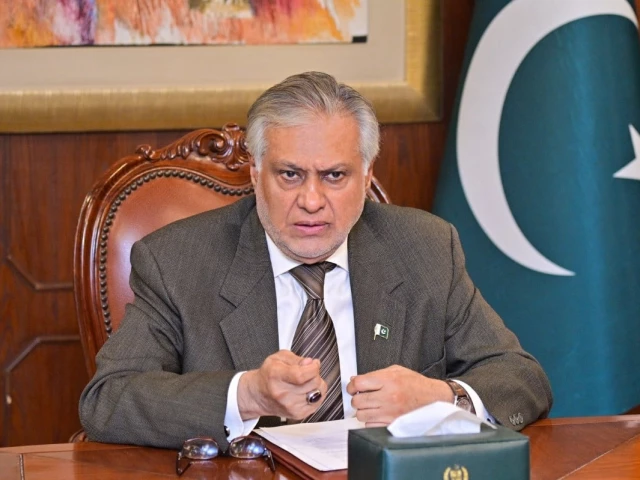
Deputy Prime Minister and Foreign Minister Ishaq Dar said Wednesday that relations between Pakistan and China have evolved into a multidimensional strategic partnership grounded in mutual trust, respect, and shared interests.
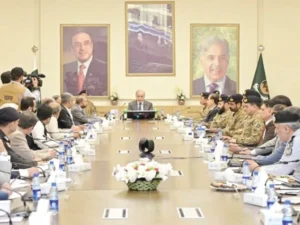
The remarks were delivered during a special Senate session in Islamabad marking the 75th anniversary of diplomatic relations between the two countries.
The event was attended by a high-level Chinese delegation led by Cai Dafeng and chaired jointly by Senate Chairman Yousaf Raza Gilani and Ishaq Dar.
Pakistan Reaffirms Support for One China Policy
Addressing senators and Chinese officials, Dar reiterated Pakistan’s firm commitment to the “One China” policy and praised Beijing for consistently supporting Pakistan’s sovereignty, security, and economic development.
“Pakistan-China bilateral relations are multidimensional and based on mutual trust, respect, and mutual benefit,” Dar stated.
He added that both countries have remained closely aligned at major international forums including:
- United Nations
- Shanghai Cooperation Organisation (SCO)
According to Dar, Pakistan and China continue coordinating on issues affecting developing nations and regional stability.
Pakistan Highlights Mediation Role in Regional Diplomacy
Dar also referenced Pakistan’s recent diplomatic engagement involving tensions between the United States and Iran.
He stated that Islamabad had played a role in efforts aimed at reducing regional tensions and promoting dialogue.
During his recent visit to China, Dar said both countries proposed a five-point peace initiative focused on regional de-escalation — a plan he claimed later received support from multiple countries.
The comments reflect Pakistan’s growing attempt to position itself as a regional diplomatic intermediary amid rising geopolitical tensions across the Middle East and Asia.
Dar Recalls Origins of CPEC
The deputy prime minister also revisited the origins of the China-Pakistan Economic Corridor (CPEC), describing how the initiative emerged following discussions between Pakistani and Chinese leadership after the 2013 elections.
According to Dar, Pakistan at that time was facing severe energy shortages, with electricity outages lasting:
- Up to 18 hours in cities
- Up to 20 hours in villages
He said Pakistani leadership requested Chinese assistance to overcome the crisis.
“We asked China to help Pakistan overcome load-shedding and energy shortages,” Dar said.
“Those discussions later turned into the CPEC project, and China gave massive support.”
CPEC 2.0 and Economic Expansion
Dar announced that the second phase of CPEC — often referred to as “CPEC 2.0” — had already begun.
The new phase is expected to include:
- Energy projects
- Industrial cooperation
- Infrastructure development
- Economic modernization initiatives
He described major projects such as the Karakoram Highway and Gwadar Port as enduring symbols of Pakistan-China friendship.
“CPEC has transformed Pakistan’s economic landscape,” Dar said.
Parliamentary Cooperation Expanding
The Senate session also focused heavily on parliamentary diplomacy and institutional cooperation between the two countries.
Dar announced that he would accompany Prime Minister Shehbaz Sharif on a state visit to China from May 23 to 26 to commemorate 75 years of diplomatic relations.
The visit is expected to include meetings with senior Chinese leadership including Premier Li Qiang.
According to Dar, a large multi-party parliamentary delegation from Pakistan will also participate.
Pakistan-China Political Parties Forum Planned
Officials said the upcoming engagements would include:
- Launch of the Pakistan-China Political Parties Forum
- Meetings under the CPEC Joint Consultative Mechanism
- Parliamentary exchange initiatives
- Strategic cooperation discussions
Pakistan’s leadership says expanding institutional and parliamentary ties will further strengthen long-term bilateral cooperation.
Gilani Calls China Pakistan’s ‘Extremely Important Friend’
Senate Chairman Yousaf Raza Gilani described the relationship as an “iron-clad friendship” built over decades of mutual trust and strategic partnership.
He repeated the well-known phrase often used to describe Pakistan-China ties:
“Higher than mountains, deeper than oceans, sweeter than honey, and stronger than steel.”
Gilani said the relationship remains central to regional peace and development.
China Presented as Development Model
Gilani also praised China’s economic transformation, describing Beijing as a model for development and poverty reduction.
“China promotes relations in the world for development, unlike countries that once built ties for wars,” he said.
He argued that the completion and expansion of CPEC would further strengthen economic connectivity and regional cooperation.
Pakistan-China Partnership Deepens Amid Global Uncertainty
The Senate session illustrates how Pakistan and China continue broadening their strategic relationship beyond infrastructure and trade into diplomacy, regional security, and parliamentary cooperation.
At a time of growing geopolitical fragmentation, Islamabad appears increasingly eager to reinforce its long-term alignment with Beijing while simultaneously pursuing mediation roles in regional conflicts.
China, meanwhile, continues viewing Pakistan as:
- A critical Belt and Road partner
- A strategic regional ally
- An important gateway for connectivity projects
The emphasis on CPEC 2.0 also reflects Pakistan’s hope that Chinese investment can help stabilize economic challenges and accelerate development.
However, analysts note that future success will depend heavily on:
- Security conditions
- Economic reforms
- Political stability
- Investor confidence
As both countries celebrate 75 years of diplomatic relations, the partnership increasingly appears positioned not only as a bilateral alliance but also as part of a broader strategic response to shifting global power dynamics.