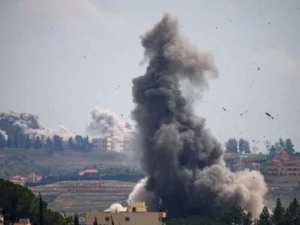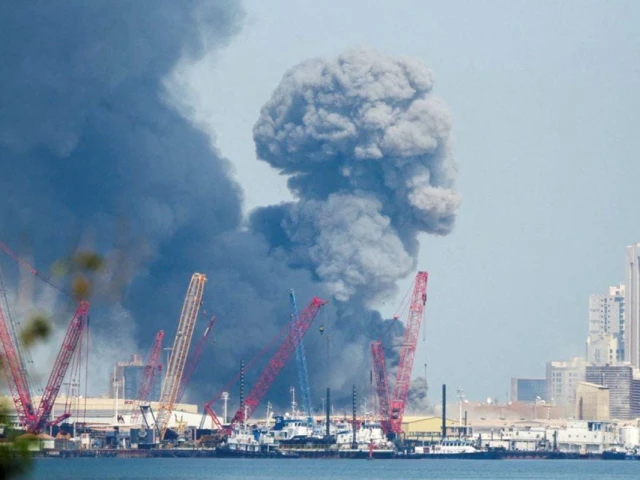
MANAMA: Bahrain has strongly condemned recent Iranian missile attacks targeting Bahraini and Kuwaiti territory, describing them as a serious violation of sovereignty and a threat to regional peace and stability.
In an official statement issued on Saturday, Bahrain’s Ministry of Foreign Affairs denounced the attacks as a “flagrant violation” of the sovereignty of both Bahrain and Kuwait, warning that such actions risk further destabilizing the Gulf region.
According to Bahraini authorities, the incoming missiles were successfully intercepted by air defense systems, preventing casualties and major damage.
Bahrain Accuses Iran of Violating International Law
The Bahraini government accused Tehran of violating international law and breaching United Nations Security Council Resolution 2817 (2026), which condemned attacks against regional states and attempts to disrupt maritime navigation through the strategically vital Strait of Hormuz.
The ministry urged Iran to immediately cease what it described as “unjustified attacks” and called for the full reopening of the Strait of Hormuz without restrictions.
Bahrain also demanded that Iran disclose the locations of any naval mines reportedly deployed in regional waters and facilitate the safe departure of more than 20,000 sailors currently stranded due to escalating security concerns.
Sovereignty a “Red Line”
In its statement, Bahrain emphasized that its patience should not be interpreted as weakness.
“The defense of Bahrain’s sovereignty is a red line,” the ministry declared, reaffirming the country’s commitment to taking all legitimate measures necessary to protect national security and territorial integrity.
The statement highlighted Bahrain’s determination to work with regional and international partners to maintain stability and ensure the safety of international shipping routes.
Emergency Measures Activated
Earlier on Saturday, Bahrain’s Ministry of Interior announced that warning sirens had been activated following the reported attacks.
Authorities advised citizens and residents to remain calm and move to designated safe locations as a precautionary measure.
Neighboring Kuwait also reported that its air defense systems had been engaged in response to what officials described as hostile missile and drone threats.
Rising Regional Tensions
The latest developments come amid heightened tensions across the Middle East following military strikes launched by the United States and Israel against Iran earlier this year.
The conflict triggered a series of retaliatory actions, including Iranian missile and drone attacks against Israel and countries hosting US military facilities.
The situation has also impacted maritime trade through the Strait of Hormuz, one of the world’s most important energy corridors through which a significant portion of global oil and liquefied natural gas exports pass.
Although a ceasefire was later announced, diplomatic efforts to achieve a broader and more lasting agreement have continued, with regional powers and international mediators working to prevent further escalation.
International Concern Growing
Regional governments and international organizations have repeatedly expressed concern over the possibility of a wider conflict that could threaten global energy markets, international shipping, and broader regional security.
Analysts warn that continued military confrontations could have significant economic and geopolitical consequences far beyond the Middle East.
As diplomatic negotiations continue, Gulf nations are calling for restraint, respect for sovereignty, and renewed efforts toward dialogue to avoid a deeper regional crisis.