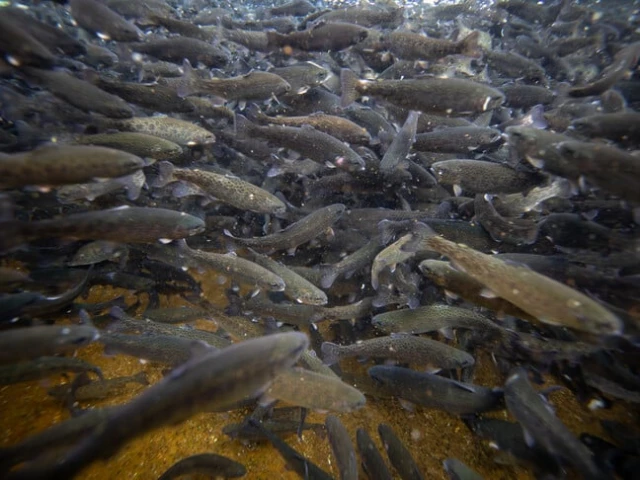
GILGIT: Pakistan’s renowned trout population in Gilgit-Baltistan (G-B), long celebrated for thriving in the region’s crystal-clear rivers, streams, and lakes, is facing a serious decline due to climate change, habitat destruction, hydropower development, and increasing overfishing, experts have warned.
According to environmental specialists and fisheries officials, trout numbers in the mountainous region have fallen by nearly 50 percent over the past two decades, raising concerns about the future of one of Pakistan’s most prized freshwater species.
Climate Change Damaging Trout Habitats
Gilgit-Baltistan’s glacier-fed waters have traditionally provided ideal conditions for trout breeding and growth. However, changing weather patterns and extreme climate events are increasingly disrupting these fragile ecosystems.
According to wildlife experts, flash floods, glacial lake outburst floods (GLOFs), landslides, and sediment buildup have severely affected spawning grounds where trout reproduce.
“Climate change-induced floods are destroying breeding habitats by altering river sediments and gravel structures necessary for spawning,” environmental experts noted.
Trout require cold, oxygen-rich, and clean water to survive. Increased mud, debris, and rock deposits caused by floods are degrading water quality and threatening breeding cycles.
Overfishing Accelerating Population Decline
While climate change remains a major concern, illegal and excessive fishing has become another significant threat.
Authorities report that trout are increasingly being caught through prohibited methods, including:
- Dynamite fishing
- Illegal netting
- Electric shock fishing
Experts say these destructive practices are reducing fish populations and damaging aquatic ecosystems.
The decline is also reflected in the average size of trout being caught today.
“Ten years ago, catching a trout weighing more than two kilograms was common. Today, most catches range between 500 and 600 grams,” fisheries officials said.
Hydropower Projects Affect Migration
Hydropower development across Gilgit-Baltistan is also impacting trout populations.
Environmentalists argue that many hydroelectric projects have been constructed without fish ladders or bypass systems that allow trout to migrate upstream during breeding seasons.
Since trout naturally move upstream to spawn, blocked migration routes can prevent reproduction and result in long-term population declines.
Experts warn that unless fish-friendly infrastructure is incorporated into future projects, entire breeding cycles could be disrupted.
Improved Roads Fuel Commercial Fishing
The expansion of road networks throughout Gilgit-Baltistan has improved access to remote rivers, lakes, and streams that were previously difficult to reach.
While this has boosted tourism and economic activity, it has also increased commercial fishing pressure on trout-rich areas.
Environmental officials say easier access has enabled larger-scale harvesting of fish, contributing to declining populations in many regions.
Trout’s Historical Roots in Gilgit-Baltistan
Interestingly, trout is not native to Gilgit-Baltistan.
The species was introduced by British colonial administrators during the late 19th and early 20th centuries.
Today, the region is home to two major trout species:
- Brown Trout
- Rainbow Trout
Brown trout remain the dominant species and are especially abundant in the scenic Ghizer district, widely considered Pakistan’s trout capital.
Fishing is officially prohibited from October to March to protect breeding populations, although authorities acknowledge that violations remain common.
Trout Farming Industry Expands
While wild trout numbers are declining, trout farming is experiencing rapid growth throughout the region.
The Fisheries Department has actively promoted aquaculture by providing technical guidance and financial support since 2013.
As a result, the number of trout farms has increased dramatically.
- More than 450 trout farms now operate across Gilgit-Baltistan.
- Annual production exceeds 600 tons.
- Demand continues to rise in major cities including Islamabad, Lahore, and Peshawar.
Entrepreneurs report profit margins ranging between 80% and 100%, making trout farming one of the region’s most promising agricultural industries.
Tourism Drives Demand
Local tourism has also fueled demand for trout.
Visitors increasingly consider trout a signature culinary experience of Gilgit-Baltistan.
“No tourist returns from the region without tasting trout,” industry stakeholders say.
The growing popularity of the fish has strengthened local businesses while increasing pressure on natural populations.
Calls for Conservation Measures
Environmental organizations are urging authorities to implement stronger conservation policies and involve local communities in fisheries management.
Experts have suggested introducing a regulated trophy fishing model similar to Pakistan’s successful markhor conservation programme.
Under the markhor trophy hunting system, a significant portion of permit revenues is invested in local communities, helping fund schools, healthcare facilities, infrastructure, and conservation initiatives.
Conservationists believe a similar approach could support trout population recovery while generating sustainable income for local residents.
Balancing Conservation and Economic Growth
As climate change intensifies and fishing pressure continues to grow, experts stress that urgent action is needed to protect Gilgit-Baltistan’s iconic trout population.
While trout farming offers economic opportunities and growing domestic demand creates new markets, conservation measures will be essential to ensure the long-term survival of wild trout stocks.
Without stronger protections, one of Pakistan’s most celebrated freshwater species could face an increasingly uncertain future.