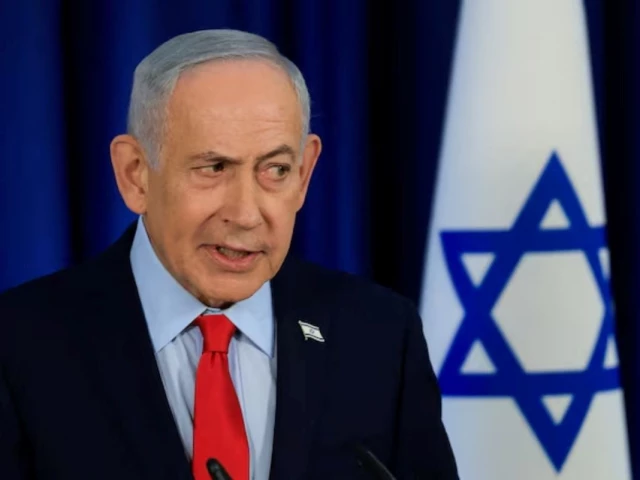
Israeli Prime Minister Benjamin Netanyahu’s decades-long grip on power is facing its most severe test yet, as a US-brokered interim agreement with Iran threatens to unravel the very pillars of his political identity. With elections looming this autumn, the man who built his career on security and a special relationship with Washington now finds himself publicly rebuked by President Donald Trump and abandoned by an ally seeking to exit a costly war .
Netanyahu, 76, confirmed this week he intends to stand in the election, which must be called by October . While opinion polls suggest his right-wing coalition is on course to lose, few Israeli political observers would entirely discount the survival instincts of a leader who has dominated the country’s parliamentary system for long stretches since the 1990s .
A Legacy Built on Security and U.S. Ties Unravels
The US-Iran framework agreement, set to be signed in Switzerland, represents a profound challenge to Netanyahu’s political narrative. President Donald Trump has opted to end the wars in Iran and Lebanon well before Israel’s stated goals were accomplished, leaving Netanyahu’s boast in March that “we are changing the face of the Middle East” looking increasingly hollow .
The deal has forced the ruling Likud party to scrap election advertisements highlighting Netanyahu’s close ties with Trump, an assessment that the leader’s once-valuable political asset had become a liability . The report noted that highlighting the two leaders’ rapport would not confer an advantage on Netanyahu amid rising Israeli anger and disappointment with the American leader’s actions .
Critics across the political spectrum have slammed the agreement. Opposition leader Yair Lapid described it as “one of the most shocking failures in Israel’s foreign and security policy … entirely registered in Netanyahu’s name” . Former Prime Minister Ehud Barak offered a blunt assessment: “Israel is paying the price of Netanyahu’s hubris and blindness… Iran emerged stronger; Israel emerged weaker. That is Netanyahu’s strategic responsibility. He failed” .
The ‘Mr. Security’ Image Under Siege
Netanyahu’s political career has been built on the image of “Mr. Security,” a leader uniquely capable of protecting Israel from its enemies. That image, already dented by the security failures surrounding the October 7, 2023, Hamas attack, has now been further undermined by the outcome of the war he championed .
While Israeli forces achieved significant tactical successes—including the killing of Hezbollah leader Hassan Nasrallah and Iran’s supreme leader—the war has not delivered a lasting victory. Hamas still controls much of Gaza, the Iranian regime remains in power, and Hezbollah has survived in Lebanon .
The war has left Israel in a strategic quagmire. Israeli forces now occupy large areas of Gaza, Lebanon, and Syria, stretching military resources and reservists to breaking point with no clear diplomatic path out . The interim deal is expected to halt the US blockade of Iran and require Israel to halt its offensive against Hezbollah in Lebanon, effectively tying Netanyahu’s hands before his war goals were achieved .
A Collision Course with Washington
Perhaps most damaging to Netanyahu’s political standing is the public deterioration of his relationship with Trump. The US president, who once stood alongside Netanyahu as a close ally, has in recent weeks called him “crazy,” ungrateful, and lacking in judgment . During a June phone call, Trump reportedly called Netanyahu “fucking crazy” after ordering him not to strike Beirut while the US was seeking a deal with Iran .
The Israeli leader now faces a stark choice. As one analyst summarized, the options are “either a direct and destructive confrontation with our greatest ally, or a submissive surrender of Israeli interests” . Netanyahu has attempted to navigate this by publicly insisting that Israel is not bound by the agreement and will continue to prevent Iran from obtaining nuclear weapons, but his leverage appears limited .
Analysis: A Defining Moment
The US-Iran agreement has exposed the fault lines in Netanyahu’s political strategy. The interim deal does not dismantle Iran’s nuclear program, curb its ballistic missile arsenal, or end its funding of regional proxies—all key Israeli objectives . Instead, the agreement appears to strengthen Iran’s position, easing sanctions and potentially allowing billions of dollars to flow into its economy .
Netanyahu’s political survival now depends on navigating an impossible dilemma. He must maintain his alliance with the US while satisfying a domestic audience that is increasingly skeptical of Trump’s commitment to Israel’s security . According to a recent poll, just 41% of Jewish Israelis think their security is a central consideration for Trump, down from 64% in March .
For a leader who built his career on being indispensable, Netanyahu now finds himself sidelined. The war he championed to secure his legacy may instead become the defining failure of his political life . As the October election approaches, Israeli voters will have the final say on whether the country’s arch-survivor can weather one more storm.