As an Italian mother’s grief transforms into a legal crusade against Meta and TikTok, the tech industry faces its most existential challenge since the tobacco litigation of the 1990s. But will this landmark case finally force accountability, or will powerful algorithms continue to operate beyond the reach of the law?
The Human Cost of Code
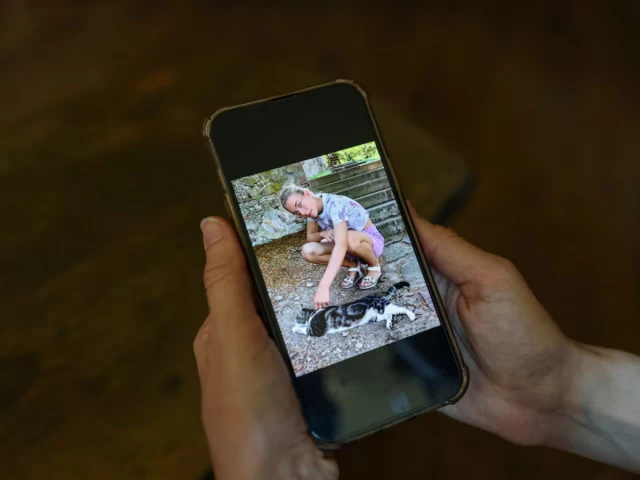
Rossella’s story is devastatingly simple: a 12-year-old girl, a secret Instagram account named “Just a dead pers0n,” and algorithms that systematically fed her depression until she could no longer escape. Her mother Irene watched helplessly as the platform—designed to connect—instead isolated her daughter in a digital echo chamber of despair.
“We underestimated certain risks and didn’t know they existed,” Irene told Reuters, her words carrying the unbearable weight of hindsight. “But others can still act.”
The ‘Tobacco Moment’ for Big Tech
Legal experts are drawing striking parallels between this Italian lawsuit and the landmark 1990s tobacco litigation that reshaped the industry. Both cases share a common thread: corporations designing products with known addictive properties while aggressively downplaying risks to vulnerable populations.
Tonino Cantelmi, the plaintiffs’ advisor and director of the School of Specialisation in Cognitive-Interpersonal Psychotherapy in Rome, offers a chilling comparison: “Each ‘like’ or notification triggers dopamine release, tying users to the platform in a way that resembles addiction.”
The lawsuit argues that social media platforms use reward mechanisms modeled on slot machines—scientifically designed to exploit neurobiological vulnerabilities. For children whose prefrontal cortexes are still developing, the impact is particularly devastating. Studies published in JAM Paediatrics have documented measurable differences in brain development among heavy social media users, suggesting that the damage may be physiological, not merely psychological.
The Limits of Corporate Safeguards
Both Meta and TikTok have vigorously defended their practices. Meta points to its “Teen Accounts” and built-in safeguards, while TikTok claims it removes more than 99% of content violating mental health guidelines. Yet these measures appear inadequate against the fundamental architecture of the platforms themselves.
Valentina Muraglie, a board member of Italy’s association of large families, articulates the impossible position parents face: “Monitoring social media use is a full-time job. It would require parents to spend all their time doing it, and that is simply unrealistic.”
The companies’ responses—emphasizing personal responsibility and parental involvement—obscure a crucial reality: no parent can compete with a trillion-dollar tech infrastructure designed to maximize engagement. When Rossella’s parents discovered her secret account, they realized she had been navigating a digital landscape where protection features were insufficient and bypass tutorials were readily available.
A Global Movement Takes Shape
The Italian case is not isolated. Britain has announced plans to ban social media for children under 16, European Union regulators are intensifying Digital Services Act enforcement, and multiple U.S. states have filed lawsuits against TikTok for “deliberately addictive” design. A U.S. ruling has already found Meta and Google negligent in designing platforms harmful to young people.
But the Italian case is unique in its “algorithm as product” framing. It challenges not just content moderation practices but the core logic of recommendation systems—the invisible force that pushed Rossella from curiosity to despair in five months.
The Uncomfortable Questions
Psychologist Federico Tonioni, head of the Web Psychopathology Centre at Rome’s Gemelli hospital, offers a nuanced perspective: “The healthiest approach when dealing with adolescents is to accept that we are unprepared.”
His warning against over-reliance on parental control complicates the narrative: “If there is something dangerous, it is control over children. Young people need to be listened to. Control is not a healthy form of presence. The healthiest distance is trust.”
This raises uncomfortable questions. Is the solution truly more restrictions, or does the tragedy of Rossella represent a failure of communication—a generation gap where digital fluency has outpaced adult understanding? The lawsuit itself concedes that the goal is not to dismiss the benefits of social media but to remove “harmful mechanisms.”
The Legacy
For Irene Roggero Ugues, the legal battle transcends personal grief. “There’s no point keeping this to myself, and I don’t think Rossella would mind,” she said, her words a quiet plea for a world where other families might be spared her devastating loss.
As the case proceeds, global attention will focus on Italy. Whatever the outcome, Rossella’s story has already achieved something profound: it has made the invisible architecture of social media visible, and has forced a reckoning with the question of who bears responsibility when code becomes a weapon against the vulnerable.