Austria Denies US Access to Airspace for Iran Operations
In a significant geopolitical development, Austria has officially refused to allow the United States military to use its airspace for bombing missions targeting Iran. The decision reflects growing resistance among European nations toward involvement—direct or indirect—in escalating tensions in the Middle East.
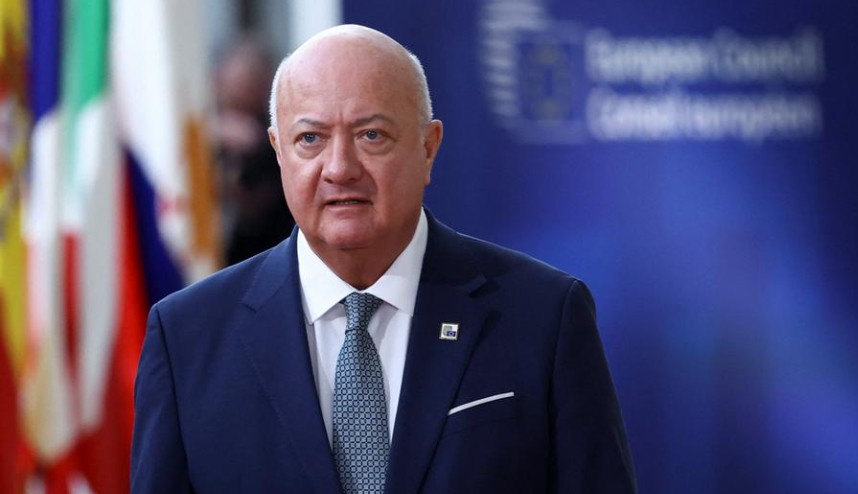
The Austrian government, led by Chancellor Christian Stocker, confirmed that it had rejected requests from Washington to facilitate military operations through its airspace. Officials emphasized Austria’s longstanding policy of neutrality and its commitment to avoiding participation in foreign conflicts.
Austria Joins EU Nations Opposing Military Involvement
With this move, Austria aligns itself with a growing number of European Union countries that are distancing themselves from US and Israeli military actions against Iran. The refusal signals a broader shift within Europe, where governments are increasingly cautious about being drawn into a potentially wider regional conflict.
Political analysts suggest that Austria’s stance is not isolated but part of a coordinated European hesitation to support operations that could escalate tensions further in the Middle East.
Italy Blocks Use of Strategic Sigonella Air Base
Austria’s decision comes shortly after Italy announced similar restrictions. The Italian government declared that US forces would not be permitted to use the strategically important Sigonella Air Base in Sicily for operations related to the conflict.
Italian authorities have also imposed a ban on the landing of US military aircraft at the base if they are linked to the ongoing hostilities. Sigonella has historically served as a key logistical hub for NATO and US operations in the Mediterranean, making Italy’s refusal particularly significant.
France and Spain Impose Airspace Restrictions
France has also taken decisive steps by closing its airspace to any aircraft suspected of transporting military equipment to Israel. The move underscores Paris’s intent to prevent indirect support for military actions that could intensify the conflict.
Similarly, Spain has implemented comparable restrictions, reinforcing a pattern of resistance across major European nations. These coordinated measures highlight growing unease within the EU regarding the potential consequences of continued military escalation.
Rising European Concern Over Escalation
The collective actions of Austria, Italy, France, and Spain indicate mounting concern within Europe over the risk of a broader war involving Iran. Governments across the continent are seeking to avoid entanglement while urging diplomatic solutions.
Experts warn that restricting access to airspace and military bases could complicate US operational logistics in the region, potentially impacting the scale and speed of any military campaign.
Neutrality and Strategic Autonomy in Focus
Austria’s refusal also brings renewed attention to the concept of neutrality in European foreign policy. As a non-NATO member with a constitutionally enshrined neutral status, Austria has historically avoided military alliances and conflicts.
By denying access to its airspace, Vienna reinforces its commitment to strategic autonomy and signals that it will not compromise its principles, even amid pressure from global powers.
Implications for US-EU Relations
This wave of restrictions could have broader implications for transatlantic relations. While the United States maintains strong ties with European allies, differing approaches to the Iran conflict may introduce friction.
However, analysts note that such disagreements are not uncommon and may ultimately lead to renewed diplomatic engagement rather than long-term division.
Austria’s decision to block US military use of its airspace marks a pivotal moment in Europe’s response to rising tensions involving Iran. Alongside Italy, France, and Spain, Vienna is sending a clear message: Europe is increasingly unwilling to be drawn into military conflicts that risk destabilizing the region further.
As the situation evolves, global attention will remain focused on whether diplomatic efforts can prevail over military escalation.