By Daily Frontlines | Economic Analysis
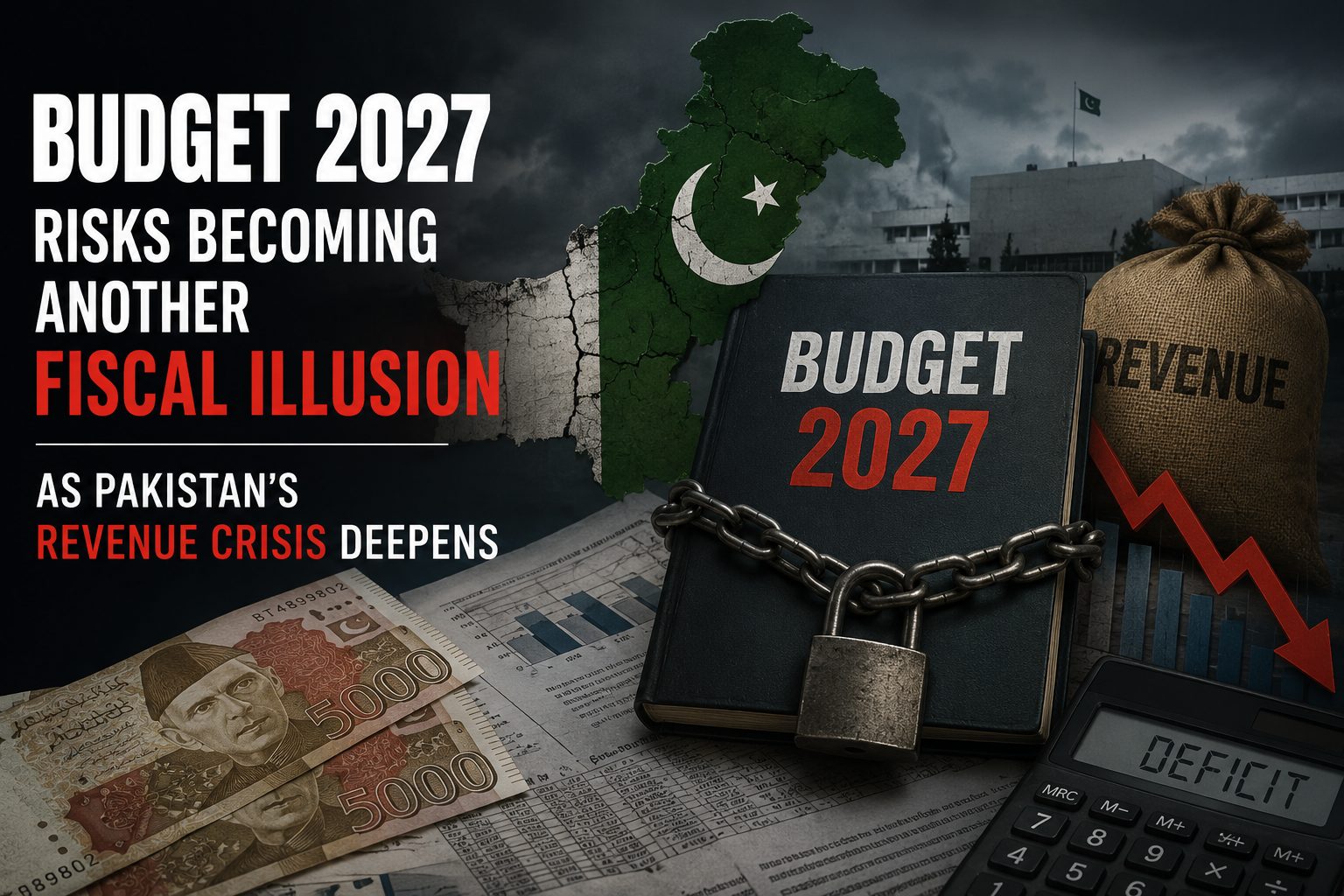
Pakistan is heading into Budget 2027 facing a familiar challenge: rising expenditure, growing debt obligations, and an increasingly fragile tax system. While authorities are expected to announce ambitious revenue targets and fiscal reforms, critics argue that the country risks repeating the same cycle of overestimating revenues while placing additional burdens on already compliant taxpayers.
A Revenue System Under Pressure
The latest fiscal data paints a concerning picture. During the first ten months of FY2025-26, tax collection remained significantly below target despite inflation-driven increases in nominal revenues. The shortfall has raised questions about whether Pakistan’s current taxation framework can sustainably support government spending without further increasing taxes on documented sectors.
Economists note that revenue growth driven by inflation, currency depreciation, and higher fuel prices should not be mistaken for genuine tax reform. Sustainable fiscal health requires expanding the tax base, improving compliance, and bringing untaxed sectors into the formal economy.
The Growing Reliance on Indirect Taxation
One of the key concerns surrounding the upcoming budget is the government’s continued dependence on indirect taxes and petroleum levies.
Critics argue that these measures disproportionately affect:
- Salaried employees
- Middle-income households
- Consumers
- Small businesses
- Documented taxpayers
While indirect taxes generate quick revenue, they often increase the cost of living and place a heavier burden on lower and middle-income groups than on wealthier segments of society.
Petroleum Levy Under Scrutiny
The petroleum levy has become a major source of government revenue in recent years. However, analysts argue that excessive reliance on fuel-related taxation can contribute to inflationary pressures throughout the economy by increasing transportation and production costs.
The Burden on Documented Taxpayers
A recurring criticism of Pakistan’s tax structure is that the majority of direct tax collection comes through withholding and advance taxes rather than comprehensive assessment and enforcement mechanisms.
This means that:
- Salaried workers often pay taxes automatically
- Businesses face multiple withholding obligations
- Banks and service providers act as tax collection agents
- Large segments of the informal economy remain outside the tax net
According to fiscal experts, this creates an uneven system where compliant taxpayers shoulder a disproportionate share of the burden.
Untapped Tax Potential
Pakistan’s economy continues to contain significant untaxed or under-taxed sectors, including:
- Informal businesses
- Speculative real estate transactions
- Segments of wholesale and retail trade
- Certain agricultural income streams
- Undocumented wealth holdings
Experts argue that bringing these sectors into a transparent and predictable tax regime could significantly improve revenue generation without imposing additional pressure on existing taxpayers.
Digital Integration Remains Key
Policy specialists have repeatedly called for greater integration of databases maintained by:
- National identity authorities
- Banking institutions
- Utility companies
- Telecom operators
- Provincial tax agencies
Such integration could improve compliance, reduce evasion, and create a more comprehensive picture of economic activity across the country.
Budget 2027: Reform or Repetition?
As policymakers prepare the next federal budget, economists say the real challenge is not setting higher revenue targets but addressing structural weaknesses within the taxation system.
Key reform proposals include:
Simplification of Tax Laws
Reducing complexity can improve compliance and lower administrative costs for businesses.
Broadening the Tax Base
Expanding taxation to previously undocumented sectors would distribute the burden more fairly.
Digital Revenue Administration
Technology-driven tax systems can reduce corruption, improve efficiency, and enhance transparency.
Federal-Provincial Coordination
Greater harmonisation between federal and provincial taxation frameworks could eliminate duplication and improve collection.
Economic Risks Ahead
If structural reforms are delayed, analysts warn that Pakistan may continue to face:
- Revenue shortfalls
- Higher borrowing requirements
- Inflationary pressures
- Reduced business confidence
- Slower economic growth
At the same time, increasing taxes on already compliant sectors may discourage investment and further strain formal economic activity.
Beyond Revenue Targets
Budget 2027 represents a critical opportunity for Pakistan to move beyond short-term fiscal management and undertake deeper institutional reforms.
The debate is no longer simply about collecting more taxes. Instead, it centers on creating a fairer, broader, and more efficient system capable of supporting sustainable economic growth while maintaining public trust.
Without meaningful structural changes, ambitious revenue targets may once again prove difficult to achieve, leaving taxpayers and businesses facing another year of uncertainty. As economists increasingly point out, the success of Budget 2027 will be judged not by headline figures but by whether it delivers genuine reform and long-term fiscal stability.