Khyber-Pakhtunkhwa Chief Minister Sohail Afridi on Sunday defended the recent statement by Pakistan Tehreek-e-Insaf (PTI) founder Imran Khan’s son, Kasim Khan, at the United Nations Human Rights Council (UNHRC), describing it as a natural expression of concern for his father rather than a political act. The remarks have sparked a political firestorm, with the federal government and business community accusing Kasim of undermining Pakistan’s trade interests.
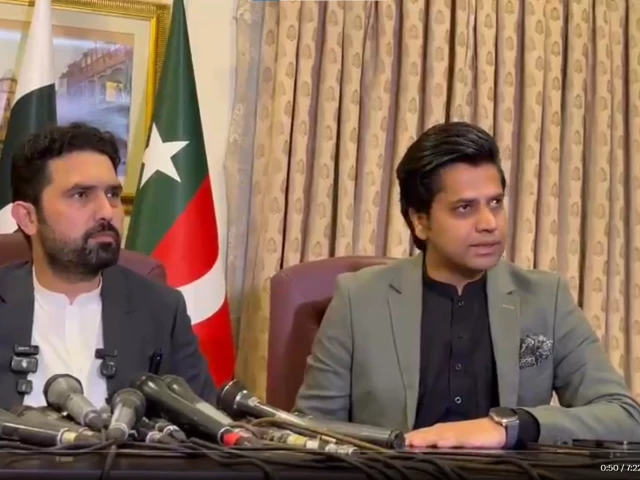
ISLAMABAD – Speaking to the media in Islamabad on Sunday, Chief Minister Afridi addressed the controversy surrounding Kasim Khan’s UNHRC address, in which the PTI founder’s son urged the international body to intervene for his father’s release. Afridi rejected attempts to link the comments to Pakistan’s GSP Plus trade status with the European Union, calling such characterizations a misrepresentation.
“The conversation, translated into Urdu to clarify context, reflected a son’s natural concern for his father and had no political connotations,” Afridi said, defending the young Khan’s emotional appeal to the international human rights forum.
Kasim Khan’s UNHRC Address
Earlier this week, Kasim Khan addressed the UNHRC, highlighting several alleged violations in his father’s detention, including arbitrary detention, solitary confinement, denial of medical care, restricted family visits, and the trial of civilians in military courts. He asserted that these actions contravened Pakistan’s obligations under the European Union’s Generalised Scheme of Preferences Plus (GSP Plus) framework—a trade arrangement that grants Pakistan preferential access to EU markets in exchange for compliance with international human rights and labor standards.
Federal Government’s Response
Information Minister Attaullah Tarar accused the PTI and Imran Khan’s family of acting against Pakistan’s national and economic interests, claiming that Kasim Khan’s statement undermined the country’s GSP Plus trade status. The government has framed the UNHRC address as a politically motivated attack on Pakistan’s international standing.
The Federation of Pakistan Chambers of Commerce and Industry (FPCCI) also condemned the remarks, describing them as a “negative propaganda campaign” against Pakistan’s position with the EU. FPCCI Senior Vice President Saqib Fayyaz Magoon noted that the 2023 extension of GSP Plus status reflected Pakistan’s compliance with international law, with government institutions and the business community aligned with EU standards.
Afridi’s Counter-Narrative
The K-P chief minister pushed back against this narrative, arguing that the real issue is the state of democracy in Pakistan. He claimed that democratic processes have been undermined over the past decades, citing alleged vote rigging during the February 8 elections as an attack on democracy.
“While the people had given a clear mandate, a fake government was imposed outside Khyber-Pakhtunkhwa,” Afridi said, warning that any loss of GSP Plus status would be the result of federal policies rather than his son’s remarks.
Afridi also accused the federal government of violating democratic freedoms and human rights, suppressing journalists, and acting against dissenting voices. “Freedom of expression is a fundamental right of every citizen, yet the current environment restricts this right,” he said, expressing concern over the health of Imran Khan’s wife, Bushra Bibi.
Economic and Environmental Criticisms
On economic matters, the chief minister criticized the federal government for running the economy on loans and alleged mismanagement, stating that 45 percent of K-P remains green, while the “fake government” is cutting forests to create urban settlements.
He also claimed that the former prime minister is being unjustly imprisoned and subjected to inhumane treatment, alongside the PTI founder’s wife, in violation of human rights.
Political Context
The controversy over Kasim Khan’s UNHRC remarks comes amid ongoing political tensions in Pakistan, where Imran Khan has been in detention since August 2023 on multiple charges that his supporters say are politically motivated. The PTI founder was convicted in several cases following his ouster from power in April 2022, with trials continuing in civilian and military courts.
The timing of the UNHRC address—coming as Pakistan seeks to maintain its GSP Plus status and navigate the economic challenges posed by the Middle East conflict—has amplified the stakes of the political dispute. The federal government has accused PTI of seeking to damage the country’s international standing to pressure for Khan’s release.
Analysis: A Family’s Plea or a Political Move?
The divergent interpretations of Kasim Khan’s UNHRC address reflect the deep polarization of Pakistani politics. For the federal government, the address was a calculated move by the PTI to damage Pakistan’s economic interests and international reputation. For Chief Minister Afridi and PTI supporters, it was simply a son’s desperate plea for his father’s freedom.
The GSP Plus framework, which provides Pakistan with duty-free access to European markets, is a vital component of the country’s trade strategy. Any threat to this status would have significant economic consequences. The government’s alarm at Kasim’s remarks reflects the real stakes involved.
But Afridi’s defense of the young Khan taps into a different set of concerns: the rights of families of political prisoners, the limits of state power, and the emotional toll of prolonged detention. By framing Kasim’s words as a “natural expression of concern,” the K-P chief minister appeals to a universal sympathy that transcends politics.
For Imran Khan, now in his third year of detention, the intervention of his son at the UNHRC may represent one of the few remaining avenues for international attention to his case. Whether that attention will translate into pressure on the Pakistani government—or further strain the country’s international relationships—remains to be seen.