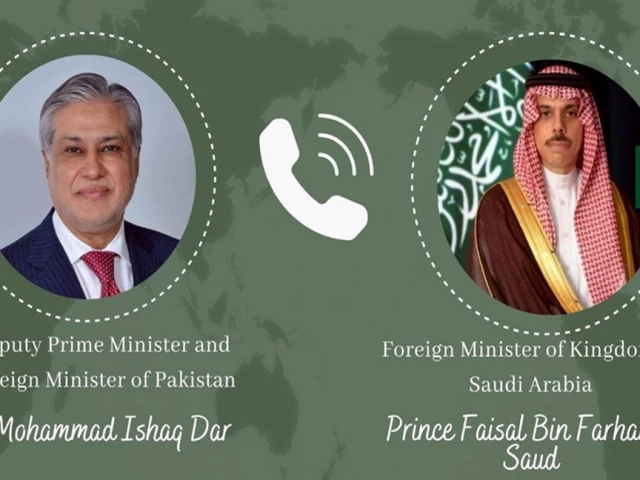
ISLAMABAD – Pakistan and Saudi Arabia expressed deep concern over ceasefire violations in Lebanon on Thursday, according to the Ministry of Foreign Affairs (MoFA). The concern was raised during a telephone conversation between Deputy Prime Minister and Foreign Minister Ishaq Dar and Saudi Foreign Minister Prince Faisal bin Farhan.
Dar appreciated Saudi Arabia’s continued support for Pakistan’s efforts towards achieving lasting peace. Both leaders stressed the urgent need for full respect and implementation of the ceasefire to ensure lasting peace and stability in the region, the statement added.
The phone call comes as the fragile US-Iran ceasefire, brokered by Pakistan, came under immediate strain following Israeli strikes on Lebanon that killed hundreds. While the US has insisted that its agreement with Iran did not apply to Israeli operations in Lebanon, Iran has warned that continued attacks on Hezbollah could jeopardise the truce.
Pakistan-Uzbekistan Talks
FM Dar also held a telephone conversation with Uzbek Foreign Minister Bakhtiyor Saidov to discuss the latest developments in the Middle East and the wider region, according to an official statement. During the call, Saidov appreciated Pakistan’s leadership and conveyed Uzbekistan’s full support for initiatives undertaken by Pakistan in pursuit of peace and stability, particularly efforts to secure the initial two-week ceasefire.
Both sides expressed hope that continued engagements and efforts would help foster lasting peace and stability in the region and beyond. The conversation reflects the broader international support for Pakistan’s mediation efforts, extending beyond the Middle East to Central Asia.
Chinese Appreciation
Earlier on Wednesday, Chinese Ambassador Jiang Zaidong appreciated Pakistan’s constructive role in advancing peace and security in the Middle East and the Gulf region during a meeting with the deputy prime minister. According to a statement issued by the MOFA, Ambassador Zaidong conveyed China’s deep appreciation for Pakistan’s efforts in promoting peace and security in the Middle East and the Gulf region.
China’s endorsement is significant, given Beijing’s close relationship with Tehran and its status as a permanent member of the UN Security Council. The meeting followed Pakistan and China’s joint five-point initiative for restoring peace and stability in the Gulf and the Middle East.
Diplomatic Outreach
FM Dar also discussed the evolving regional situation and urged a lasting peace process during a series of telephonic conversations with regional counterparts and European Union Foreign Policy Chief Kaja Kallas. The diplomatic outreach reflects Pakistan’s efforts to maintain momentum on the ceasefire and build international support for a permanent peace agreement.
Analysis: Maintaining Diplomatic Momentum
Pakistan’s diplomatic efforts did not end with the brokering of the two-week ceasefire. The calls with Saudi Arabia, Uzbekistan, China, and the EU represent a concerted effort to maintain momentum and build a coalition of support for a permanent peace agreement.
The concern over Lebanon ceasefire violations is particularly significant. Israel’s strikes on Lebanon have threatened to unravel the US-Iran truce, and Pakistan is using its diplomatic channels to urge restraint. The call with Saudi Arabia, a key regional player with influence over both the US and Iran, is part of that effort.
The appreciation from China and Uzbekistan demonstrates that Pakistan’s mediation has enhanced its standing not only in the Middle East but also in Central Asia. For a country seeking to position itself as a regional leader, this diplomatic capital is invaluable.
As US and Iranian officials prepare to meet in Islamabad for talks on a permanent ceasefire, Pakistan’s role as a facilitator remains critical. The calls with Saudi Arabia, China, and the EU are reminders that the international community is watching — and that Pakistan’s diplomatic success depends on maintaining broad-based support.