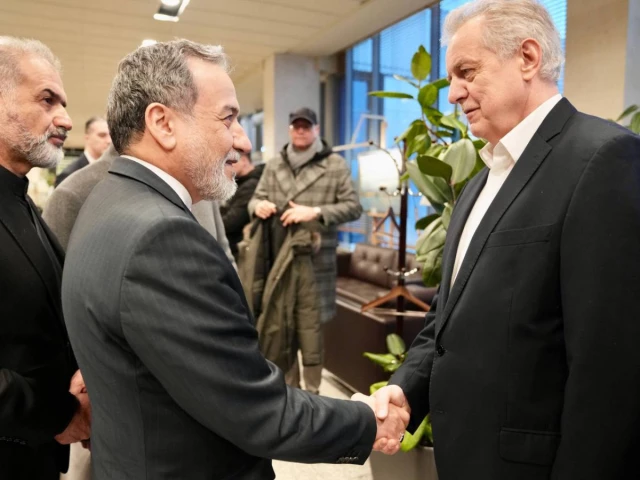
MOSCOW – Iranian Foreign Minister Abbas Araghchi, speaking in Russia, addressed the failure of the latest round of negotiations, pinpointing American demands as the main reason behind the breakdown. “Americans’ approach led to the previous round of talks to fail to meet its objectives, despite the progress made. This was due to the excessive demands they made and wrong approaches they adopted,” he said.
He further explained that consultations were held with Pakistan to assess the situation, emphasizing the importance of diplomatic support and strengthening ties in the region. Araghchi also mentioned Oman as a close ally, noting that their stance during the war had been commendable.
Need for Closer Gulf Cooperation
He stressed the need for closer cooperation, especially with nations in the southern Persian Gulf, to address arising issues. As both Oman and Iran share borders along the strategic Strait of Hormuz, Araghchi concluded by reaffirming the necessity of ongoing talks to align their interests and coordinate efforts for future steps.
Iran Foreign Minister Arrives in Russia as US Talks Stall
Iran’s foreign minister arrived in Russia on Monday as peace efforts between Tehran and Washington hung in the balance, following a flurry of regional diplomacy and the collapse of planned talks in Pakistan. Abbas Araghchi arrived in Saint Petersburg, the Iranian Foreign Ministry said on Telegram, where he is expected to meet with Russian President Vladimir Putin, and is scheduled to hold talks with his Russian counterpart Sergei Lavrov, according to Iran’s IRNA news agency.
It comes after Araghchi visited Oman between trips to Islamabad, as mediators push to keep peace talks between Tehran and Washington alive. On Saturday, US President Donald Trump scrapped a planned trip to Islamabad by his envoys Steve Witkoff and Jared Kushner.
Iran Sent Written Messages via Pakistan
In a sign that efforts were ongoing, the Fars news agency said Iran had sent “written messages” to the Americans via mediator Pakistan outlining red lines, including nuclear issues and the Strait of Hormuz. Fars said the messages were not part of formal negotiations, however.
US media outlet Axios reported on Sunday that Iran had sent a new proposal to reopen the Strait of Hormuz and end the war, with nuclear negotiations postponed for a later stage, citing a US official and two other sources with knowledge of the matter. Iranian state news agency IRNA cited the report without denying it.
Ceasefire Holds but Economic Shockwaves Continue
A ceasefire in the US-Israeli war with Iran has so far held, but its economic shockwaves have continued to reverberate globally. Iran has sealed off the strait, cutting flows of oil, gas and fertiliser and sending prices soaring, raising fears of food insecurity in developing countries. At the same time, a US blockade of the strait is in place.
Hopes for a second round of talks in Pakistan had centred on the planned visit by Witkoff and Kushner, but Trump cancelled the trip after Iranian state television said Araghchi had no plans to meet US officials there. On Sunday, Trump told Fox News that if Iran wanted the talks, “they can come to us, or they can call us.”
Too Early to Drop Sanctions: von der Leyen
European Commission President Ursula von der Leyen said on Monday that it was too early to drop sanctions imposed on Iran. “We think the dropping of sanctions would be too early,” she said in Berlin at a meeting of the conservative CDU and its CSU Bavarian sister party, adding that the sanctions were in place due to Iran’s suppression of its own population. “We first have to see a change, a fundamental change in Iran for the dropping of sanctions,” von der Leyen added.
‘We Will Not Bow Down,’ Says Hezbollah Chief
“The sacrifices are great, but they are the price of liberation and dear life, borne by our great Lebanese people with their honourable resistance as a choice of two options: liberation and pride or occupation and humiliation,” Hezbollah Chief Naim Qassem said, according to Al Jazeera.
“We are continuing our defensive resistance for Lebanon and its people, we will not return to the pre-March [status quo], we will respond to the Israeli aggression, and confront it. No matter what the enemy threatens, we will not retreat, we will not bow down, we will not be defeated,” he said.
Qassem added that their potential is “inexhaustible” and vowed that Israel will not stay in Lebanon, and “our people will return to their lands until the last inch of our southern border with occupied Palestine.”
Hezbollah Rejects Direct Negotiations
Hezbollah chief Naim Qassem said direct negotiations are “out of the question” and his group will continue to resist and respond to Israeli “aggression.” “We will not give up weapons, and the defence and the field have proven our readiness for confrontation,” he said, according to Al Jazeera.
“The authorities [Lebanon’s government] rushed to make an unnecessary and gratuitous concession, and we categorically refuse direct negotiations [with Israel]. The authorities must stop direct negotiations and pursue a path of indirect negotiations,” Qassem added.
Five Conditions for Talks
Qassem rejected the Lebanese government’s talks with Israel and outlined five conditions that must be met before direct talks can occur: “Stopping the aggression on land, sea and air, the withdrawal of Israel from the occupied territories, the release of prisoners, the return of the people to all their villages and towns and reconstruction.”
Iran’s Revolutionary Guards on Hormuz
Iran’s Revolutionary Guards said they had no intention of lifting their blockade, which has roiled energy markets. “Controlling the Strait of Hormuz and maintaining the shadow of its deterrent effects over America and the White House’s supporters in the region is the definitive strategy of Islamic Iran,” the Guards said on their official Telegram channel. The United States has imposed a blockade of Iranian ports in retaliation.
Israel Strikes Lebanon
At least one person has been killed in an Israeli drone attack in the town of Qalila, southern Lebanon, the NNA news agency reported, according to Al Jazeera. Israel and Hezbollah traded blame over violations of the fragile ceasefire in Lebanon, with Prime Minister Benjamin Netanyahu saying the military was “vigorously” targeting the Iran-backed militia as both sides claimed new attacks.
Netanyahu told Sunday’s weekly cabinet meeting that Hezbollah’s actions were “dismantling the ceasefire” while Hezbollah said it would respond to Israeli violations and its “continued occupation.” Lebanon’s health ministry said Israeli strikes on the country’s south on Sunday killed 14 people, including two women and two children, and wounded 37.
Analysis: Stalemate Persists
As Araghchi shuttles between Moscow, Oman, and Islamabad, the fundamental impasse remains. Iran blames “excessive US demands” for the breakdown of talks. The US maintains its blockade. The ceasefire holds — but the strait remains closed.
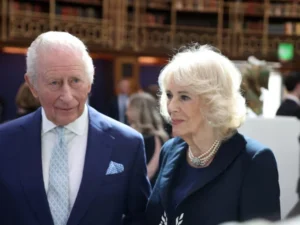
Israel’s continued strikes on Lebanon, and Hezbollah’s refusal to disarm or negotiate directly, add another layer of complexity. The “special relationship” between the US and UK is strained over the Iran war. King Charles’s state visit proceeds under a shadow.
For now, diplomacy continues — but progress is elusive.