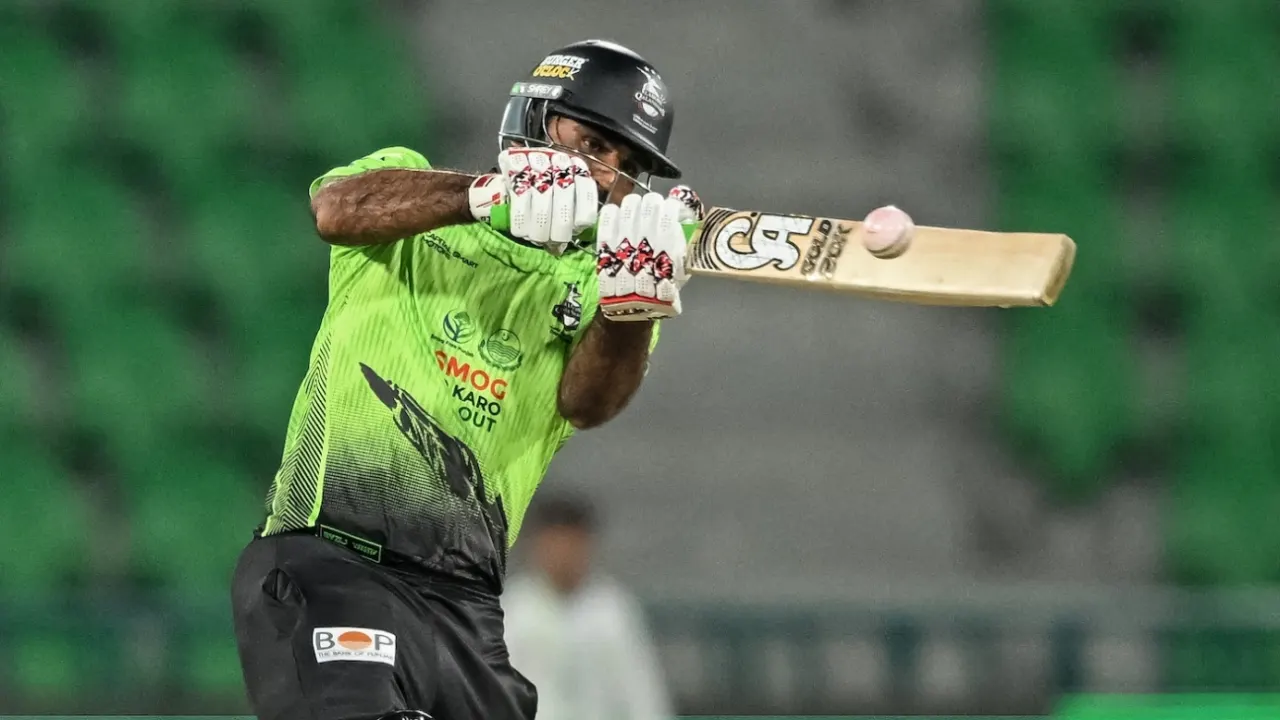
KARACHI – The PSL 2026 season has been rocked by a ball-tampering controversy involving one of Pakistan cricket’s most high-profile players. Fakhar Zaman has been charged with a level-III offence under the PSL code of conduct, which carries a minimum ban of one match and a maximum of two for a first violation in a PSL season. Match referee Roshan Mahanama will conduct a hearing in the coming days, with Fakhar expected to contest the charge.
The incident took place at the start of the last over of Karachi Kings’ chase. On-field umpire Faisal Afridi took the ball from Lahore Qalandars bowler Haris Rauf for inspection after it had exchanged hands between captain Shaheen Shah Afridi and Fakhar. Following a lengthy discussion with fellow umpire Sharfuddoula, the two officials determined that the ball had been tampered with and brought in a replacement ball.
Karachi Kings were awarded five penalty runs under the PSL playing conditions, and their batters—Khushdil Shah and Azam Khan—were allowed to select the replacement ball.
The Penalty Runs That Changed the Game
The five penalty runs proved decisive in a tightly contested chase. With Kings needing 14 runs off the final six deliveries before the penalty was applied, the five runs brought the equation down to nine off six. The match was sealed within two legal balls as Abbas Afridi struck Haris Rauf for a four and a six, securing victory for Karachi Kings.
At the post-match presentation ceremony, Lahore Qalandars captain Shaheen Shah Afridi appeared unclear on the reasoning behind the penalty. “We’ll see [what the umpires say],” he said when asked about the incident.
The PSL Playing Conditions
The umpires’ decision was made in accordance with clause 41.3 of the PSL playing conditions, which allows umpires to “make frequent and irregular inspections of the ball.” The clause also stipulates that umpires “shall immediately inspect the ball if they suspect anyone of attempting to change the condition of the ball.”
Under clause 41.3.5.1, the “batter at the wicket” is permitted to select the replacement ball from a “selection of six other balls of various degrees of usage.” Clause 41.3.5.3 awards five penalty runs to the batting side if umpires can identify the player or players responsible for changing the ball’s condition.
Fakhar’s Potential Ban
For Fakhar, the charge carries significant consequences. A level-III offence is among the most serious under the PSL code of conduct, and a ban—even of one or two matches—would be a blow to Lahore Qalandars, who rely heavily on the experienced opener’s firepower at the top of the order.
Fakhar has been one of Pakistan cricket’s most consistent performers across formats, and his presence in the PSL is a major draw for fans. A ban would not only impact his team’s campaign but also raise questions about the handling of the incident and the standards of conduct expected from senior players.
Hasan Ali Fined for Celebration
In a separate incident from the same match, Karachi Kings’ Hasan Ali was fined 10 percent of his match fee for his celebration following the dismissal of Haseebullah in the 19th over. His actions were deemed a level-I offence that breached article 2.5 of the PSL code of conduct, which pertains to “using language, actions or gestures which disparage or which could provoke an aggressive reaction from a batter upon dismissal.”
Impact on the PSL Season
The controversy comes at a critical juncture in the PSL 2026 season, with teams jockeying for playoff positions. The five penalty runs awarded to Karachi Kings may ultimately prove decisive in the standings, and the outcome of Fakhar’s disciplinary hearing will affect Lahore Qalandars’ campaign going forward.
The PSL has worked hard to maintain the integrity of the competition and uphold the standards of the game. How the league handles this controversy—and the message it sends about ball-tampering and player conduct—will be closely watched by fans and cricket authorities alike.
Analysis: A Costly Moment
The ball-tampering incident in the Lahore Qalandars-Karachi Kings match will be remembered as one of the defining moments of PSL 2026. For Fakhar Zaman, a player with an otherwise unblemished record, the charge threatens to tarnish his reputation and sideline him at a crucial stage of the tournament.
For the Qalandars, the loss of their star opener—even for a single match—would be a significant blow. The team has relied on Fakhar’s explosive batting at the top of the order, and his absence would force a reshuffling of the batting lineup.
For Karachi Kings, the five penalty runs may have been the margin of victory. In a league where playoff qualification often comes down to net run rate or the finest of margins, such a moment can define a season.
As the match referee prepares to conduct his hearing, the cricket world will be watching. The outcome will not only determine Fakhar’s immediate future but also set a precedent for how the PSL handles similar incidents going forward. For now, one of Pakistan cricket’s most beloved players awaits a verdict that could shape the remainder of his PSL campaign.