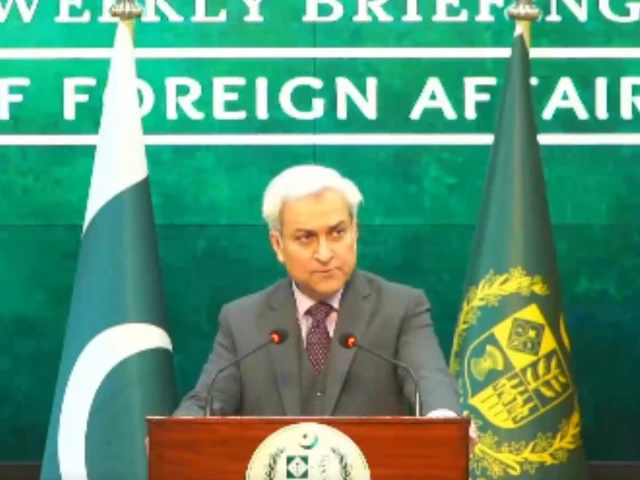
ISLAMABAD – Pakistan on Thursday condemned “unprovoked firing and shelling” by Afghan forces along the border, saying civilians were targeted in recent cross-border incidents, while reaffirming its diplomatic efforts to ease tensions between the United States and Iran, Foreign Office spokesperson Tahir Andrabi said during a weekly briefing.
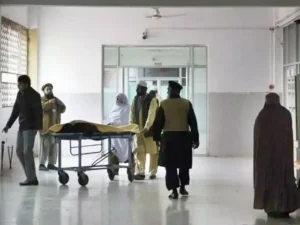
He stated that Afghan forces opened fire on April 26 and 29 in border areas of South Waziristan, including Angoor Adda. “Afghan forces have carried out unprovoked firing and shelling, targeting the civilian population,” he said, adding that women and children — including those aged three, eight and 10 — were among the injured.
He said several houses were also damaged, noting that local elders had condemned the attacks and demanded an immediate halt. “We echo these concerns and express our strongest condemnation,” he said, adding that Pakistan stands in solidarity with the affected families and is taking “all possible measures” to prevent further incidents.
Escalating Afghanistan Tensions
Tensions between Pakistan and Afghanistan have sharply escalated in recent months amid mutual accusations over cross-border militancy. Islamabad maintains that militants linked to the Tehreek-e-Taliban Pakistan operate from Afghan territory, while Kabul denies the allegations and accuses Pakistan of violating its sovereignty through alleged strikes.
Recent claims of civilian casualties in Afghanistan’s Kunar province have further deepened tensions, with Pakistan rejecting the reports as “false” and accusing Afghan authorities of misinformation. The situation has strained already fragile relations since the Afghan Taliban’s return to power in 2021, despite intermittent mediation efforts and calls for dialogue.
Sustained US-Iran Engagement
Separately, Andrabi said Pakistan is maintaining “sustained engagement” with both Washington and Tehran to support de-escalation and ceasefire efforts. He said Pakistan’s approach reflects its commitment to “constructive diplomatic engagement” aimed at promoting regional stability.
“Pakistan remains committed to regional stability and international peace, reflecting our preference for principled, dialogue-oriented diplomacy,” he said.
High-Level Contacts
He added that Prime Minister Shehbaz Sharif, Deputy Prime Minister Ishaq Dar, and Chief of Army Staff Field Marshal Asim Munir have remained engaged with key stakeholders, maintaining “open channels of communication” with both sides. The spokesperson stated that PM Shehbaz held multiple telephone conversations with Iranian President Masoud Pezeshkian, including a 45-minute call on April 19, reaffirming Pakistan’s commitment to regional peace.
During recent visits to Saudi Arabia, Qatar and Turkiye, regional leaders, including Saudi Crown Prince Mohammed bin Salman, Qatar’s Emir Sheikh Tamim bin Hamad Al Thani, and Turkish President Recep Tayyip Erdoğan appreciated Pakistan’s diplomatic role, he noted.
Iranian Delegation Visit
Andrabi further said an Iranian delegation led by Foreign Minister Abbas Araghchi also recently visited Islamabad for talks on regional stability. According to diplomatic sources, Pakistan is quietly facilitating back-channel engagement between the United States and Iran aimed at easing tensions over the Strait of Hormuz and Tehran’s nuclear programme.
Competing Priorities
Iran has proposed prioritising the reopening of the strait while delaying nuclear negotiations, whereas Washington prefers a comprehensive agreement addressing both issues simultaneously. Despite strong public positions, sources suggest that the ceasefire between Washington and Tehran is likely to hold for now, with ongoing diplomatic efforts reducing the risk of immediate escalation.
International Appreciation
The spokesperson further informed that PM Shehbaz has held discussions with European Council President Antonio Costa and New Zealand Prime Minister Christopher Luxon, both of whom appreciated Pakistan’s outreach.
EU Business Delegation
Separately, an EU business delegation visited Pakistan, with more than 600 B2B meetings held, he said, highlighting investment opportunities in energy, IT and communications.
R4 Group Meeting
At the multilateral level, the “R4” group — comprising Pakistan, Saudi Arabia, Turkiye and Egypt — met on the sidelines of the Antalya Diplomacy Forum, reaffirming their commitment to regional cooperation, he added.
Palestine Situation
On the Israel–Palestine situation, Andrabi said Pakistan has joined joint statements condemning Israeli actions, including violations at Al-Aqsa Mosque and concerns over the status of Jerusalem’s holy sites.
President Zardari’s China Visit
He also noted that President Asif Ali Zardari is currently on an official visit to China to mark 75 years of diplomatic relations. During the visit, three memorandums of understanding were signed in desalination, agriculture and the tea sector, including a Karachi seawater desalination project, agricultural technology transfer in Sindh, and a tea industry partnership between Pakistani and Chinese firms.
Zardari also conferred the Sitara-i-Pakistan on Professor Pan Xiangbin in recognition of his contributions to cardiac care, describing it as a reflection of the “tangible benefits” of Pakistan–China cooperation in health and development, he maintained.
Analysis: A Multi-Faceted Foreign Policy
The Foreign Office’s weekly briefing covered a wide range of issues, reflecting the multi-faceted nature of Pakistan’s foreign policy. On the one hand, Pakistan condemned Afghan firing along the border, highlighting the security challenges it faces on its western flank. On the other hand, it reaffirmed its mediation efforts between the US and Iran, showcasing its diplomatic role in the Middle East.
The contrast between the two is striking. On the Afghan border, Pakistan is dealing with unprovoked firing and civilian casualties. In the Middle East, it is facilitating back-channel engagement between two adversaries.
The spokesperson’s statement that Pakistan is maintaining “sustained engagement” with both Washington and Tehran suggests that mediation efforts continue, despite the absence of a breakthrough. The competing priorities — Iran wanting to prioritise the strait, Washington wanting a comprehensive agreement — remain unresolved.
The international appreciation for Pakistan’s role, from the Saudi crown prince to the Qatari emir to the Turkish president, is a diplomatic asset. The EU business delegation and the R4 group meeting indicate that Pakistan’s diplomatic capital is being leveraged for economic and regional cooperation.
President Zardari’s visit to China and the signing of three MOUs — including a Karachi seawater desalination project — demonstrate the continued strength of the Pakistan-China partnership.
As Pakistan navigates complex regional dynamics, its foreign policy is being tested on multiple fronts. The coming weeks will determine whether its mediation efforts bear fruit — and whether tensions with Afghanistan escalate or ease.