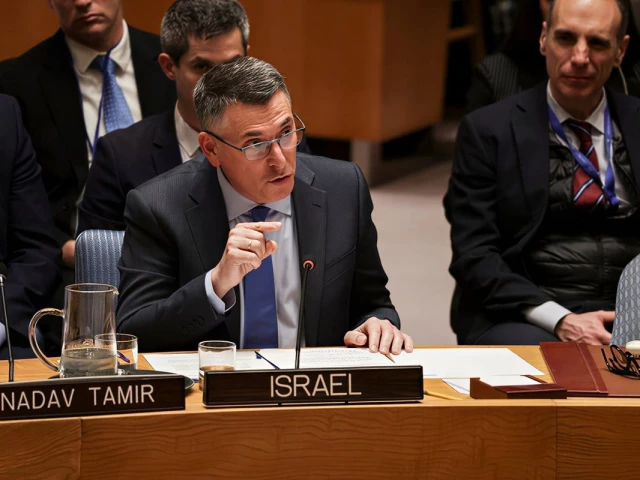
Gideon Saar has rejected claims that Israel is facing a shortage of ballistic missile interceptors amid the ongoing conflict involving Iran and the Lebanese armed group Hezbollah.
Speaking on Sunday, Saar dismissed a report published by Semafor which cited an unnamed US official claiming that Israel had informed Washington it was running critically low on missile interceptors.
Responding to questions about the report, Saar said the claim was incorrect. He also denied a separate Israeli media report suggesting that Israel was planning to hold direct negotiations with Lebanon.
An Israeli military source also rejected the suggestion of interceptor shortages, stating that the country’s armed forces remain fully prepared for an extended military campaign.
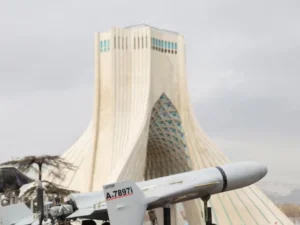
According to the Institute for National Security Studies at Tel Aviv University, Iran has launched nearly 300 ballistic missiles and hundreds of drones toward Israel since joint US and Israeli strikes targeted Iran on February 28.
Israeli military officials said roughly half of the missiles fired by Iran were equipped with cluster munitions. However, they noted that the daily number of missile launches has significantly declined compared with the early days of the conflict.
Meanwhile, Hezbollah has continued firing rockets from Lebanon toward Israeli territory since March 2. The group claims the attacks are retaliation for the killing of Iran’s supreme leader at the beginning of the US-Israel war against Iran.
Reports about possible diplomatic engagement have also surfaced. The Israeli newspaper Haaretz recently reported that Israel and Lebanon could hold direct talks in the coming days.
In addition, Benjamin Netanyahu’s close ally and former minister Ron Dermer reportedly visited Saudi Arabia last week to explore potential diplomatic initiatives related to Lebanon once the current military campaign concludes.
However, Israeli Energy Minister Eli Cohen expressed skepticism about any near-term agreement, stating that meaningful progress would require decisive action by the Lebanese government against Hezbollah.
He also revealed that Israel’s security cabinet had discussed the possibility of cancelling the 2022 Israel-Lebanon maritime border agreement, though no final decision has been made so far