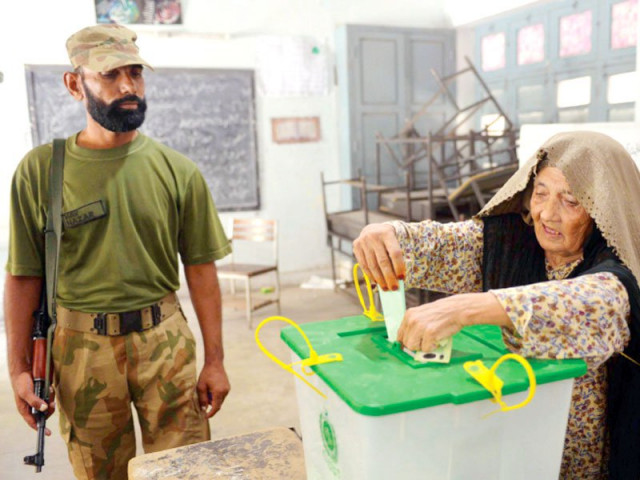
GILGIT: Voting began across Gilgit-Baltistan on Sunday as more than 958,000 registered voters headed to polling stations to elect representatives for the 24 general seats of the Gilgit-Baltistan Legislative Assembly.
Polling commenced at 8:00am and will continue until 5:00pm without interruption. Authorities have deployed extensive security arrangements across the region to ensure a peaceful, transparent, and orderly electoral process.
Over 130 Candidates in the Race
A total of 130 candidates representing 24 political parties, along with 266 independent candidates, are contesting the elections. The Gilgit-Baltistan Assembly consists of 33 seats, including 24 directly elected seats, six reserved seats for women, and three seats reserved for technocrats and professionals.
Political parties will receive reserved seats based on their performance in the general election through proportional representation.
Polling Begins Peacefully
Caretaker Information Minister Ghulam Abbas said polling started peacefully throughout the region, with voters actively participating in the democratic process.
He stated that comprehensive arrangements had been made by the caretaker government and the Election Commission, with police, Rangers, Gilgit-Baltistan Scouts, and Pakistan Army personnel deployed at sensitive locations.
Abbas encouraged citizens to exercise their right to vote and expressed confidence that the elections would contribute to the region’s continued progress and development.
Chief Election Commissioner Reviews Arrangements
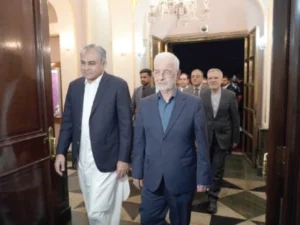
Chief Election Commissioner Raja Shahbaz Khan visited multiple polling stations in Gilgit to inspect voting arrangements and security measures. Accompanied by Provincial Election Commissioner Abid Raza, he reviewed facilities available to voters and met election officials and polling agents.
Election authorities reported steady voter turnout, although some polling stations experienced long queues and complaints regarding delays in the voting process. The chief election commissioner directed officials to address the concerns and ensure smooth polling operations.
Extensive Security Measures
Security has been significantly enhanced across Gilgit-Baltistan, with thousands of personnel deployed to protect polling stations and maintain law and order.
More than 7,500 polling staff have been assigned election duties, while over 5,000 Punjab Police personnel have joined local security forces to assist in election security operations. Additional personnel from Islamabad Police have also been deployed in sensitive areas.
Election officials classified 551 polling stations as highly sensitive, 349 as sensitive, and 488 as normal, with security arrangements tailored according to the risk level of each location.
Section 144 Imposed in Diamer
Authorities in Diamer district imposed Section 144 of the Criminal Procedure Code for 60 days ahead of polling day to maintain public order.
The restrictions prohibit the public display of weapons, aerial firing, firecrackers, and unauthorized drone operations. Officials warned that strict legal action would be taken against anyone violating the order.
Competitive Political Contest
The election campaign witnessed active participation from major political parties, including the Pakistan Peoples Party (PPP), Pakistan Muslim League-Nawaz (PML-N), Pakistan Tehreek-e-Insaf (PTI), and Istehkam-e-Pakistan Party (IPP).
PPP Chairman Bilawal Bhutto Zardari led an extensive campaign across the region, while PML-N leaders including Nawaz Sharif, Khawaja Saad Rafique, and other senior party figures addressed rallies in multiple districts.
PTI leaders alleged restrictions on their campaign activities, claiming obstacles in holding rallies and travelling within the region. Meanwhile, the IPP sought to expand its presence by focusing on infrastructure development and economic growth.
Government Formation at Stake
With 13 seats required to form a government, the election is being closely watched due to Gilgit-Baltistan’s strategic significance and its growing importance in national development and regional connectivity projects.
The outcome is expected to shape the region’s political direction and influence future development priorities, governance policies, and constitutional discussions regarding Gilgit-Baltistan’s status within Pakistan.