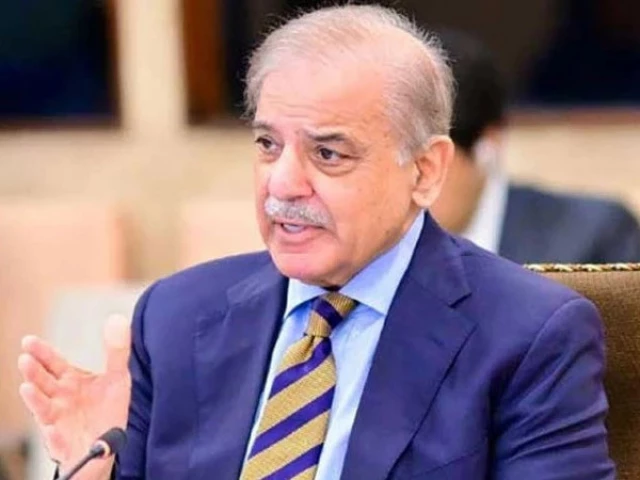
The federal government has allocated Rs125 billion through savings and development budget cuts to cushion consumers against rising global oil prices, as Prime Minister Shehbaz Sharif said public relief remained his main priority amid ongoing regional tensions and supply disruptions. The allocation comes as Pakistan grapples with the economic fallout of the US-Israeli war on Iran, which has driven global oil prices to two-year highs.
ISLAMABAD – Chairing a review meeting on fuel conservation and austerity measures on Sunday, Prime Minister Shehbaz Sharif said timely decisions had ensured sufficient petroleum supplies to meet national requirements, adding that maximum possible relief had been extended to citizens over the past three weeks.
Officials informed the meeting that the government had so far spent Rs69 billion to offset a potential increase of Rs127 per litre in petrol and Rs252 per litre in high-speed diesel prices, shielding consumers from the full impact of surging oil prices in international markets. The additional Rs125 billion allocation will further support these relief efforts.
Soaring Global Prices, Absorbed Locally
In a recent address, the prime minister noted that petrol prices could have reached Rs544 per litre and diesel Rs790 per litre based on global rates, but the government was maintaining the prices at Rs322 and Rs335 respectively—a significant subsidy that has required substantial fiscal adjustments.
The government has raised funds for these subsidies through savings in development projects and across various government departments, reflecting the priority placed on protecting consumers from the full impact of the energy crisis.
Digital Monitoring and Supply Stability
Officials told the meeting that petroleum supply and demand, along with the entire distribution chain, were being closely monitored through a digital dashboard, while arrangements for petrol imports in April had already been finalized.
They said Pakistan had avoided long queues and supply disruptions seen in several other countries, attributing the stability to effective planning and timely policy decisions by the government. The digital monitoring system allows real-time tracking of fuel stocks and distribution, helping prevent shortages and hoarding.
Fuel Support Program for Motorcycles, Rickshaws
A proposed fuel support program for motorcycle riders and rickshaw drivers was also reviewed, featuring a dedicated mobile application to distribute subsidized petrol through a digital quota system for low-income users. The program targets two- and three-wheelers, which form the backbone of transportation for millions of low-income Pakistanis.
Under the proposed mechanism, eligible users will receive digital vouchers through the mobile application, with a QR code system used to verify transactions. Motorcycles are expected to receive between 20 and 30 litres of subsidized petrol per month.
Conservation Measures
The prime minister directed provincial governments to facilitate motorcycle and rickshaw owners in registering their vehicles in their own names, aiming to digitize records nationwide and ensure eligibility for future relief programmes. This initiative is designed to create a comprehensive database of vehicle owners eligible for targeted subsidies.
He also instructed authorities to strengthen coordination with chief secretaries of all provinces, as well as Azad Jammu Kashmir and Gilgit-Baltistan, to ensure uniform implementation of conservation and relief measures across the country.
The participants of the meeting urged citizens to support conservation efforts by avoiding unnecessary travel and prioritizing teleconferencing in workplaces, as part of broader measures to reduce fuel consumption and manage limited resources efficiently.
Austerity Measures Already in Place
The government has introduced a range of austerity steps to conserve fuel and reduce expenditures, including:
- An additional weekly holiday for government offices
- Cuts in free petrol allocations for ministers
- Restrictions on protocol vehicles
- Proposals to extend subsidized fuel to students
These measures have helped reduce government fuel consumption while maintaining essential services.
Recent Price Adjustments
Earlier, authorities raised petrol and diesel prices by Rs55 per litre, or 20 percent, citing the impact of the US-Israel and Iran conflict on global supply chains, which has pushed crude oil prices to a two-year high. Despite these increases, the government has absorbed much of the global price shock through subsidies.
In a parallel move, the government increased the levy on high-octane fuel used by luxury vehicles by Rs200 per litre, taking the total levy to Rs300 and raising its price to Rs600 per litre. This targeted measure aims to shift the burden of higher fuel costs toward higher-income consumers while protecting low-income users.
The Regional Context
The fuel crisis is a direct consequence of the US-Israeli war on Iran, which began on February 28. The closure of the Strait of Hormuz—through which approximately 20 percent of the world’s oil passes—has driven global oil prices above $100 a barrel, creating supply disruptions and price volatility worldwide.
For Pakistan, which imports the vast majority of its oil needs, the impact has been severe. The government’s decision to absorb much of the price increase through subsidies reflects the priority placed on protecting consumers, but it has also required difficult fiscal trade-offs.
Analysis: A Balancing Act
The government’s allocation of Rs125 billion to shield fuel consumers represents a significant commitment of fiscal resources at a time when Pakistan is already operating under an IMF program with strict fiscal targets. The decision to prioritize consumer relief over deficit reduction reflects the political sensitivity of fuel prices, particularly for low-income households.
The digital fuel subsidy program for two- and three-wheelers, once implemented, will allow the government to target relief more efficiently than across-the-board price controls. By using mobile technology and QR codes, the system can ensure that subsidies reach those who need them most while reducing the fiscal burden of broad-based subsidies.
The government’s success in avoiding fuel shortages and long queues—problems seen in several other countries affected by the global energy crisis—is a significant achievement. The digital dashboard monitoring system appears to have helped maintain supply chain stability during a period of global disruption.
Nevertheless, the underlying problem remains unresolved. As long as the Strait of Hormuz remains closed and the Middle East conflict continues, global oil prices will remain elevated, and Pakistan will continue to face difficult choices between fiscal discipline and consumer protection. The Rs125 billion allocation provides temporary relief, but a lasting solution will require an end to the conflict—and a fundamental shift in Pakistan’s energy strategy.