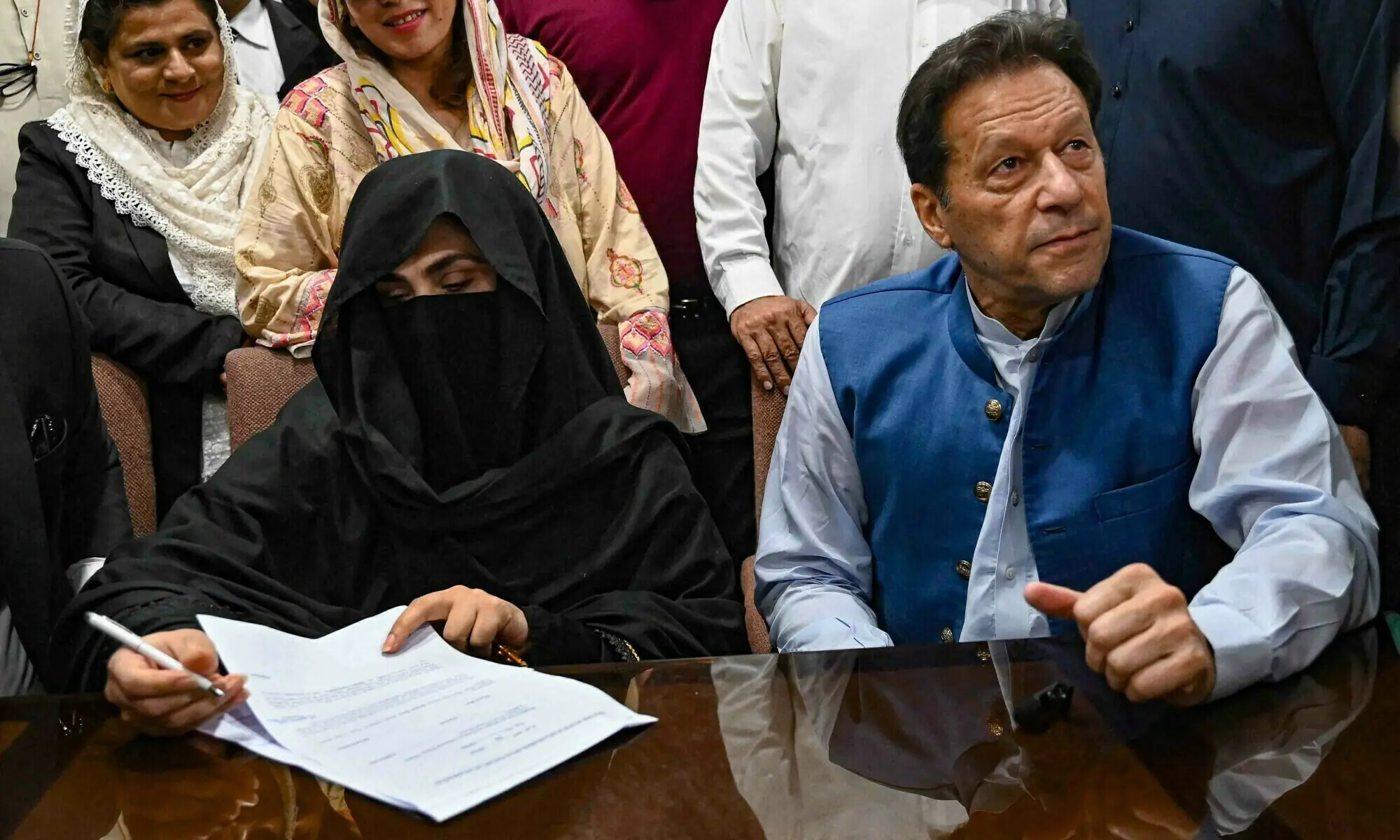
ISLAMABAD – Former Prime Minister Imran Khan and his wife, Bushra Bibi, on Friday approached the Islamabad High Court (IHC) seeking the urgent fixation of their appeals to set aside the conviction in the Toshakhana I case and to suspend the sentence in the £190 million corruption case, citing “inordinate delays” and “dilatory tactics” by the prosecution.
On March 31, the IHC adjourned the hearing of the suspension of sentence applications filed by Imran and Bushra in the £190 million Al-Qadir Trust case after the defence counsel sought time to obtain fresh instructions from his clients. In a series of petitions filed under Section 561-A of the Code of Criminal Procedure (CrPC), the couple has also requested that the court direct the jail authorities to facilitate unhindered meetings with their legal team for necessary consultations.
Appeals Against Toshakhana I Conviction
The petitioners, in their appeal filed today, sought the early fixation of appeals of the couple against conviction for final adjudication. These appeals challenge the judgment delivered on January 31, 2024, by the Accountability Court No. 1, Islamabad, which convicted the couple in the Toshakhana I case and sentenced them to 14 years in Adiala Jail. However, in April 2024, the IHC suspended the sentences handed out to the former prime minister and his spouse.
The petitions submitted today argued that the trial court’s judgment was passed without the “proper application of judicial mind” and suffers from a “serious misreading and non-reading of material evidence.”
Medical Concerns and Access to Counsel
The petitions also highlighted Imran’s medical condition, specifically “right central retinal vein occlusion,” noting that the necessary treatment is unavailable within the premises of Adiala Jail. The former premier’s health has garnered attention in recent months, most notably after his eye ailment came to light earlier this year.
Both Imran and Bushra also raised serious concerns regarding their inability to meet with their legal counsel in Adiala Jail. Seeking directions for the jail superintendent to facilitate “immediate and unhindered” meetings, Imran’s petition argues that the denial of visitation rights is a violation of Articles 9 (no person shall be deprived of life or liberty save in accordance with law), 10-A (right to fair trial), and 14 (the dignity of man and the privacy of the home shall be inviolable) of the Constitution.
In a separate application, lead counsel Barrister Salman Safdar stated that he has been denied access to his clients for approximately three months, making it impossible to obtain “fresh instructions” to proceed with the main appeals.
Bushra’s Separate Plea
The 54-year-old Bushra was described as a “parda-nasheen” lady with no history of holding public office, asserting that she has been implicated solely due to her marital relationship. In a separate move, Bushra also filed an application seeking a decision on the merits regarding her plea for the suspension of her sentence in the Al-Qadir Trust case.
The application noted that her plea under Section 426 CrPC had been pending for over ten months, with notices originally issued on May 15, 2025. The petition alleged that the National Accountability Bureau (NAB) has employed “procedural manoeuvring” and “dilatory tactics” to frustrate the proceedings.
It further stated that despite the court’s orders to fix the application, the matter has been repeatedly adjourned on various pretexts, including the non-availability of prosecutors or requests for more time to prepare. The plea maintained that Bushra has already served over a year of her seven-year sentence and, as a female accused, is entitled to statutory leniency.
Court Orders and Compliance
Last year, the IHC had allowed Imran twice-a-week meetings — on Tuesdays and Thursdays — with his family, lawyers, and other associates. Despite the order, the ex-premier has been largely restricted from meeting visitors for several weeks, the petition noted.
The petition, filed through a legal team including Barrister Salman Safdar, Salman Akram Raja, and Barrister Ali Zafar, also emphasized that “justice should not only be done but also be seen to be done,” urging the IHC to ensure the expeditious disposal of these matters to prevent “irreparable loss.”
Background of the Cases
The Toshakhana I case relates to allegations that Imran Khan and Bushra Bibi acquired state gifts from the Toshakhana (state depository) at undervalued prices and sold them for profit. The couple was convicted and sentenced to 14 years in January 2024, though the IHC suspended their sentences in April 2024.
The £190 million Al-Qadir Trust case involves allegations that Imran and Bushra acquired land for a university trust in exchange for £190 million that was returned to the UK government as part of a settlement. The couple has denied any wrongdoing, maintaining that the funds were legitimate and that they acted in accordance with the law.
Legal Battles Continue Amid Political Turmoil
The fresh petitions by Imran Khan and Bushra Bibi underscore the ongoing legal battles that have defined the former prime minister’s post-premiership life. The allegations of “dilatory tactics” by the prosecution and “inordinate delays” in hearing their appeals reflect the couple’s frustration with a legal process that has kept them in detention for extended periods.
The medical concerns raised by Imran’s legal team add urgency to their pleas. The claim that necessary treatment for his eye condition is unavailable in Adiala Jail could potentially form the basis for a request for transfer to a hospital or for home detention.
The denial of access to legal counsel, if proven, would raise serious constitutional concerns. The right to a fair trial, enshrined in Article 10-A of the Constitution, includes the right to consult with legal representatives. The claim that lead counsel has been denied access for approximately three months is significant and could influence the court’s approach to the couple’s petitions.
For Imran Khan and Bushra Bibi, the path to freedom runs through the IHC. The court’s willingness to fix their appeals for early hearing and to address their concerns about access to counsel and medical treatment will determine how quickly—or slowly—their legal battles progress.
As the former prime minister remains in detention, his supporters continue to demand his release. The IHC’s decisions on these petitions will be closely watched by PTI supporters, legal experts, and political observers alike.