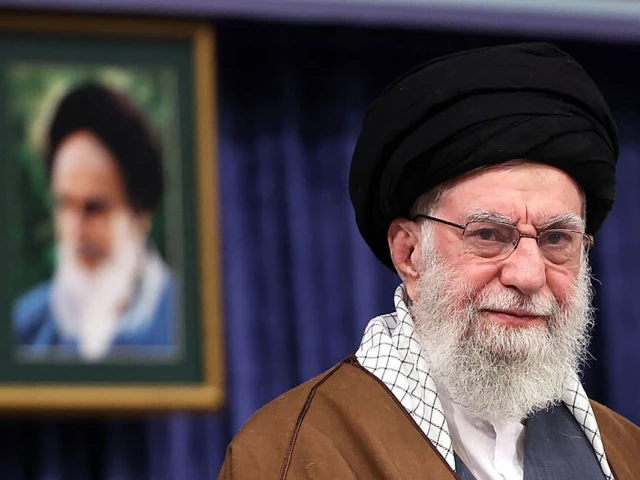
Iran has announced the death of its Supreme Leader, Ayatollah Ali Khamenei, following a series of coordinated strikes reportedly carried out by the United States and Israel — a development that, if definitively confirmed, marks a historic turning point for the Islamic Republic and the wider Middle East.
Iranian state media on Sunday said Khamenei was killed in the attacks and declared 40 days of public mourning across the country. The announcement came after hours of conflicting claims, official denials, and mounting speculation over the fate of the 86-year-old leader, who has ruled Iran since 1989.
Conflicting Claims and Escalating Rhetoric
Earlier, Israeli Prime Minister Benjamin Netanyahu claimed there were “growing signs” that Khamenei was no longer alive. In a video statement, Netanyahu said Israeli forces had destroyed the supreme leader’s compound and eliminated several senior officials tied to Iran’s military and nuclear establishments.
“This morning we destroyed the compound of the tyrant Khamenei,” Netanyahu said, adding that Israeli strikes had targeted senior Revolutionary Guards commanders and figures involved in Iran’s nuclear programme. He warned that operations would continue in the coming days.
A senior Israeli official, speaking to Reuters, claimed Khamenei’s body had been found following an Israeli strike. The Israeli military said its air force had hit hundreds of targets across Iran, including strategic defence systems and three separate sites where senior leaders were reportedly meeting.
A US official cited by Fox News also suggested that Khamenei and several top Iranian figures were believed to have been killed in an initial Israeli strike. However, Washington stopped short of formal confirmation. When questioned by NBC News, former US President Donald Trump declined to offer definitive confirmation but said, “the rumour is, and the word is, that he has been killed.”
Tehran’s Initial Denials
In the immediate aftermath of the strikes, Iranian officials had strongly denied reports of Khamenei’s death. The head of public relations at the supreme leader’s office described the claims as “mental warfare” and urged citizens not to be swayed by enemy propaganda.
Iran’s Foreign Ministry spokesman, Esmail Baghaei, told Sky News that both Khamenei and President Masoud Pezeshkian were “safe and sound.” Iranian news agencies Tasnim and Mehr echoed those assurances, reporting that the supreme leader remained “steadfast and firm in commanding the field.”
Foreign Minister Abbas Araghchi, in an interview with NBC News, also rejected reports of Khamenei’s death, saying, “As far as I know, he is alive.” He acknowledged that some commanders may have been killed but insisted that Iran’s leadership structure remained intact. Dismissing suggestions of regime change, Araghchi described such ambitions as “mission impossible.”
However, satellite imagery published by Reuters showed heavy damage and black smoke rising from Khamenei’s Tehran compound, intensifying questions about his status. A source familiar with the situation had earlier suggested that the supreme leader had been moved to a secure location outside the capital prior to the strikes, though this could not be independently verified.
A Defining Moment for Iran
If confirmed beyond dispute, Khamenei’s death would represent the most consequential political rupture in Iran since the 1979 Islamic Revolution. As Supreme Leader, he held ultimate authority over the executive, legislative and judicial branches of government, as well as the armed forces and the powerful Islamic Revolutionary Guard Corps (IRGC).
Over nearly four decades in power, Khamenei shaped Iran’s domestic and foreign policy, positioning the country as a regional counterweight to Gulf Arab states and Israel. He oversaw the expansion of Tehran’s influence through allied groups across Lebanon, Syria, Iraq and Yemen, while advancing a nuclear programme that drew repeated international sanctions and military threats.
The reported strikes come amid mounting pressures on the Islamic Republic. Last year, joint Israeli and US operations severely damaged key nuclear and missile facilities. Iran has also faced sustained economic hardship under sanctions, sparking mass protests earlier this year that were met with a forceful security crackdown.
Regionally, Tehran’s strategic posture has been under strain since the October 7, 2023 attack by Hamas on Israel, which triggered a prolonged conflict and heightened direct confrontation between Israel and Iranian-backed forces.
Regional and Global Implications
The confirmation of Khamenei’s death raises urgent questions about succession, stability, and the risk of wider escalation. Under Iran’s constitution, the Assembly of Experts is responsible for appointing a new supreme leader. However, the process could prove politically fraught, particularly under conditions of external military pressure.
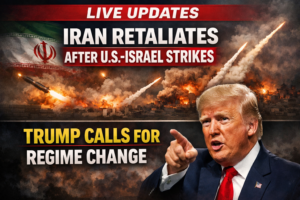
There are also fears that hardline factions within the Revolutionary Guards could consolidate power, potentially intensifying confrontation with Israel and US forces in the region. Iran has already launched retaliatory strikes targeting US bases in the Gulf following earlier attacks, and further escalation remains a distinct possibility.
For now, the international community is watching closely as Tehran prepares for an official mourning period — and potentially a historic transition of power. Whether Khamenei’s reported death leads to internal consolidation or deeper instability will likely shape the Middle East’s strategic landscape for years to come.