



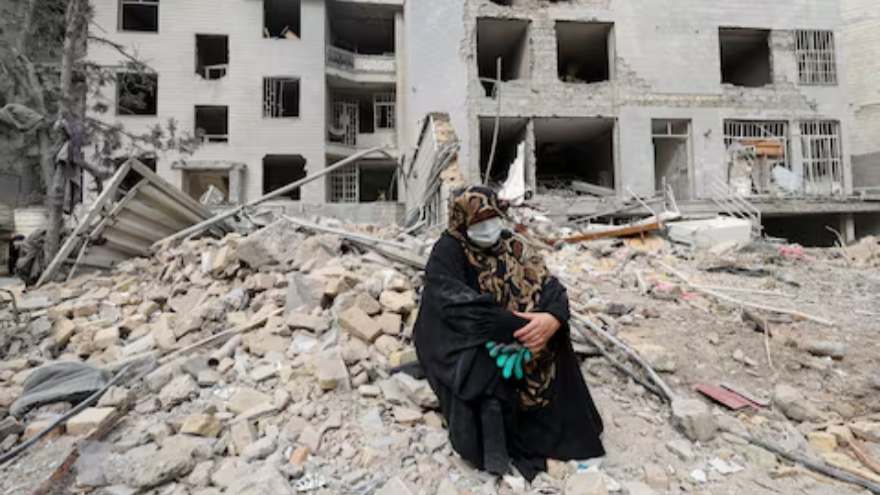
With more than 82,000 civilian structures damaged or destroyed across Iran, including thousands of homes, schools, and medical facilities, the human cost of the four-week US-Israeli military campaign is coming into sharp focus. As the devastation mounts, Tehran has significantly hardened its negotiating stance, demanding firm guarantees, compensation, and recognition of its strategic control over the Strait of Hormuz as preconditions for any diplomatic breakthrough.
TEHRAN – The scale of destruction inflicted on Iran during four weeks of US and Israeli strikes has reached staggering proportions, according to figures cited by Al Jazeera from the Iranian Red Crescent Society. More than 82,000 civilian structures have been reported damaged or destroyed, painting a picture of a nation under sustained bombardment whose humanitarian infrastructure is buckling under the weight of war.
The toll includes at least 62,000 homes reduced to rubble or rendered uninhabitable, alongside 281 medical facilities—hospitals, clinics, and pharmacies—that have been hit. Educational infrastructure has not been spared, with 498 schools damaged in the strikes. Even rescue capabilities have been targeted: 17 rescue centers and 12 emergency vehicles have been destroyed, further complicating relief efforts across affected regions.
Against this backdrop of mounting civilian suffering, Iran has adopted a significantly tougher negotiating posture, according to senior sources in Tehran cited by Reuters. The country’s leadership is now demanding substantial concessions from the United States as a precondition for any serious mediation or peace talks—a stance that threatens to widen the gap between the two sides even as backchannel communications intensify.
A Humanitarian Catastrophe Unfolds
The Red Crescent figures, which represent the most comprehensive accounting of damage since the conflict began, underscore the devastating impact of the US-Israeli military campaign on Iran’s civilian population. The destruction of 281 medical facilities has crippled an already strained healthcare system, leaving countless Iranians without access to essential medical care.
The targeting of rescue centers and emergency vehicles has compounded the crisis, slowing relief efforts and leaving many communities isolated. With winter approaching in parts of the country, the destruction of 62,000 homes threatens to create a secondary humanitarian catastrophe as displaced families face exposure to the elements.
The human cost continues to rise alongside the material damage. Casualty reports have emerged from multiple cities, though independent verification remains difficult due to restricted access to strike sites. Iranian officials have accused the US and Israel of deliberately targeting civilian infrastructure—a charge both nations deny, maintaining that their operations focus on military and nuclear sites.
Tehran’s Demands: Guarantees, Compensation, and Control
As the humanitarian toll mounts, Iran has significantly hardened its position in the diplomatic backchannel, according to senior sources. Central to Tehran’s demands are firm guarantees against future military action—a response to what Iran views as repeated violations of its sovereignty.
Compensation for wartime losses has also emerged as a non-negotiable demand. The destruction of 82,000 structures represents not only a humanitarian crisis but an economic one, with rebuilding costs expected to run into the tens of billions of dollars. Iranian officials have signaled that any peace agreement must include mechanisms for reconstruction assistance.
Perhaps most significantly, Tehran is demanding formal recognition of its control over the Strait of Hormuz, the narrow waterway through which roughly one-fifth of the world’s oil and liquefied natural gas supplies transit. Iran’s effective closure of the strait during the conflict has demonstrated its strategic leverage, and the leadership appears determined to codify that leverage in any final settlement.
On the ballistic missile program, Iran has drawn a clear red line. Tehran is refusing to accept any limitations on its missile capabilities, viewing them as essential to national defense—particularly in light of the recent military escalation. This position directly contradicts stated US objectives and is likely to become a central point of contention in any negotiations.
Mixed Signals and the Mediation Maze
The hardening of Iran’s position comes amid continued confusion over whether formal negotiations are already underway. President Trump has stated that Washington held “very, very strong talks” with Tehran, suggesting progress behind the scenes. However, Iranian officials have publicly denied that any direct discussions have taken place.
Sources in Tehran indicate that only preliminary contacts have occurred through intermediaries, including Pakistan, Turkey, and Egypt, to assess the feasibility of formal negotiations. European officials have echoed this view, noting that regional actors and Gulf states are currently facilitating indirect communication between the two sides.
There are indications that Islamabad could host potential talks aimed at ending the conflict, with reports suggesting that Iran may dispatch Parliament Speaker Mohammad Baqer Qalibaf and Foreign Minister Abbas Araqchi if negotiations materialize. Final decision-making authority, however, is expected to rest with the Islamic Revolutionary Guard Corps (IRGC), whose influence has grown markedly during the conflict.
Israeli Skepticism and Internal Pressures
Israeli officials have expressed deep skepticism about the likelihood of any agreement being reached. Senior figures in Israel believe Tehran is unlikely to accept key US demands, which reportedly include curbs on both its ballistic missile and nuclear programs. Iran’s recent use of ballistic missiles against Israeli targets, along with its capacity to disrupt shipping through the Strait of Hormuz, has underscored its strategic leverage.
Analysts note that relinquishing these capabilities would leave the country vulnerable to future attacks, making concessions in these areas highly improbable. For Israel, which has advocated for a sustained military campaign to degrade Iran’s military capabilities, the prospect of a negotiated settlement that leaves Iran’s missile program intact is deeply unappealing.
Domestic dynamics are also shaping Iran’s negotiating posture. Sources point to the increasing influence of the Revolutionary Guards, uncertainty surrounding the leadership transition under Supreme Leader Mojtaba Khamenei, and a strong internal narrative of resilience amid the conflict. These factors have narrowed Tehran’s room for maneuver, reinforcing a hardline approach even as the war continues to exact both human and economic costs.
The appointment on Tuesday of Mohammad Baqer Zolghadr—a former Revolutionary Guards commander and hardline political figure—as secretary of the Supreme National Security Council further underscores the consolidation of power within Iran’s most uncompromising factions.
Analysis: A Widening Gap as the Clock Ticks
The combination of mounting civilian casualties and Iran’s hardened negotiating posture creates a dangerous dynamic as the window for diplomacy narrows.
For Tehran, the devastating toll of the US-Israeli strikes has reinforced a narrative of existential threat. The destruction of 82,000 civilian structures, including hundreds of medical facilities and schools, has galvanized public opinion and left little room for a leadership that appears to capitulate to American demands. Demanding guarantees, compensation, and recognition of its strategic position is not merely negotiating tactics—it is a political necessity for a regime that must demonstrate it can protect its people and its sovereignty.
For Washington, Iran’s maximalist demands present a fundamental challenge. President Trump’s claim of “very, very strong talks” suggests an expectation of progress, yet Tehran’s public posture—and its appointment of a hardline security chief—points in the opposite direction. The five-day pause on strikes, set to expire soon, may prove insufficient to bridge the gap between Iran’s demands and what the US is prepared to concede.
Pakistan’s role as mediator becomes all the more critical—and all the more difficult—in this context. Islamabad’s backchannel efforts have succeeded in opening lines of communication, but translating those contacts into a formal negotiation will require both sides to demonstrate flexibility that, at present, appears in short supply.
As the conflict enters its fifth week, with civilian infrastructure in ruins and Iran’s leadership consolidating behind a hardline posture, the path to peace remains uncertain. The EU has called for negotiations, Pakistan has offered its soil, and backchannel communications continue. But with Iran demanding guarantees against future attacks, compensation for wartime losses, and recognition of its control over the Strait of Hormuz, the gap between the two sides may be wider than the mediators have acknowledged.






One thought on “Iran Counts 82,000 Structures Hit as Civilian Toll Mounts; Tehran Hardens Stance in US Backchannel Talks”