
TEHRAN: Iran declared that those responsible for launching the recent conflict have suffered a major defeat, while officials in Tehran signaled cautious optimism over a preliminary agreement reached with the United States aimed at ending months of hostilities and restoring stability across the Middle East.
The comments came as Iranian and American officials confirmed that a framework agreement had been reached, with a formal signing ceremony expected in Switzerland later this week.
Iran Claims Victory, Demands US Fulfill Commitments
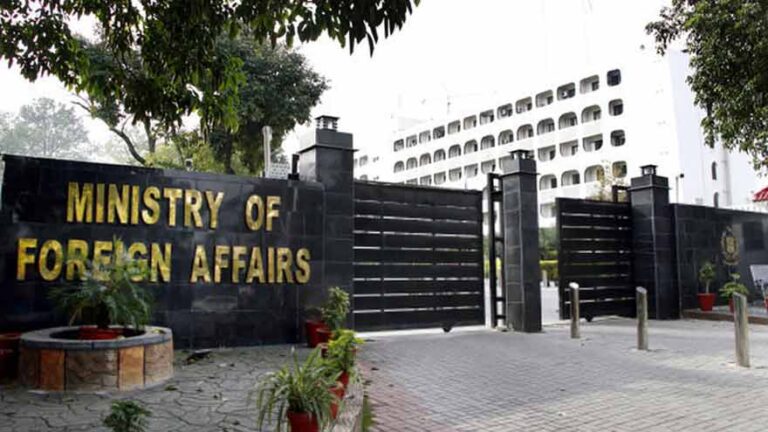
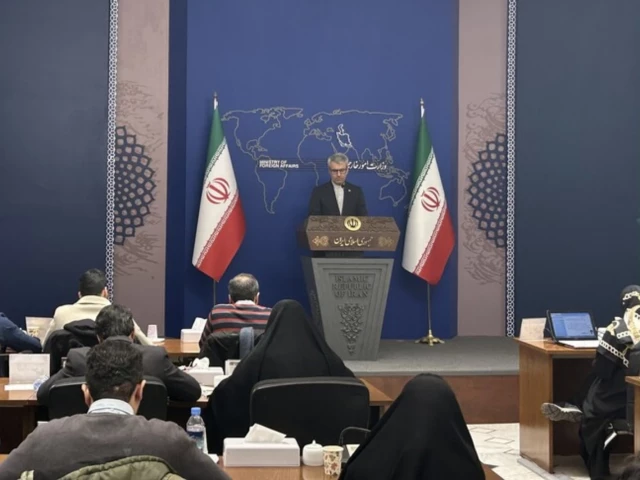
Iranian Foreign Ministry spokesperson Esmaeil Baghaei stated that those who initiated the war had been “defeated hugely,” while emphasizing that the success of any future agreement would depend on Washington honoring its commitments.
Speaking during a press briefing, Baghaei said Iran expected the United States to facilitate access to frozen Iranian assets and implement agreed measures without delay.
He stressed that Tehran would closely monitor compliance and warned that any failure by Washington to meet its obligations would trigger reciprocal action from Iran.
Baghaei also reiterated that deep mistrust toward the United States remains rooted in historical events dating back to the 1953 coup against Iran’s democratically elected government.
“There is a long road for the United States to go to gain our trust,” he said.
US-Iran Framework Agreement Announced
The diplomatic breakthrough follows months of indirect negotiations mediated by Pakistan and supported by regional partners.
US President Donald Trump announced that a preliminary agreement had been finalized, while Pakistani Prime Minister Shehbaz Sharif confirmed that both sides had reached an understanding aimed at ending military operations and reopening key trade routes.
A memorandum of understanding is expected to be formally signed in Switzerland on Friday.
The agreement reportedly includes provisions for:
- Permanent cessation of military operations
- Reopening of the Strait of Hormuz
- Lifting of the US naval blockade on Iranian ports
- Release of frozen Iranian assets
- A 60-day negotiation period covering nuclear issues and sanctions relief
Lebanon Emerges as Key Component
One of the most significant aspects of the agreement involves Lebanon.
Iranian officials stressed that respect for Lebanon’s sovereignty and territorial integrity formed an important part of the negotiations.
Foreign Minister Abbas Araghchi held discussions with counterparts from Egypt, Iraq, and Saudi Arabia, emphasizing that stability in Lebanon remains essential to broader regional peace.
A Hezbollah official told Reuters that the group has not conducted military operations since the announcement of the US-Iran understanding and reiterated that its position remains linked to Israel’s actions in southern Lebanon.
However, Israeli officials have maintained that military operations in Lebanon will continue regardless of the agreement.
Israeli Defence Minister Israel Katz stated that Israeli forces would remain in occupied areas of southern Lebanon and warned that Israel would respond forcefully to any future threats.
Strait of Hormuz Set to Reopen
A major outcome of the proposed agreement is the planned reopening of the Strait of Hormuz, one of the world’s most strategically important energy corridors.
The waterway handles a substantial portion of global oil and liquefied natural gas shipments and has faced severe disruptions during the conflict.
President Trump announced that the Strait would reopen later this week and said the United States would end its blockade of Iranian ports.
The announcement immediately impacted global markets.
Oil prices fell sharply, with Brent crude and West Texas Intermediate both recording significant declines amid expectations that energy supplies would normalize.
Iranian officials said Tehran would coordinate maritime security measures with Oman and other regional partners to ensure safe navigation through the waterway.
Details of Draft Agreement Surface
Iranian media outlets published details of a reported 14-point draft memorandum outlining the framework of the agreement.
According to the reports, the proposed deal includes:
Security Provisions
- Immediate and permanent end to military operations
- US commitment not to interfere in Iran’s domestic affairs
- Respect for Iranian sovereignty
- Suspension of new sanctions during negotiations
Economic Measures
- Release of approximately $24 billion in frozen Iranian assets
- Suspension of sanctions on Iranian oil and petrochemical exports
- Restoration of Iran’s access to international financial channels
Nuclear Negotiations
- A 60-day period for negotiations on Iran’s nuclear program
- Continued Iranian commitment under the Nuclear Non-Proliferation Treaty (NPT)
- Future discussions limited to enrichment activities and sanctions relief
Reconstruction Support
- Proposed reconstruction assistance valued at up to $300 billion
- International support for rebuilding economic infrastructure damaged during the conflict
Iranian officials emphasized that discussions regarding Iran’s missile program and support for allied regional groups remain outside the scope of negotiations.
International Community Welcomes Agreement
Governments across the world welcomed the announcement and expressed hope that the agreement would lead to lasting peace.
The United Arab Emirates called for full compliance with the deal and stressed the importance of protecting maritime navigation.
Germany urged both Iran and Israel to avoid actions that could reignite tensions, particularly in Lebanon.
Egypt and Jordan described the agreement as a major step toward restoring regional security and stability.
China also welcomed the understanding and called for the swift reopening of the Strait of Hormuz, highlighting the route’s importance to global trade and energy supplies.
Indonesia praised diplomatic efforts by all parties and urged continued restraint to maintain momentum toward de-escalation.
Challenges Remain Ahead
Despite the diplomatic breakthrough, significant challenges remain unresolved.
The future of Iran’s nuclear program remains uncertain and is expected to dominate upcoming negotiations.
Questions also remain regarding sanctions relief, regional security arrangements, and long-term implementation mechanisms.
Israel has not formally endorsed the agreement and continues to insist on maintaining operational freedom in Lebanon.
Political analysts warn that while the preliminary accord offers a path toward reducing tensions, the success of the process will depend on sustained diplomatic engagement and strict adherence to commitments by all parties involved.
Looking Forward
The forthcoming signing ceremony in Switzerland is expected to mark the first formal step toward ending one of the region’s most dangerous conflicts in recent years.
If successfully implemented, the agreement could reopen critical trade routes, reduce pressure on global energy markets, and create an opportunity for broader negotiations on regional security and Iran’s nuclear program.
For now, international attention remains focused on whether the preliminary understanding can evolve into a durable peace arrangement capable of delivering long-term stability across the Middle East.