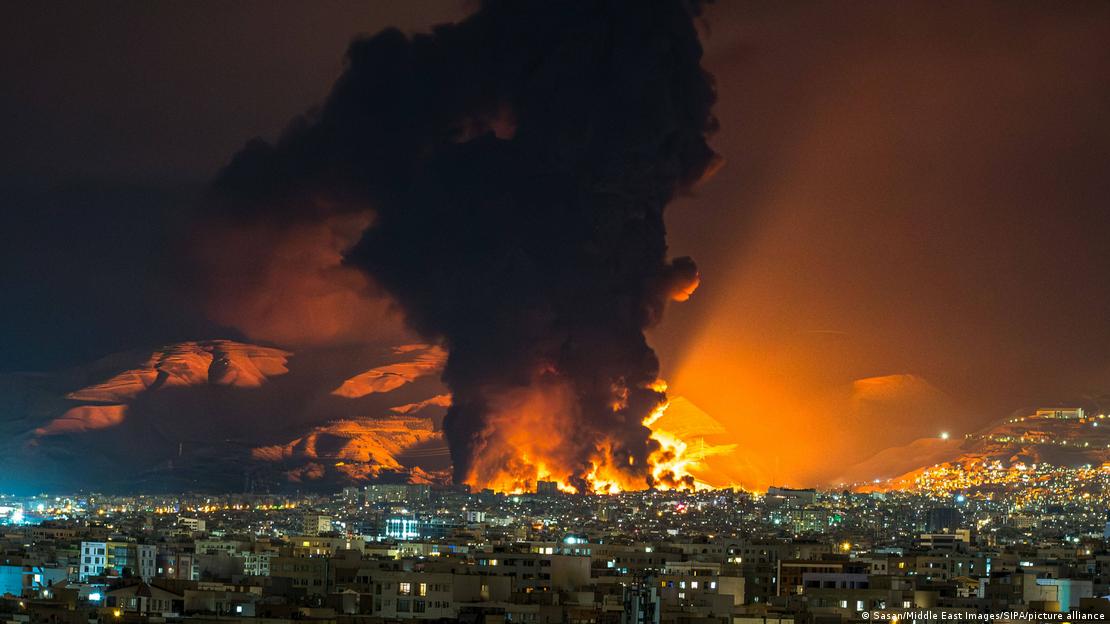
The closure of the Strait of Hormuz following the U.S.-led strikes on Iran has unleashed a cascade of economic shocks—from spiking energy costs to a looming “fertilizer crisis”—that threatens to destabilize the global economy, overwhelm central banks, and push vulnerable nations toward food insecurity.
The conflict, triggered by the death of Iranian Supreme Leader Ayatollah Ali Khamenei in U.S. and Israeli missile strikes on Feb. 28, has effectively shut down the Strait of Hormuz, the world’s most critical energy chokepoint . Tehran’s retaliation halted the flow of roughly 20% of global oil consumption and a staggering one-third of the world’s urea fertilizer trade through the narrow waterway .
“For a long time, the nightmare scenario that deterred the U.S. from even thinking about an attack on Iran was that the Iranians would close the Strait of Hormuz,” said Maurice Obstfeld, senior fellow at the Peterson Institute and former IMF chief economist. “Now we’re in the nightmare scenario” .
Oil Markets in Turmoil and the Limits of Bypass Routes
The immediate impact was seismic. Brent crude briefly skyrocketed to nearly $120 per barrel in the days following the closure, though prices have since retreated to the low $90s as markets grapple with the unprecedented supply shock .
Kpler vessel-tracking data shows that roughly 16 million barrels per day of petroleum products have stopped flowing . While Saudi Arabia and the UAE are maximizing the use of bypass pipelines (the 5 million bpd East-West pipeline and the 1.5 million bpd Fujairah pipeline, respectively), these routes can only move less than half of normal Hormuz flows . With OPEC’s spare capacity unable to bridge the gap, producing nations are running out of runway.
Iraq has been hit hardest. With its southern fields accounting for 85-90% of national output and no functioning pipeline northward, production at fields like Rumaila has already been slashed by an estimated 1.4 to 1.5 million bpd. Onshore storage in Iraq reached 90% utilization within just three days of the closure .
Simon Johnson, the Nobel prize-winning economist and former IMF chief economist, emphasized the gravity: “The Strait of Hormuz has to be reopened. It’s 20 million barrels of oil a day going through there. There’s no excess capacity anywhere in the world that can fill that gap” .
The Overlooked ‘Fertilizer Shock’ and Global Food Security
While oil prices have dominated headlines, experts warn of a slower-burning but potentially more devastating crisis: the disruption of fertilizer supplies. The Persian Gulf sits at the core of the global fertilizer system, producing much of the world’s ammonia and urea thanks to its low-cost natural gas .
“The most direct impact is delays to shipments of ammonia, urea, and LNG,” wrote Nima Shokri and Salome Shokri-Kuehni of United Nations University. “If the Strait of Hormuz is closed, it’s not just oil exports that are threatened, but also the supply of nitrogen fertilizers and the raw materials to produce them” .
With the Northern Hemisphere’s planting season approaching, delays of just a few weeks could force farmers to choose between paying dramatically higher prices or reducing fertilizer application. Crops are highly sensitive to nitrogen; even a slight reduction in usage can lead to significant yield losses, translating into millions of tons of lost food .
Joseph Glauber of the International Food Policy Research Institute noted that up to 30% of global fertilizer exports—including urea, ammonia, phosphates, and sulfur—typically transit the Strait .
“The effects are going to be most devastating in low-income countries where agricultural productivity may already be challenged,” Obstfeld warned. “Add this extra cost component and you get the prospect of significant food shortages” .
Nations like India, which relies on Persian Gulf LNG to run its domestic urea plants, and Brazil, which depends on imported nitrogen for its massive soy and corn harvests, are particularly exposed .
Central Banks’ Impossible Choice: Stagflation Fears Rise
The supply shock has thrown global central banks into disarray. The IMF’s managing director, Kristalina Georgieva, warned that a persistent 10% rise in oil prices would add 0.4 percentage points to global inflation while shaving 0.2% off global output . Her predecessor, Gita Gopinath, now at Harvard, calculated that the shift from a $65 to a $75 average oil price for 2026 could cut global growth by 0.2% and boost inflation by 0.5% .
Central bankers now face a cruel trade-off: raise rates to combat inflation and risk tipping fragile economies into recession, or hold steady or cut rates to support growth and risk letting inflation become entrenched—a painful echo of the 1970s oil shocks .
In Asia, the dilemma is acute. Thailand and the Philippines may be forced to reverse dovish policies. The Bank of Japan faces a potential 0.39 percentage point hit to growth if oil stays at $110, yet it has less room than in the past to ignore inflation, which has exceeded its 2% target for nearly four years .
For the U.S. Federal Reserve, the conflict complicates an already delicate balancing act. With inflation stuck around 3% and a softening labor market, the war “is going to massively intensify the debate inside the Fed,” Johnson predicted, making rate cuts less likely .
Draining Fiscal Space and Rising Social Costs
The crisis unfolds at a time when the world’s fiscal firepower is dangerously depleted. Gopinath warned that “policy space has been completely exhausted compared to the early days of the pandemic,” with global debt hitting a record $348 trillion . Developing countries face over $9 trillion in refinancing needs, while U.S. foreign aid commitments have been slashed.
On the ground, the pain is immediate. U.S. gasoline prices have shot up to an average of $3.48 a gallon . In Asia, governments are implementing drastic measures: Thailand has suspended overseas travel for civil servants; the Philippines has introduced a four-day work week; and Vietnam is encouraging work-from-home orders . In India, restaurants warn of potential shutdowns as gas supplies are prioritized for households .
Eswar Prasad, professor of trade policy at Cornell University, noted the global economy has shown resilience to shocks like U.S. tariffs, offering a sliver of optimism . But with no end to the conflict in sight and a new, potentially more hardline leadership in Tehran, the “dark chapter” for the world economy is far from over. As Georgieva advised policymakers: “Think of the unthinkable and prepare for it” .