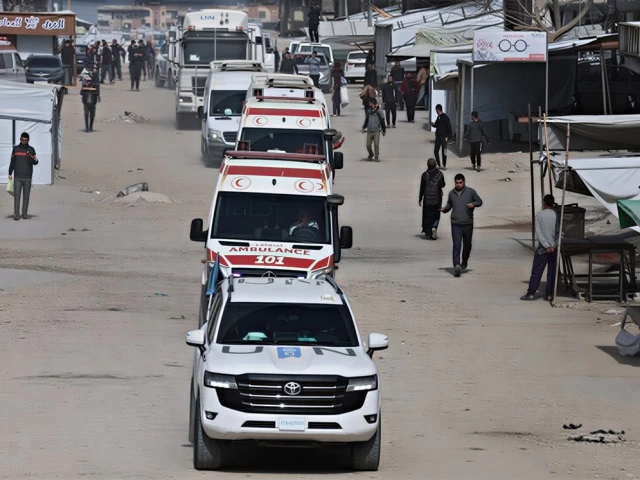
GAZA/CAIRO — Israel reopened the Rafah crossing with Egypt on Thursday after nearly three weeks, allowing a limited number of wounded Palestinians to leave for medical treatment, as mediators worked to preserve a fragile ceasefire that has come under increasing strain.
The Palestinian Red Crescent Society said only eight Palestinians injured in Israeli attacks during the two-year conflict and 17 of their family members would be allowed into Egypt for medical treatment after the crossing reopened. It was unclear how many would be permitted to return from Egypt back into Gaza.
Mediation Efforts
Sources told Reuters that the border opening resulted from recent talks that envoys from President Donald Trump’s “Board of Peace” held with Hamas officials in Cairo. The discussions aimed to safeguard the Gaza ceasefire, which has been under serious strain since the United States and Israel began their military campaign against Iran on February 28.
The crossing had reopened in early February after being largely shut since May 2024, during the early months of Israel’s fighting against Hamas in Gaza. Its reopening offers some relief to Palestinians seeking to leave Gaza for medical care or return after fleeing the fighting.
Continued Violence
While Israeli attacks in Gaza declined in the days immediately following the launch of the US-Israeli offensive against Iran, according to residents, medics, and analysts, they have since begun to rise again.
On Thursday, two Israeli airstrikes killed at least four Palestinians and wounded others in two separate incidents in Gaza City, local health officials said. There was no immediate comment from Israel regarding the strikes.
The territory’s health ministry says that nearly 680 people have been killed by Israeli fire since the October ceasefire was announced. Israel said four of its soldiers were killed by fighters in Gaza during the same period.
Truce Under Strain
Israel and Hamas have traded blame for truce violations, with each side accusing the other of undermining the agreement that had raised hopes for a sustained pause in hostilities.
The reopening of Rafah represents a modest step toward humanitarian relief, but with violence continuing and the regional conflict widening, the prospects for a lasting ceasefire remain uncertain.
Humanitarian Context
For wounded Palestinians and their families, the limited openings provide rare opportunities to access medical care unavailable in Gaza’s devastated health system. However, the small numbers permitted to cross highlight the ongoing restrictions facing Gaza’s population of more than two million.