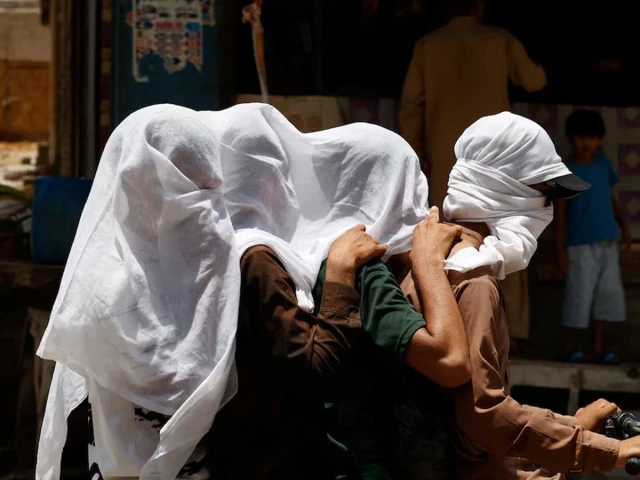
KARACHI – The Pakistan Meteorological Department (PMD) announced on Friday that Karachi was set to experience high temperatures, with the mercury expected to reach 38°C over the next three days. According to PMD, the city’s temperature could exceed 38°C on Sunday, while Friday and Saturday are forecast to reach 36°C and 37°C respectively.
PMD noted that north-eastern winds from Balochistan were expected to blow during the early hours of the day, while south-western sea breezes had remained inactive. The absence of the cooling sea breeze, which typically moderates Karachi’s coastal climate, is a key factor in the expected temperature rise.
Heatwave Risk Minimal
“Due to moderate humidity levels and the temporary closure of sea winds, the possibility of a heatwave was minimal,” the Meteorological Department added. Despite the lack of intense heat, PMD advised caution, as the temperatures might still feel uncomfortable during the day.
The distinction between high temperatures and a heatwave is important. A heatwave is declared when temperatures exceed normal levels by a significant margin for an extended period. While 38°C is hot, Karachi has historically experienced higher temperatures; the city’s record high is 47°C, recorded in May 1938.
NDMA Issues Heat Alert for Sindh and Punjab
Earlier on Tuesday, the National Disaster Management Authority (NDMA) issued a heat alert for various districts in Sindh and Punjab, warning of potentially severe temperatures starting from April 11. The authority said that districts likely to be impacted include Dadu, Jacobabad, Larkana, and the surrounding areas.
“Jamshoro, Qambar Shahdadkot, Ghotki, Khairpur, Sanghar, Umerkot, and Kashmore are also at risk, along with Jhal Magsi, Usta Muhammad, and Dera Murad Jamali,” NDMA said. The authority noted that nighttime temperatures were expected to be 3 to 5 degrees above normal, while daytime highs could be 5 to 7 degrees higher.
In southern Punjab, a heatwave alert has been issued for Bahawalnagar, Bahawalpur, and Rahim Yar Khan. These districts, located in the arid belt of Punjab, are particularly susceptible to extreme temperatures during the summer months.
Safety Advisory
“Residents are advised to avoid unnecessary outdoor activities during peak daytime hours, stay hydrated, and pay special attention to the elderly, children, and labourers,” NDMA said. The authority emphasised that vulnerable populations — including the elderly, young children, and outdoor workers — are at highest risk during heatwaves.
NDMA asserted that it was actively monitoring all weather developments and potential risks, providing timely information to relevant authorities and the public. “Citizens are encouraged to use the NDMA Disaster Alert App for guidance on weather conditions, potential hazards, and safety measures,” it added.
Seasonal Transition
April marks the transition period between winter and summer in Pakistan. As the sun moves northward, temperatures begin to rise across the country. Coastal cities like Karachi benefit from sea breezes that moderate temperatures, but when these breezes are inactive, temperatures can spike.
The expected 38°C is above the average maximum temperature for April in Karachi, which is around 33-34°C. However, it is not unprecedented; Karachi has recorded April temperatures above 40°C in the past.
Looking Ahead
The coming weeks will determine whether this hot spell develops into a full-fledged heatwave. The NDMA’s alert for April 11 suggests that authorities are anticipating a significant rise in temperatures across Sindh and Punjab.
For residents of Karachi, the advice is straightforward: stay hydrated, avoid unnecessary sun exposure during peak hours, and check on vulnerable neighbours and family members. For labourers and outdoor workers, employers should consider adjusting work hours to avoid the hottest part of the day.
As climate change increases the frequency and intensity of heatwaves in South Asia, early warning systems and public awareness campaigns become increasingly important. The PMD and NDMA’s proactive alerts are a step in the right direction.