SEOUL, South Korea, March 11, 2026 — North Korea has officially welcomed the selection of Mojtaba Khamenei as Iran’s new Supreme Leader, state media reported Wednesday, praising Tehran’s sovereignty while condemning the United States and Israel for “destroying the foundations of regional peace and security” .
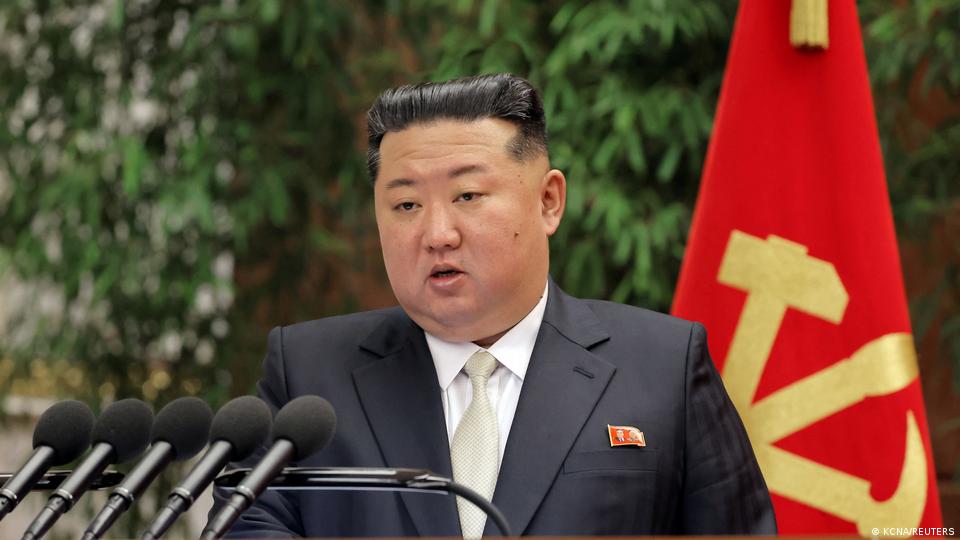
The statement from a North Korean Foreign Ministry spokesperson, carried by the Korean Central News Agency (KCNA), marks one of the first formal diplomatic recognitions of Iran’s leadership transition since the Feb. 28 strike that killed Ayatollah Ali Khamenei .
“We respect the right and choice of the Iranian people to elect their Supreme Leader,” the spokesperson said, according to KCNA. The statement framed the succession as an internal matter of sovereignty, while sharply criticizing Washington and Tel Aviv .
Pyongyang’s Sharp Rebuke of US-Israel Campaign
The North Korean statement went beyond simple congratulations, launching a broadside against the ongoing US-Israeli military campaign .
“The United States and Israel are destroying the foundations of regional peace and security and increasing instability across the world,” the spokesperson said, accusing the two nations of violating Iran’s “political system and regional sovereignty” and seeking to “overthrow its social system” .
Pyongyang’s rhetoric aligns with its long-standing anti-American posture and its position within what Tehran calls the “Axis of Resistance.” North Korea had previously condemned the initial US-Israeli strikes on Iran as “illegal aggression” in the days following the Feb. 28 attack .
A Rare Diplomatic Endorsement
The KCNA report noted that the statement was issued “in response to a question from a senior KCNA reporter,” a formulaic style used by Pyongyang to deliver official positions on international affairs.
While North Korea and Iran have maintained diplomatic relations for decades, Pyongyang rarely comments on internal leadership transitions in other nations. The public endorsement of Mojtaba Khamenei’s ascent is therefore notable, signaling solidarity between two of the world’s most isolated regimes, both facing crippling international sanctions and hostile relations with Washington .
The Context of Regional War
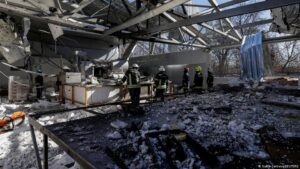
North Korea’s statement comes as the US-Israeli campaign against Iran enters its 12th day, with Iranian forces having retaliated by closing the Strait of Hormuz and threatening economic targets across the region .
The endorsement also arrives amid reports that Mojtaba Khamenei, the 56-year-old new leader, was wounded in the same Feb. 28 strike that killed his father and several family members . Iranian officials have denied claims that the new leader is incapacitated, though he has yet to make a public appearance or statement since being named successor on Sunday .
Echoes of Trump’s Pressure Campaign
The North Korean statement indirectly referenced U.S. President Donald Trump, who had expressed a desire to influence Iran’s leadership transition . Despite Trump’s hopes for a shift in Tehran’s direction, the Assembly of Experts moved swiftly to select Mojtaba Khamenei, a figure deeply embedded in the Islamic Republic’s security apparatus .
North Korea itself has been a target of Trump’s maximum pressure campaigns in the past, and Pyongyang’s expression of solidarity with Tehran underscores the convergence of interests among nations opposed to U.S. foreign policy in the Middle East and Asia .
Waiting for Khamenei
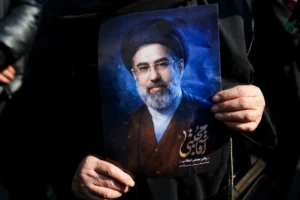
As North Korea extends its diplomatic welcome, the world continues to wait for the new Iranian leader’s first public address. Iranian media had initially suggested Mojtaba Khamenei would speak on March 9, but no address materialized. Tehran’s supporters have held rallies across the country, waving flags and photographs of the unseen leader, whose condition and intentions remain shrouded in mystery .
For now, the endorsement from Pyongyang offers Tehran a rare piece of diplomatic backing at a time when most of the international community watches the war with apprehension and uncertainty about the future direction of the Islamic Republic .