ISLAMABAD – Pakistan Air Force escorted Iranian negotiators home from inconclusive peace talks with the US last weekend, launching a major operation after the Iranians said Israel might seek to kill them, three sources told Reuters. Pakistan deployed some two dozen jets in the escort, as well as the force’s Airborne Warning and Control System for aerial surveillance to ensure the safety of the delegation back from Islamabad, said two Pakistani sources with knowledge of the operation.
One said similar security protection would be provided for subsequent talks if the Iranians ask for it, “otherwise Pakistani aircraft would receive them in Pakistan airspace”. A third source involved in the talks said measures were already in the works ahead of an expected further round of talks as soon as this weekend.
Iranian Concerns
The discussions with the Iranian delegation about a potential threat while travelling and the presence of a Pakistani air escort into Iran have not previously been reported. “When the talks failed, the Iranians were wary that things had not gone right. It was their suspicion that they might be targeted,” one security source said.
“This was a massive operational mission if you look at it from a pilot’s point of view. You are taking responsibility for a delegation that is coming for talks, you are giving them air cover, you have potent fighters that counter any threat,” he said.
Escort Details
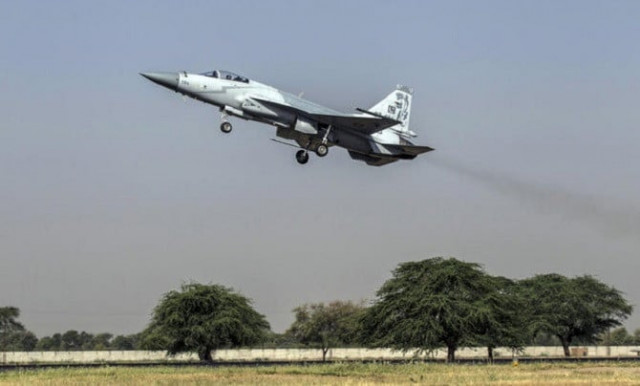
Sunday’s mission to Iran included Chinese-made J-10 aircraft, the top jet in the PAF fleet, one official said. The Iranian delegation, led by FM Abbas Araghchi and Parliament Speaker Mohammad Baqer Qalibaf, a former military officer and certified pilot, requested the security escort, which goes well beyond normal protocol, the two security sources said.
The regional diplomat said the Iranians did not make a formal request but also did not “rule out the possibility that Israel could even strike the aircraft”, prompting Pakistan to insist on providing a security escort. The delegation did not land in Tehran, the diplomat said, declining to say where they were dropped off.
Background
Israel had Araghchi and Qalibaf on its strike list until Pakistan asked Washington to intervene to have them removed because there would be no one left to negotiate on the war the US and Israel launched on February 28. Israeli Prime Minister Benjamin Netanyahu said last month, “I wouldn’t issue life insurance policies on any of the leaders…,” referring to Iran.
No Official Comment
The Israeli prime minister’s office did not immediately respond to a request for comment. Iran’s permanent mission in Geneva did not immediately respond to a request for comment. Pakistan’s air force and military did not respond to questions about the operation. The US embassy in Islamabad did not respond to a request for comment.
Analysis: Beyond Normal Protocol
The revelation that Pakistan Air Force escorted Iranian negotiators home with two dozen jets and airborne surveillance systems underscores the seriousness with which Pakistan views its mediation role. The fact that Iranian delegates feared for their lives — and that Pakistan took extraordinary measures to protect them — highlights the dangers inherent in the negotiations.
The request for security escort, which goes “well beyond normal protocol”, reflects the Iranians’ genuine fear of assassination. Given that Israel had Araghchi and Qalibaf on its strike list until Pakistan intervened, those fears were not unfounded.
The deployment of Chinese-made J-10 aircraft, the top jet in the PAF fleet, demonstrates Pakistan’s commitment to the safety of the delegates. The operation was “massive” from a pilot’s point of view — taking responsibility for a delegation, giving them air cover, countering any threat.
As further rounds of talks are expected, Pakistan has indicated that similar security protection will be provided if requested. The message is clear: Pakistan will protect its guests, even if it requires the full force of its air force.