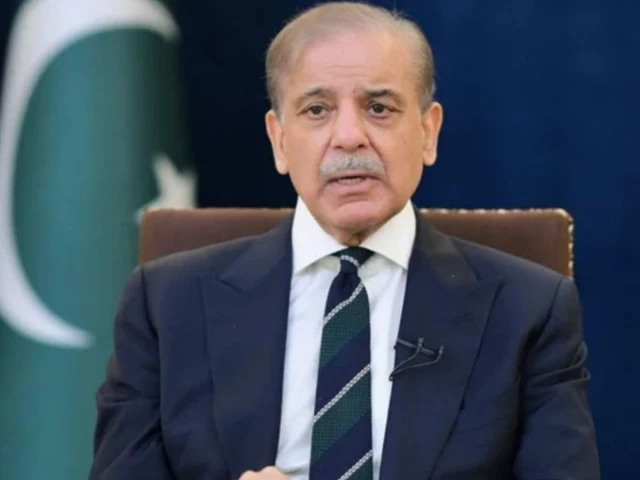
ISLAMABAD – In a carefully choreographed diplomatic move that could reshape the trajectory of the US-Iran conflict, Prime Minister Shehbaz Sharif on Tuesday publicly offered Pakistan as a neutral venue for peace talks between the two adversaries. The offer, made via a post on X, received immediate and unprecedented validation when President Donald Trump reposted it on his Truth Social platform—a gesture widely interpreted in Islamabad as Washington’s acknowledgment of Pakistan’s mediation role.
“Pakistan welcomes and fully supports ongoing efforts to pursue dialogue to end the war in Middle East, in the interest of peace and stability in region and beyond,” the prime minister wrote. “Subject to concurrence by the US and Iran, Pakistan stands ready and honoured to be the host to facilitate meaningful and conclusive talks for a comprehensive settlement of the ongoing conflict.”
Trump’s repost of the prime minister’s offer injected fresh momentum into Pakistan’s mediation bid, suggesting that the idea of Islamabad as a neutral venue for high-stakes negotiations is gaining traction at the highest levels in Washington. The move follows weeks of backchannel communications facilitated by Pakistani intermediaries, including a reported telephone conversation between Army Chief Field Marshal Asim Munir and President Trump.
A Coordinated Diplomatic Offensive
The prime minister’s formal offer comes after widespread media speculation about Pakistan’s mediation role and represents what sources describe as a carefully coordinated move involving all key stakeholders. While Iran has publicly denied reports of holding any direct talks with the United States, diplomatic sources indicate that such denials may be intended for domestic consumption rather than reflecting the reality of behind-the-scenes engagement.
Sources in Islamabad told The Express Tribune that ongoing efforts seeking de-escalation are the most serious since the conflict began on February 28, when US-Israeli strikes launched the current war. The diplomatic flurry of the past 24 hours—involving Pakistan’s civil and military leadership engaging with counterparts in Tehran, Washington, Ankara, and Cairo—suggests a concerted push to translate backchannel communications into formal negotiations.
The choice of Pakistan as the main mediator stems from its unique geopolitical position. Islamabad has cultivated close ties with the Trump administration while maintaining deep connections with Iran. Gulf countries also trust Pakistan, placing it in a position where it can help broker a deal between adversaries who have few other interlocutors in common.
Foreign Office: Diplomacy Requires Discretion
In an exclusive conversation with The Express Tribune, Foreign Office spokesperson Tahir Andrabi said Islamabad remained firmly committed to resolving the conflict through dialogue and engagement, in line with its longstanding foreign policy principles. However, he stressed that such efforts required confidentiality.
“Diplomacy and negotiations often require that certain matters be advanced with discretion,” Andrabi noted, urging the media to refrain from speculation and await official announcements. The cautious public posture reflects the sensitivity of the mediation effort, with Pakistan seeking to avoid premature disclosures that could undermine the process.
While some reports claimed a US delegation had already arrived in Islamabad for talks, there was no official confirmation. Sources, however, did not rule out the possibility, suggesting Pakistan is willing to provide a neutral venue if required.
A Week of Intense Diplomatic Engagement
The prime minister’s public offer caps a week of intense diplomatic engagement across Pakistan’s civil-military leadership. PM Shehbaz held a telephone conversation with Iranian President Masoud Pezeshkian, reaffirming solidarity with Iran while urging restraint and dialogue. According to an official statement, the prime minister extended Eidul Fitr and Nowruz greetings to the Iranian leadership and people while expressing condolences over the loss of lives in the ongoing conflict.
He warned of the “dangerous” trajectory of hostilities in the Gulf and underscored the urgent need for collective efforts to de-escalate tensions through diplomacy. Importantly, he stressed the need for unity within the Muslim world, saying cohesion in the Ummah was “more critical than ever” amid the unfolding crisis.
Simultaneously, the country’s military leadership engaged Washington. According to a report in the Financial Times, Chief of Defence Forces and Chief of Army Staff Field Marshal Asim Munir held a telephone conversation with President Trump to discuss the evolving situation. Diplomatic sources said the contacts reflected Pakistan’s attempt to leverage its unique ties with both Tehran and Washington to create space for dialogue.
Deputy Prime Minister and Foreign Minister Ishaq Dar led a hectic diplomatic outreach, speaking separately with his Iranian counterpart Abbas Araghchi and Turkiye’s Foreign Minister Hakan Fidan. In both conversations, Dar emphasized dialogue and diplomacy to ensure peace and stability, with all sides agreeing to remain in close contact. Earlier, Dar also held talks with Egypt’s Foreign Minister Badr Abdelatty, further broadening the coalition of nations supporting de-escalation.
The Mediation Landscape: Pakistan, Turkiye, Egypt
Pakistan’s mediation push is not happening in isolation. According to Axios, Islamabad is being considered for possible talks involving a US delegation that may include special envoy Steve Witkoff and Jared Kushner, alongside senior Iranian leadership, potentially including the parliamentary speaker. Turkiye and Egypt have also stepped up efforts to facilitate indirect messaging between the two adversaries, creating a multi-layered diplomatic infrastructure.
These parallel engagements point to a coordinated but still nascent mediation effort, largely centered on backchannel messaging rather than a formal negotiation process. The involvement of multiple regional powers reflects the urgency of de-escalation and the recognition that no single country can broker a deal alone.
A Delicate Balancing Act
Since the war began, Pakistan has been walking a tight diplomatic rope, seeking to avoid being directly embroiled in the conflict despite its mutual defense pact with Saudi Arabia and its close ties to both Washington and Tehran. That balancing act, officials say, is precisely why Islamabad is pushing for dialogue and diplomacy.
The prime minister’s public offer to host talks represents a calculated risk. Success would position Pakistan as an indispensable regional mediator and strengthen its relationships with both the United States and Iran. Failure, however, could expose Islamabad to criticism from domestic constituencies and complicate its carefully maintained neutrality.
Sources added that if Pakistan’s efforts succeed, it could amount to a major diplomatic coup—one that would reshape the country’s standing in the region and beyond. For now, the international community is watching closely as the five-day pause on US strikes against Iranian power plants continues, and as backchannel communications intensify.
Analysis: A Pivotal Moment for Pakistani Diplomacy
Prime Minister Shehbaz Sharif’s formal offer to host US-Iran talks, amplified by President Trump’s unprecedented repost, marks a pivotal moment in Pakistan’s diplomatic history.
For decades, Pakistan has navigated the complex geopolitics of the Middle East, maintaining relationships with powers that are often at odds with one another. The current moment represents an opportunity to leverage those relationships in service of a broader regional peace—a role that successive Pakistani governments have aspired to but rarely achieved.
The Trump repost is particularly significant. By publicly amplifying Pakistan’s offer, the US president has signaled Washington’s openness to Islamabad’s mediation role. This tacit endorsement provides diplomatic cover for both Pakistan and the United States, allowing the administration to pursue backchannel communications without committing to formal negotiations prematurely.
Yet significant obstacles remain. Iran has publicly denied any direct talks with Washington, and its leadership has hardened its negotiating stance in recent days, demanding guarantees against future military action, compensation for wartime losses, and formal recognition of its control over the Strait of Hormuz. The appointment of Revolutionary Guards veteran Mohammad Baqer Zolghadr as secretary of Iran’s Supreme National Security Council further signals Tehran’s uncompromising posture.
For Pakistan, the coming days will test whether backchannel communications can bridge these divides. The prime minister’s offer of Pakistani soil for talks creates a potential venue for face-to-face negotiations, but translating that offer into reality will require both Washington and Tehran to agree on a framework for dialogue—a framework that, at present, remains elusive.
As the conflict enters its fifth week, with civilian infrastructure in ruins and global energy markets on edge, the window for diplomacy is narrowing. Pakistan has positioned itself at the center of efforts to prevent a wider conflagration. Whether that position translates into a breakthrough will depend on the willingness of both adversaries to seize the opportunity that Islamabad has placed before them.