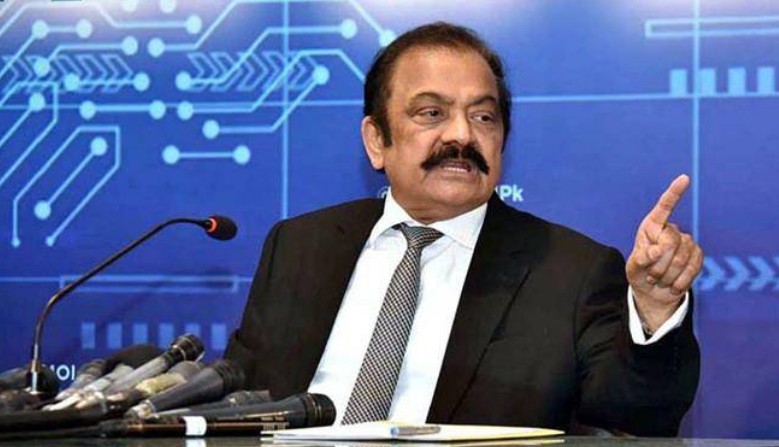
In a significant political development, Prime Minister’s Adviser on Political Affairs Rana Sanaullah Khan has firmly ruled out any possibility of political arrangements similar to those seen in 2018, sending a strong message to the opposition Pakistan Tehreek-e-Insaf (PTI).
Speaking to media representatives in Faisalabad, Sanaullah made it clear that the political landscape has shifted, and what he described as “backroom deals” or facilitated political pathways will no longer be an option for PTI or any other party.
🏛️ A Clear Rejection of Past Political Engineering
“No More 2018 Model Politics”
Sanaullah’s remarks directly referenced the controversial political environment surrounding Pakistan’s 2018 general elections, widely debated for alleged behind-the-scenes influence and engineered outcomes.
Without naming specific institutions, he stated that those responsible for such political practices remain under scrutiny, indicating a broader shift toward accountability. His statement suggests an attempt by the current government to distance itself from past allegations of political manipulation.
He emphasized that the era of “shortcut politics” is over, declaring that any party seeking power must now do so through constitutional and democratic means.
⚖️ PTI Under Pressure: No Deals, No Leniency
Tough Stance Against Opposition
Addressing the current position of PTI, Sanaullah claimed that the party is not prepared to engage in what he termed “serious and responsible politics.” He alleged that while PTI may be seeking negotiations with powerful quarters, it lacks the willingness to operate within democratic norms.
His message was unequivocal: there will be no concessions or political relief for PTI.
This stance reflects the deepening political divide in Pakistan, where tensions between the ruling coalition and PTI have intensified over the past few years. Legal battles, public protests, and institutional confrontations have further widened this gap.
Implications for Pakistan’s Political Future
Analysts suggest that Sanaullah’s remarks could signal a prolonged period of political confrontation. By ruling out reconciliation or negotiated settlements, the government appears to be adopting a strategy focused on institutional processes rather than political compromise.
This could reshape the dynamics of upcoming elections and influence how political parties engage with both the electorate and state institutions.
🌍 Foreign Policy Signals: Afghanistan and Iran
Conditional Peace with Afghanistan
On the foreign policy front, Sanaullah addressed Pakistan’s relationship with neighboring Afghanistan, stating that Islamabad seeks peaceful ties but expects firm action against دہشت گردی (terrorism) originating from Afghan soil.
He clarified that Pakistan does not view Afghanistan as an adversary, but stressed that cross-border security concerns remain a critical issue. This reflects ongoing tensions related to militant activity along the Pakistan-Afghanistan border.
Strong Reaction to Developments in Iran
Sanaullah also commented on regional developments involving Iran, expressing strong condemnation of aggression against the country. He criticized the killing of Iran’s Supreme Leader, describing it as a deeply concerning development.
His remarks highlight Pakistan’s position of supporting regional stability and opposing actions that could escalate tensions in the Middle East.
🌐 Regional Context: A Delicate Balancing Act
Navigating Complex Geopolitics
Pakistan’s foreign policy stance, as reflected in Sanaullah’s comments, underscores the delicate balance it must maintain in a volatile region. With ongoing conflicts and shifting alliances, Islamabad faces the challenge of safeguarding its security interests while promoting diplomatic stability.
From border tensions with Afghanistan to broader Middle Eastern developments, Pakistan’s leadership continues to emphasize dialogue, restraint, and mutual respect.
Domestic Politics Meets Foreign Policy
Sanaullah’s dual focus on domestic political issues and international relations illustrates how interconnected these domains have become. Political stability at home is often seen as a prerequisite for effective foreign policy, making internal dynamics even more significant.
🔍 Analysis: A Shift Toward Institutional Politics?
End of Backdoor Arrangements?
The rejection of “2018-style” deals may indicate a broader shift toward institutional and legal frameworks in Pakistan’s political system. If implemented consistently, this approach could strengthen democratic processes by reducing reliance on informal power structures.
However, critics may question whether such a shift is feasible in practice, given Pakistan’s complex political history.
Rising Political Polarization
At the same time, the firm stance against PTI risks deepening political polarization. Without avenues for dialogue or compromise, the likelihood of prolonged confrontation increases, potentially affecting governance and economic stability.
The coming months will be crucial in determining whether this hardline approach leads to greater accountability or further divisions.
✨ Conclusion
Rana Sanaullah’s statement marks a defining moment in Pakistan’s evolving political narrative. By categorically rejecting the possibility of past-style political deals, the government is signaling a tougher, more rigid approach toward opposition parties—particularly PTI.
At the same time, his comments on Afghanistan and Iran reflect Pakistan’s ongoing efforts to navigate a complex regional landscape.
As the country moves forward, the balance between political accountability, democratic engagement, and national stability will remain at the center of its future trajectory.